
Pregnancy changes almost everything in a woman’s body, and the mouth is one of the first places where those changes show up. Pregnancy hormones affect how gums respond to plaque, how enamel responds to acid, how often a woman eats, and even how carefully she brushes. Combined with the morning sickness that affects 70 to 80 percent of Indian women, pregnancy is a unique window where oral health risks rise significantly and where planning routine dental care matters.
Yet most pregnant women in India are told either “avoid the dentist entirely” (which is wrong) or “do everything as usual” (which is also wrong). The truth is more nuanced: some dental care is strongly recommended during pregnancy, some is safe only in a specific trimester window, and some should be postponed until after delivery.
This guide walks through exactly what Indian women need to know, trimester by trimester, with safety evidence and practical self-care tips. For a strong oral care foundation that supports this guide, our pillar on what to eat for healthy teeth and how often you should really visit the dentist are companion reads.
Why oral health matters more during pregnancy
Three physiological changes during pregnancy make the mouth significantly more vulnerable than at any other adult life stage.
Hormonal shifts: Pregnancy dramatically elevates oestrogen and progesterone, which increase blood flow to the gums and make them more reactive to plaque. This is why gums bleed more easily during pregnancy, even with the same brushing habits.
Dietary pattern changes: Pregnancy cravings, frequent small meals, increased snacking, and sweet food cravings all raise the frequency of acid attacks on teeth. Frequent eating gives teeth less time to remineralise between meals.
Morning sickness and acid exposure: The stomach acid that comes up during vomiting is extremely erosive. Repeated exposure, especially in the first trimester, can wear down enamel permanently if oral care is not adjusted.
Immune changes: Pregnancy slightly suppresses the immune response, which can allow oral infections to progress faster.
The combined effect is that pregnancy is the one period in adult life where gum disease risk jumps sharply, cavity risk increases, and new dental problems can appear within weeks. The good news is that with the right trimester-aligned approach, almost all of this is preventable.
Common dental problems during pregnancy
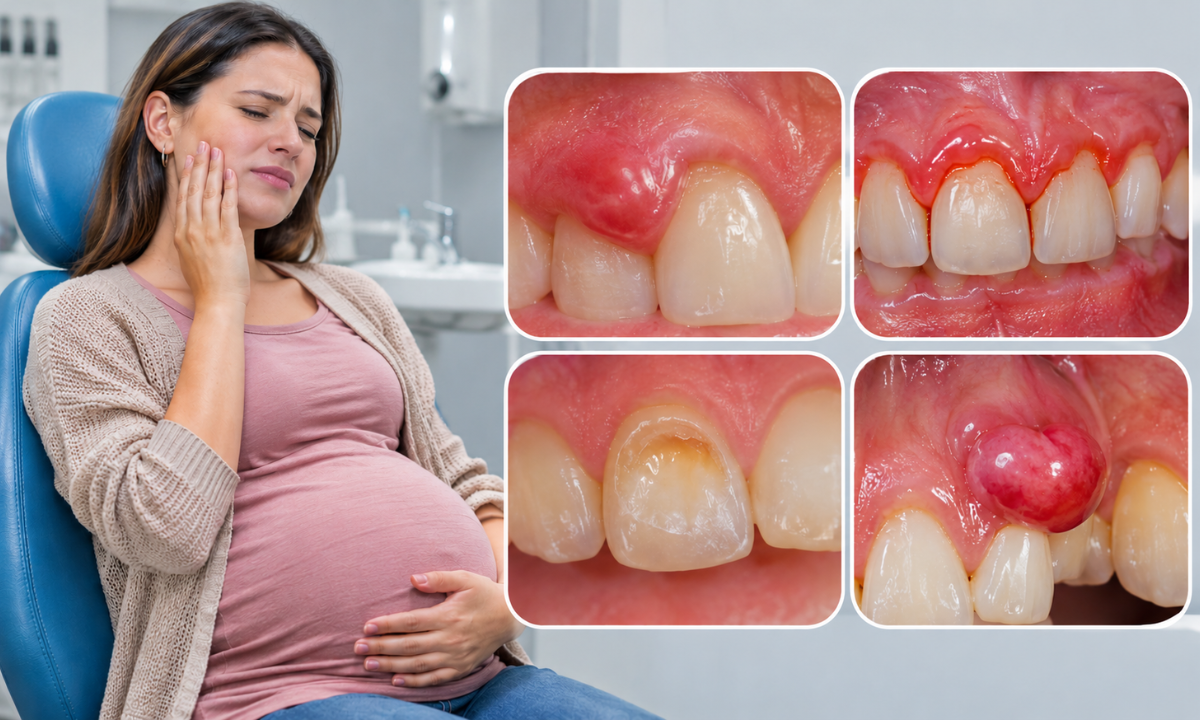
Pregnancy gingivitis (affects 50 to 70 percent of pregnant women)
The most common oral problem of pregnancy. Gums become red, swollen, tender, and bleed easily during brushing. The cause is the hormonal exaggeration of the normal inflammatory response to plaque.
Untreated, pregnancy gingivitis can progress to periodontitis (deeper gum disease), which has been linked in several studies to preterm birth. For the full spectrum, our dedicated guide on gum disease: stages, causes, symptoms and treatment covers how gingivitis develops and is treated.
Pregnancy tumour (pyogenic granuloma or “pregnancy epulis”)
Small, red, benign growths that can appear on the gums, usually between the teeth, typically during the second trimester. Affects 2 to 5 percent of pregnant women. They bleed easily, can be uncomfortable, but are not cancerous. Most shrink or disappear after delivery. Those that persist can be surgically removed post-partum.
Tooth erosion from morning sickness
Repeated vomiting coats the teeth with stomach acid (pH 1 to 3), which is strong enough to dissolve enamel. Women experiencing severe morning sickness can lose measurable enamel within weeks of frequent vomiting, especially on the inside surfaces of upper front teeth and chewing surfaces of molars.
Critical rule: Never brush immediately after vomiting. The acid-softened enamel is at maximum vulnerability for 30 to 60 minutes after an acid exposure, and brushing in this window actively grinds enamel away. Instead, rinse with plain water or a baking soda solution (1 teaspoon in a glass of water) to neutralise the acid, and wait 30 minutes before brushing.
Increased cavity risk
Frequent small meals and sweet cravings mean teeth face more acid attacks per day. Combined with reduced brushing (due to nausea triggered by toothpaste or toothbrushes), cavity risk rises significantly. Our guide on the 5 stages of tooth decay and how to stop it at the starting stage explains what to watch for early.
Loose teeth
A small percentage of pregnant women experience increased tooth mobility due to hormonal effects on the ligaments that hold teeth in their sockets. This usually resolves after delivery but should be mentioned to the dentist, who will check that it is not caused by underlying gum disease.
Nausea from brushing
A common and under-discussed problem. The gag reflex is heightened in pregnancy, and strong toothpaste flavours or the back-of-mouth brushing motion triggers nausea. Switch to a smaller toothbrush head, a mild or unflavoured toothpaste, and brush when nausea is lowest (typically late morning or afternoon rather than first thing in the morning).
What dental treatments are safe during pregnancy
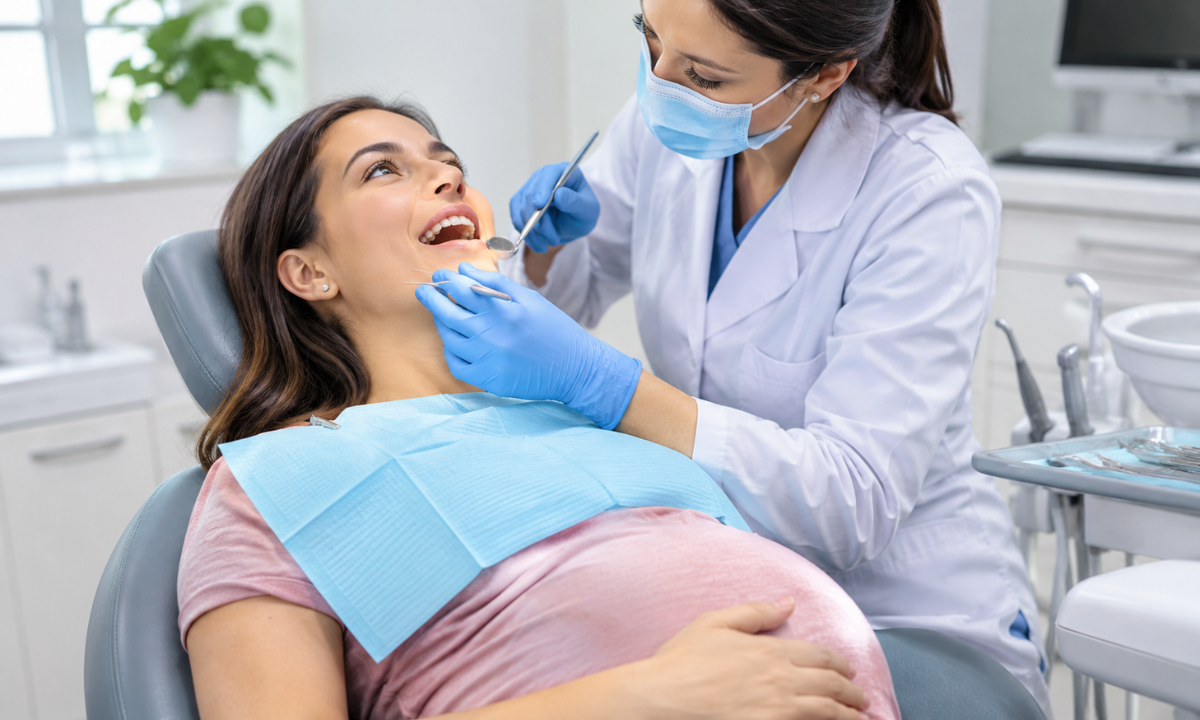
Routine cleaning (yes, and recommended)
Professional dental cleaning is not just safe during pregnancy, it is actively recommended. Many obstetricians and the American Dental Association recommend at least one professional cleaning during pregnancy, ideally in the second trimester. Cleaning controls the plaque buildup that drives pregnancy gingivitis.
Fillings (safe, especially in second trimester)
Routine fillings using tooth-coloured composite resin are safe during pregnancy. The materials used are inert and the procedure is quick. Second trimester is the preferred window.
Amalgam (silver) fillings are rarely used in modern Indian dentistry, and most practices offer only composite. If amalgam is ever offered, the small mercury content means it is generally avoided during pregnancy out of abundance of caution.
Root canal (only if symptomatic)
A routine, non-emergency root canal can be postponed until after delivery. But a symptomatic tooth (pain, swelling, infection) absolutely needs treatment during pregnancy, because the infection poses a greater risk to mother and baby than the procedure does. Our complete pillar on everything you need to know about root canal covers the procedure, and root canal aftercare: what not to do after treatment covers post-procedure care.
Extractions (only if unavoidable)
Routine extractions should be postponed until after delivery. Wisdom teeth, loose primary teeth, and planned orthodontic extractions can usually wait. Emergency extractions for severely infected teeth, abscesses, or trauma are performed in the second trimester with safe local anaesthesia.
Teeth whitening (avoid completely)
Professional teeth whitening is not recommended during pregnancy. The peroxide-based bleaching agents have not been studied extensively in pregnant women. Any aesthetic treatment should wait until after delivery and ideally after breastfeeding.
Dental implants (postpone)
Implant placement surgery, which requires significant local anaesthesia and healing time, should be postponed until after delivery. Planning can begin during pregnancy but actual placement waits.
Orthodontic treatment
If already undergoing braces or clear aligners, the treatment can continue during pregnancy, but adjustments may need to be re-scheduled based on nausea and comfort. Starting new orthodontic treatment can usually wait until after delivery.
Is dental X-ray safe during pregnancy?
This is the single most common dental anxiety during pregnancy. The honest answer: routine dental X-rays are generally safe during pregnancy, especially with modern equipment, lead apron and thyroid collar protection, and when limited to clinically necessary images.
The evidence:
- A single dental X-ray exposes the mother to approximately 0.005 millisieverts (mSv) of radiation, which is roughly equivalent to 1 day of natural background radiation
- The dose to the developing baby, with the uterus covered by a lead apron, is essentially zero (immeasurably small)
- The American Dental Association and American College of Obstetricians and Gynecologists (ACOG) both state that necessary dental X-rays can be safely performed during pregnancy with appropriate shielding
Practical safety protocol:
- Inform the dental clinic you are pregnant before any X-ray
- Insist on a lead apron that covers the abdomen AND a thyroid collar
- Routine screening X-rays can be deferred to the second trimester or after delivery
- Emergency X-rays (to diagnose an abscess or infection) are performed any time they are needed
- Most modern Indian dental practices use digital X-rays, which reduce radiation exposure by 60 to 80 percent compared to older film-based systems
The practical rule: X-rays to diagnose an active problem (pain, swelling, suspected infection) are performed any time they are clinically needed. X-rays for routine screening can wait.
Safe anaesthesia options during pregnancy
Local anaesthesia for dental procedures is generally safe during pregnancy when used in appropriate doses.
Lidocaine (lignocaine) with adrenaline (Category B): The most commonly used local anaesthetic in Indian dentistry. Category B means studies have shown no evidence of harm. Adrenaline in the formulation is important because it reduces the volume of anaesthetic needed and prolongs its effect.
Mepivacaine, bupivacaine (Category C): Used when lidocaine is unsuitable. Should be used only when benefits outweigh risks.
Nitrous oxide (laughing gas): Generally avoided during pregnancy, especially in the first trimester.
General anaesthesia: Avoided except for emergencies requiring hospital-based surgery. Replaced by local anaesthesia for all routine dental procedures.
Dental sedation: Oral sedation and IV sedation are usually postponed until after delivery.
Important: Always inform the dentist of your pregnancy, due date, and any pregnancy complications before any procedure.
First trimester (weeks 1 to 13): what to do and avoid
Priority: Monitor, manage morning sickness, plan ahead.
- Inform your dentist of the pregnancy at the earliest opportunity
- Attend a check-up to establish a baseline and plan any necessary treatment
- Manage morning sickness: do not brush immediately after vomiting, rinse with water or baking soda solution, wait 30 minutes before brushing
- Switch to a mild-flavoured or unflavoured toothpaste if nausea prevents brushing
- Start taking the prenatal vitamins prescribed by your obstetrician (calcium and vitamin D matter for teeth too)
- Avoid elective dental treatment unless urgent
- Avoid teeth whitening, cosmetic procedures, and new orthodontic treatment
- Never postpone emergency dental care (abscess, severe pain, trauma): treat these any time
The first trimester is the period of major organ development for the baby, so elective procedures are postponed. But urgent problems are treated with safe local anaesthesia and shielded X-rays as needed.
Second trimester (weeks 14 to 27): the ideal window for treatment
Priority: Routine cleaning, necessary treatments, cavity fillings.
- Schedule a professional cleaning (this is the ideal window)
- Treat any pending cavities with composite fillings
- Address pregnancy gingivitis with thorough cleaning and refined oral hygiene
- Replace old, failing fillings if clinically needed
- Treat symptomatic teeth that would be worse if left until post-delivery
- Follow all post-treatment care instructions
- Keep sessions short to avoid prolonged lying flat on the back (which can reduce blood return to the heart via the vena cava)
The second trimester is the goldilocks zone: the baby’s organs are formed, the mother is usually feeling better than in the first trimester, and the pregnancy has not yet reached the uncomfortable third-trimester stage. Most dental work that cannot wait is done here.
Third trimester (weeks 28 to 40): comfort and emergency-only care
Priority: Comfort, emergency-only treatments, oral hygiene.
- Postpone elective and routine dental procedures to post-delivery
- Attend only for emergencies and short follow-ups
- Use short appointments, with the chair reclined at an angle rather than fully flat
- Position with a pillow or wedge supporting the right hip to reduce pressure on the vena cava
- Continue excellent home oral care (brushing twice daily, flossing, antibacterial mouthwash if advised)
- Maintain prenatal nutrition
- Plan the first post-delivery dental visit (usually 6 to 8 weeks after delivery)
By the third trimester, most mothers are physically uncomfortable in the dental chair for extended periods. Treatment is limited to what cannot safely wait.
Oral care at home during pregnancy
Daily oral hygiene is the single most important factor in pregnancy dental health. These practical tips help.
- Brush twice daily: Modified Bass technique with a soft-bristled brush. If toothpaste triggers nausea, switch to a milder flavour (unflavoured or mint-free), use less toothpaste, or brush at a time of day when nausea is lowest.
- Floss daily: Essential during pregnancy because gums are more inflammation-prone. Interdental brushes or water flossers are also effective alternatives.
- Rinse after morning sickness: Never brush immediately after vomiting. Rinse with plain water or baking soda solution, wait 30 minutes, then brush normally.
- Use fluoride toothpaste: Fluoride remains the single most effective cavity prevention agent and is safe during pregnancy.
- Consider an antibacterial mouthwash: Alcohol-free chlorhexidine or essential oil-based rinses reduce plaque bacteria without the burning sensation of alcohol-based rinses.
- Clean the tongue daily: Bacteria on the tongue contribute to bad breath, which many pregnant women experience.
- Change your toothbrush more often: Every 2 to 3 months, or sooner if bristles fray. A pregnancy-associated heightened gag reflex may also mean a smaller-head brush is more comfortable.
- Stay hydrated: Water supports saliva production, which protects teeth. Aim for 2.5 to 3 litres daily (adjusted for climate and medical advice).
- Limit sugary and acidic snacks: Cravings are real, but choose less frequent, slightly larger treats over constant snacking.
- Chew sugar-free gum with xylitol: Between meals or after eating, this stimulates saliva and reduces cavity risk.
Diet for healthy teeth during pregnancy

Pregnancy nutrition is covered thoroughly by your obstetrician, but a few points specifically help teeth.
Calcium: Important for both maternal teeth and baby’s developing teeth and bones. Indian sources: low-fat milk, curd, paneer, ragi, til (sesame), almonds, green leafy vegetables.
Vitamin D: Required for calcium absorption. Most Indian women are vitamin D deficient. Sources: 15 minutes of midday sun exposure daily (arms and face), fortified milk, fatty fish, egg yolks, and prescribed supplements if deficient.
Phosphorus: Works with calcium to build strong teeth. Sources: dal, legumes, nuts, seeds, dairy, fish, eggs.
Vitamin C: Essential for gum health and collagen. Sources: amla, guava, orange, lemon, bell peppers, strawberries, tomato.
Vitamin A: Supports oral mucosal health. Sources: carrot, sweet potato, spinach, pumpkin, egg yolk, dairy.
Folate: Prescribed as supplement and found in leafy greens, lentils, and fortified grains.
Iron: Important for overall maternal health; deficiency can worsen gum problems. Sources: ragi, moong, rajma, spinach, jaggery, dates.
Limit Sugary drinks, frequent sweets, prolonged acidic drinks (cola, fruit juice sipped over long periods), sticky sweets that cling to teeth.
Our guide on what to eat for healthy teeth covers the broader diet principles that apply here too. Also useful to know is the opposite: our pillar on 7 foods that are secretly damaging your teeth.
How oral health affects the baby
Research over the past two decades has established clear links between maternal oral health and pregnancy outcomes.
Preterm birth: Multiple studies have found associations between severe periodontitis (deep gum disease) during pregnancy and preterm birth before 37 weeks. The proposed mechanism is bacterial inflammation triggering labour. Not every study has found the same effect size, but the consistent association across large studies justifies taking gum health seriously.
Low birth weight: Associated with the same mechanism as preterm birth. Severe gum infection is one of several modifiable risk factors.
Pre-eclampsia: Some evidence suggests severe gum disease is correlated with pre-eclampsia risk.
Transmission of cavity bacteria to the baby: Streptococcus mutans, the primary cavity-causing bacterium, is transmitted from mother to baby after the baby’s teeth erupt (around 6 months). Mothers with active cavities have higher transmission rates. Treating maternal cavities during pregnancy or early post-partum reduces baby’s cavity risk in early childhood.
The practical implication: Taking care of oral health during pregnancy is not just maternal self-care, it is baby-protective care. The Food Safety and Standards Authority of India (FSSAI) and prenatal nutrition guidelines from ICMR recognise maternal oral health as a component of healthy pregnancy outcomes.
FAQs
Can I go to the dentist during pregnancy?
Yes, and you should. The second trimester is the ideal window for routine dental care. Emergency care is performed any time it is needed. The outdated advice of “avoid the dentist during pregnancy” has been replaced by modern guidelines that recommend active dental care during pregnancy.
Is dental X-ray safe during pregnancy?
Routine dental X-rays, performed with a lead apron and thyroid collar, are generally safe during pregnancy. The radiation exposure is negligible. X-rays to diagnose active problems are performed any time they are needed. Routine screening X-rays can be deferred to the second trimester or post-delivery.
Is local anaesthesia safe during pregnancy?
Yes, local anaesthesia with lidocaine (Category B) is safe during pregnancy when used in appropriate doses. Always inform your dentist of your pregnancy, due date, and any complications before any procedure.
Why are my gums bleeding more during pregnancy?
This is pregnancy gingivitis, which affects 50 to 70 percent of pregnant women due to hormonal effects on gum tissue. It is manageable with thorough brushing, flossing, and professional cleaning. Untreated, it can progress to periodontitis, so do not ignore it.
Can I get my teeth whitened during pregnancy?
No. Professional whitening should wait until after delivery and ideally after breastfeeding, as peroxide-based bleaching agents have not been studied extensively in pregnancy.
Does pregnancy cause tooth loss?
The old saying “lose a tooth for every child” is a myth. Pregnancy does not directly cause tooth loss. Untreated dental problems during pregnancy can lead to tooth loss, which is why routine dental care during pregnancy matters.
Is it true that calcium is drawn from the mother’s teeth during pregnancy?
No. Calcium for the baby’s developing bones and teeth is drawn from the mother’s bones (primarily the pelvis and spine), not the teeth. Tooth problems during pregnancy are caused by hormonal effects and dietary patterns, not calcium loss from teeth.
Can I use fluoride toothpaste during pregnancy?
Yes, fluoride toothpaste is safe during pregnancy and is the single most effective cavity prevention agent.
What should I do if I have a toothache during pregnancy?
See a dentist. Do not ignore it. Mild painkillers (paracetamol, under obstetrician’s approval) can be used short-term. Avoid ibuprofen and aspirin during pregnancy. Address the underlying cause rather than just managing pain.
Is it safe to have a tooth extracted during pregnancy?
Routine extractions should be postponed to post-delivery. Emergency extractions (severely infected or abscessed teeth) are performed in the second trimester with safe local anaesthesia.
What is pregnancy tumour and should I be worried?
Pregnancy tumours (pyogenic granulomas) are benign red growths on the gums, common in the second trimester. They are not cancerous. Most shrink or disappear after delivery. Persistent ones can be removed post-partum.
How often should I visit the dentist during pregnancy?
At minimum, once during the second trimester for a professional cleaning and check-up. More frequently if gum disease, active cavities, or other issues are present. Our general guide on how often you should really visit the dentist covers broader patterns.
Can oral health really affect my baby?
Yes. Severe periodontitis has been linked with preterm birth and low birth weight. Maternal cavity bacteria transmit to the baby after teeth erupt. Taking oral care seriously during pregnancy protects both mother and baby.
I have bad breath during pregnancy. Why?
Common during pregnancy due to hormonal changes, dry mouth, dietary shifts, and pregnancy gingivitis. See our guide on what are the causes of bad breath in the mouth for solutions.
When should I schedule my first dental visit after delivery?
Typically 6 to 8 weeks after delivery, or sooner if an active problem is present. Breastfeeding mothers can have routine dental care, including local anaesthesia, with normal precautions.
Book a pregnancy-safe dental consultation
Every pregnancy is different, and the right oral care plan depends on your specific trimester, medical history, and any existing dental issues. Our clinical team at Beyond Dental works alongside obstetricians to provide dental care that is safe for mother and baby, with the right treatments at the right trimester.
Based in Vasanth Nagar, Bangalore, our team offers pregnancy-safe professional cleaning, treatment of pregnancy gingivitis, careful management of urgent dental problems during pregnancy, and post-delivery follow-up care. For the full range of services, see our dental clinic in Bangalore, advanced gum treatment, and our teeth cleaning in Bangalore service.
Book a pregnancy-safe dental consultation at Beyond Dental today.