
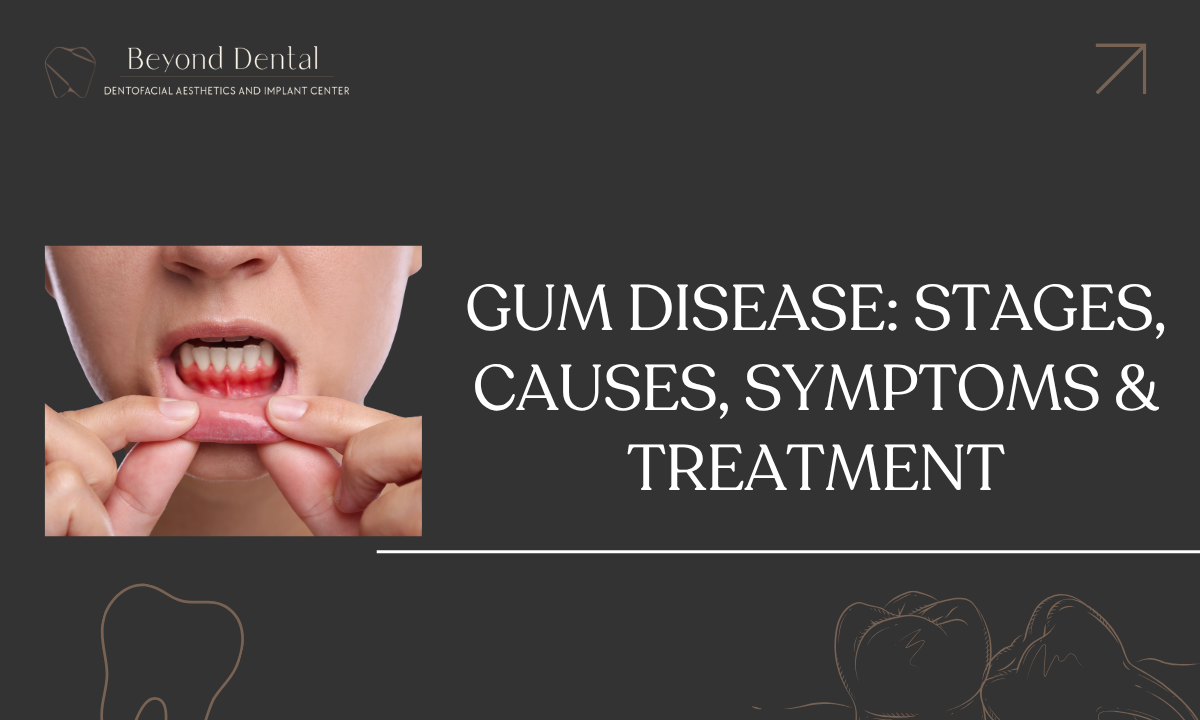
Gum disease is more common than most people think. In fact, studies show that nearly 50% of adults have some form of gum disease, and most of them do not even know it.
It starts silently. A little bleeding when you brush. Slight swelling around the gums. No pain. That is exactly why so many people ignore it until it becomes serious.
At Beyond Dental, a trusted dental clinic in Vasanth Nagar, we see this every day Patients come in with advanced gum problems that could have been treated easily months earlier. This guide breaks everything down simply so you know what to look for and when to act.
What Is Gum Disease?
Gum disease (also called periodontal disease) is an infection of the gums and the tissues that hold your teeth in place.
It starts with plaque, a sticky film of bacteria that forms on your teeth every day. If plaque is not removed through brushing and flossing, it hardens into tartar. Tartar irritates the gum tissue, causes infection, and if left untreated, slowly destroys the bone supporting your teeth.
There are two main types:
- Gingivitis: The early, mild form. Gums are red, swollen, and bleed easily. No permanent damage yet.
- Periodontitis: The advanced form. Gums pull away from the teeth, bone is damaged, and tooth loss becomes a real risk.
The 4 Stages of Gum Disease
Stage 1: Gingivitis (Early and Reversible)
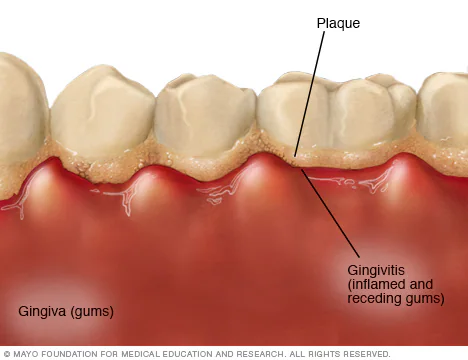
This is where it all begins. At this stage, no permanent damage has been done yet, which is why it is so important to catch it early.
Signs to watch for:
- Gums bleed when you brush or floss
- Gums look red or puffy
- Mild bad breath that does not go away
- No pain (this is why most people miss it)
Good news: Gingivitis is 100% reversible with a professional cleaning and better brushing habits at home.
Stage 2: Early Periodontitis
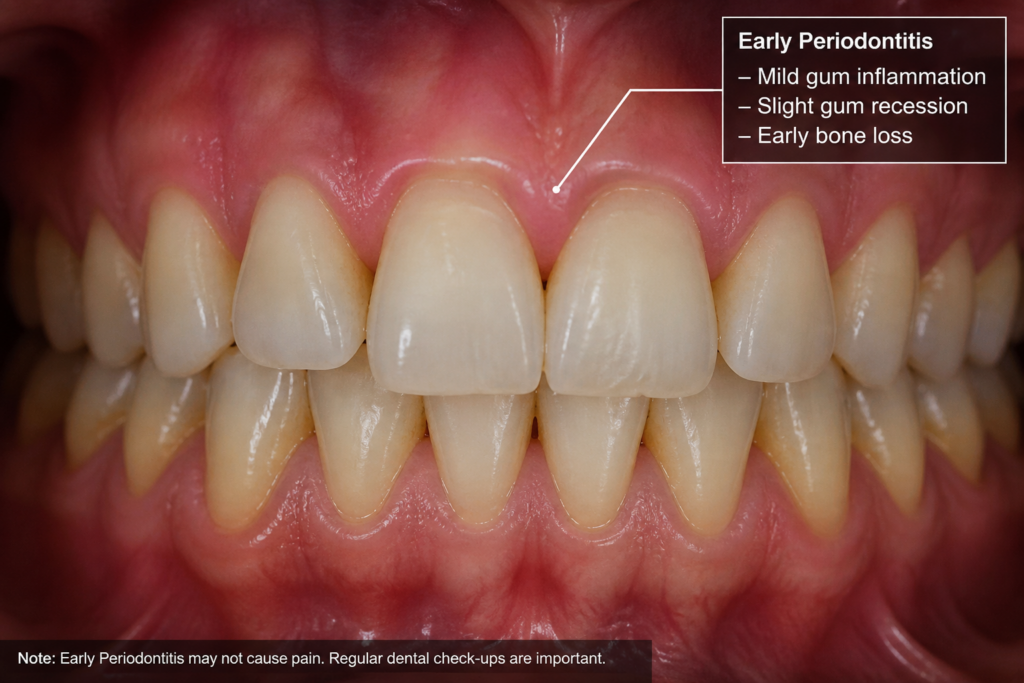
If gingivitis is ignored, the infection moves below the gum line and starts affecting the bone.
Signs at this stage:
- Pockets forming between gums and teeth
- Increased sensitivity to hot and cold foods
- Persistent bad breath
- Slight bone loss visible on dental X-rays
Treatment needed: A deep cleaning called scaling and root planing to remove bacteria from below the gum line.
Stage 3: Moderate Periodontitis
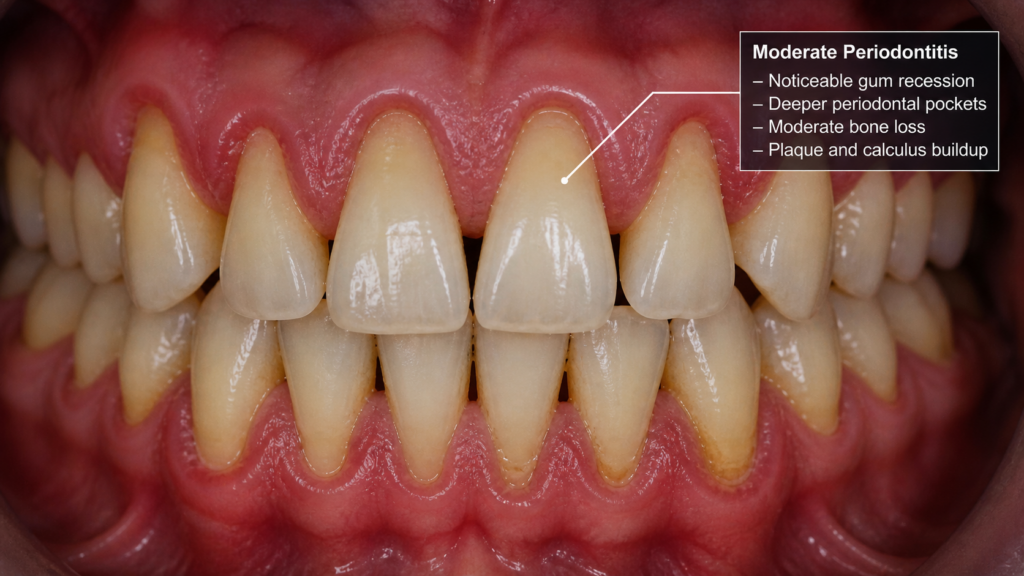
The infection has now caused significant bone and tissue damage. Teeth may start feeling loose.
Signs at this stage:
- Teeth feel loose or have shifted position
- Pain when chewing
- Gums look like they are shrinking back
- Pus between teeth and gums in some cases
At this stage, deep cleaning alone may not be enough. Surgical treatment may be required.
Stage 4: Severe (Advanced) Periodontitis
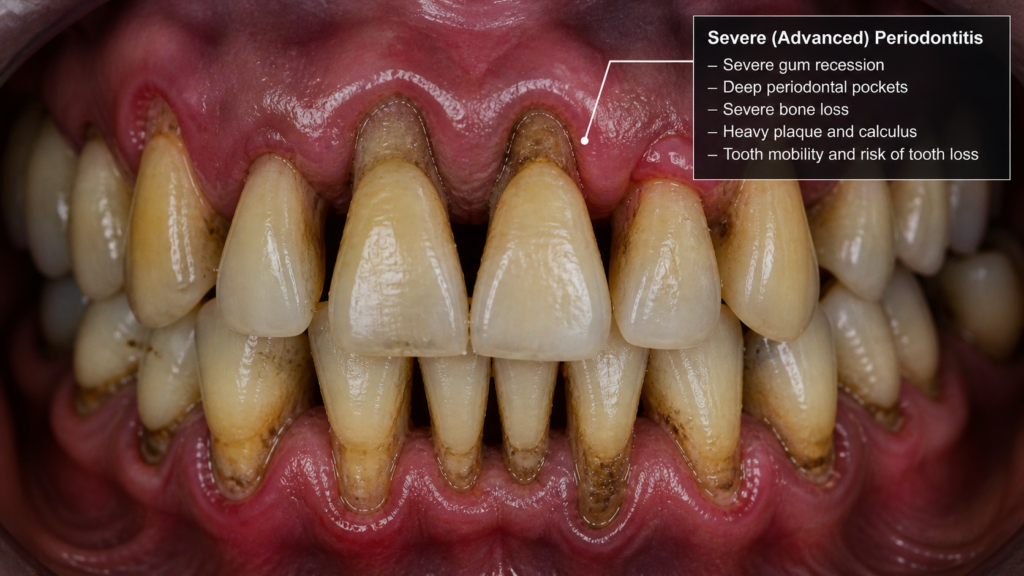
This is the most serious stage. Tooth loss is very likely without immediate treatment.
Signs at this stage:
- Severe bone and tissue destruction
- Very loose teeth or missing teeth
- Chewing is painful or very difficult
- Major changes in the way your bite feels
Treatment at this stage often involves gum surgery, bone grafts, or tooth extractions followed by dental implants.
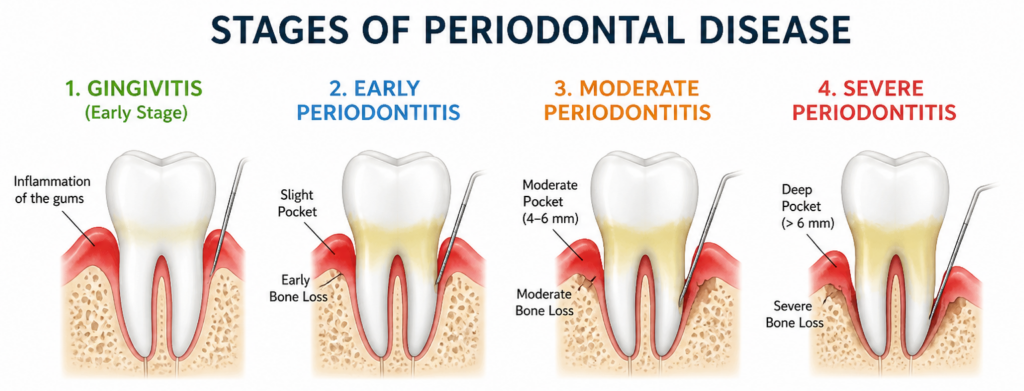
Stages at a Glance
| Stage | Bone Loss | Reversible? | Treatment |
|---|---|---|---|
| Gingivitis | None | Yes, fully | Professional cleaning and better hygiene |
| Early Periodontitis | Mild | Partially | Scaling and root planing |
| Moderate Periodontitis | Moderate | No | Deep cleaning and possible surgery |
| Severe Periodontitis | Severe | No | Surgery, bone graft, or extraction |
What Causes Gum Disease?
Gum disease does not happen overnight. It builds up slowly due to a mix of habits and health factors.
Common causes include:
- Poor oral hygiene: Not brushing or flossing regularly is the number one cause
- Smoking or tobacco use: Smokers are significantly more likely to develop gum disease
- Diabetes: Makes it harder for the body to fight infections, including in the gums
- Hormonal changes: Pregnancy and menopause can make gums more sensitive
- Certain medications: Some drugs cause dry mouth or gum tissue changes
- Genetics: Some people are more naturally prone to gum problems
- Stress: Weakens the immune system and reduces the body’s ability to fight infection
Warning Signs You Should Never Ignore
Gum disease is often painless in the early stages. Most people wait for pain before visiting a dentist. Do not make that mistake.
See a dentist if you notice any of these:
- Gums that bleed regularly during brushing or eating
- Red, swollen, or dark-coloured gums
- Bad breath that keeps coming back even after brushing
- Teeth that look longer than usual (gum recession)
- Teeth that feel loose or have moved
- Sensitivity near the gum line
- Pus or soreness around the teeth
Simple rule: Healthy gums do not bleed. If yours do, visit a dentist in Vasanth Nagar before it gets worse.
How Is Gum Disease Treated?
Treatment depends on how advanced the gum disease is.
Non-Surgical Options
- Professional Scaling and Cleaning: Removes plaque and tartar from above and below the gum line
- Root Planing: Smooths rough root surfaces so bacteria cannot easily stick
- Antibiotics: Sometimes prescribed alongside cleaning to control bacterial infection
Surgical Options (for advanced cases)
- Flap Surgery: The gum is gently lifted to clean deep pockets of infection
- Bone Grafts: Replaces bone that was destroyed by the infection
- Gum Grafts: Covers exposed roots and helps rebuild gum tissue
- Guided Tissue Regeneration: Encourages new bone and tissue growth
Gum Disease and Your Overall Health
Here is something most people do not realise: gum disease affects more than just your teeth.
Research has linked untreated gum disease to serious health conditions across the body.
| Health Condition | How Gum Disease Is Connected |
|---|---|
| Heart Disease | Bacteria from gums can enter the bloodstream |
| Diabetes | Gum disease makes blood sugar harder to manage |
| Pregnancy Complications | Linked to premature birth and low birth weight |
| Respiratory Disease | Bacteria can be inhaled into the lungs |
| Alzheimer’s Disease | Some studies suggest a possible connection |
This is why expert dental care for gum problems is about protecting your whole body, not just your smile.
How to Prevent Gum Disease
Prevention is simple. It just takes consistency.
- Brush twice a day using a soft-bristled toothbrush
- Floss every day to clean between teeth where your brush cannot reach
- Use an antibacterial mouthwash to reduce bacteria in the mouth
- Stop smoking or using any form of tobacco
- Eat a balanced diet and cut back on sugary foods and drinks
- Drink enough water throughout the day to avoid dry mouth
- Visit your dentist every 6 months for a professional clean and check-up
These habits take under 10 minutes a day and can save you from years of dental problems.
In Conclusion
Gum disease is one of the most common dental problems in adults, and one of the most ignored. It does not hurt in the early stages, which is exactly why most people miss it until real damage has been done.
The four stages move fast. What starts as a little bleeding and redness can quietly progress to bone loss, loose teeth, and eventually tooth loss, often without a single moment of pain warning you.
But here is the thing. Caught early, gum disease is completely reversible. A professional cleaning, better brushing habits, and regular check-ups are all it takes at the gingivitis stage. If you are looking for a reliable dental clinic in Bangalore that specialises in gum care, Beyond Dental is here to help.
Do not wait for pain to be your signal. If your gums bleed, look red, or feel swollen, that is your body telling you something is off. Listen to it.
At Beyond Dental, our team is here to help you get your gum health back on track. From professional cleanings to advanced gum treatments, we make it simple and stress-free
Frequently Asked Questions About Gum Disease
Can gum disease be fully cured?
Yes, but only in the earliest stage (gingivitis). Once it becomes periodontitis, it can be controlled and managed, but the bone and tissue damage cannot be fully reversed. The earlier you treat it, the better the outcome.
Is gum disease contagious?
The bacteria that cause gum disease can spread through saliva, such as through kissing or sharing utensils. However, catching the bacteria does not guarantee you will develop gum disease. Good oral hygiene keeps your risk very low.
Why do my gums bleed when I brush?
Bleeding gums almost always mean your gums are inflamed due to plaque buildup. This is the earliest sign of gingivitis. It is your body telling you something is wrong. Do not ignore it.
Can children get gum disease?
Yes. Children can develop gingivitis, especially during puberty when hormonal changes make gums more sensitive. Teaching good brushing and flossing habits early is the best prevention.
How often should I visit the dentist for gum health?
For healthy gums, every 6 months is the standard recommendation. If you already have gum disease, your dentist may ask you to come in every 3 to 4 months for monitoring and maintenance.
Does gum disease always lead to tooth loss?
Not always, but advanced gum disease is one of the leading causes of tooth loss in adults. Catching it early and treating it properly significantly reduces the risk of losing teeth.
.