
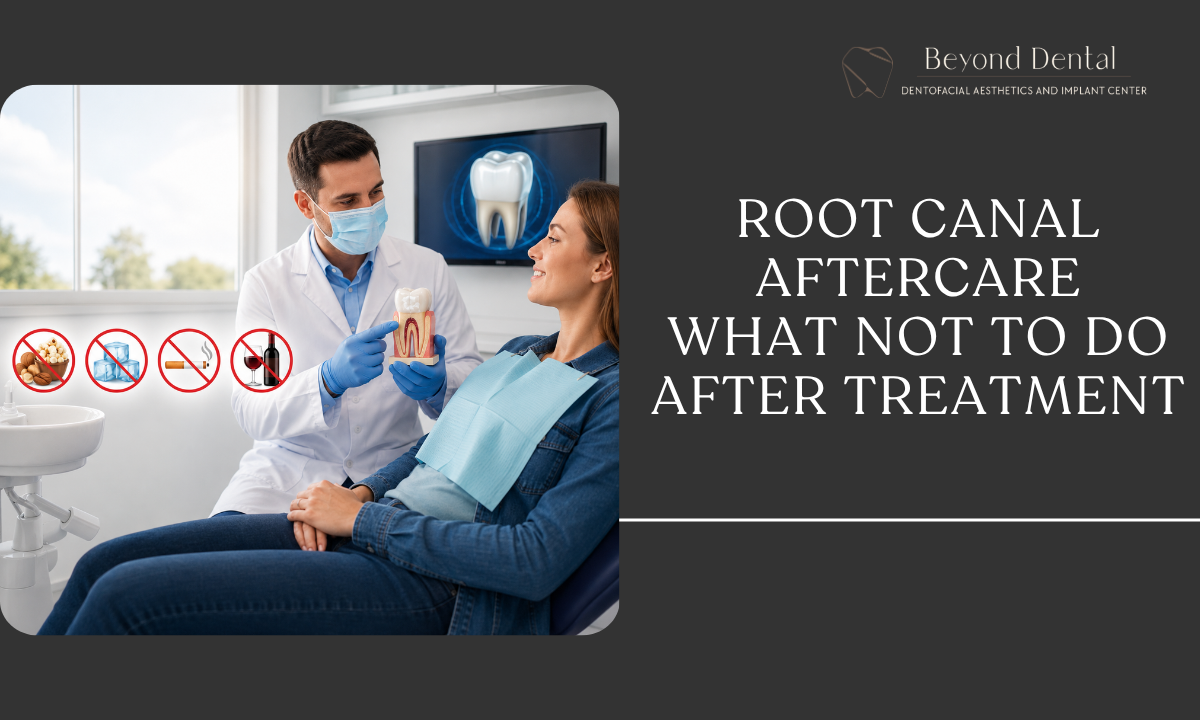
A root canal carries a far scarier reputation than it deserves. The treatment itself is routine and, with modern techniques, usually painless. What very few people talk about is the part that actually decides how well you recover: the aftercare. The days right after your appointment matter just as much as the procedure in the chair. Good root canal after care protects the tooth, keeps infection away, and gets you back to normal quickly. Get it wrong, and you risk a cracked tooth, a dislodged filling, or an avoidable flare-up.
If you have just finished root canal treatment, or you are about to, this guide covers everything you need: what the procedure involves, what not to do, what you should do instead, how long healing takes, and the warning signs that mean you should call your dentist.
At Beyond Dental, our Clinical Director, Dr Chinmaya Bhandary, has guided hundreds of patients through recovery after RCT treatment, and the advice here reflects what genuinely works in practice rather than generic textbook tips.
Understanding the Root Canal Procedure
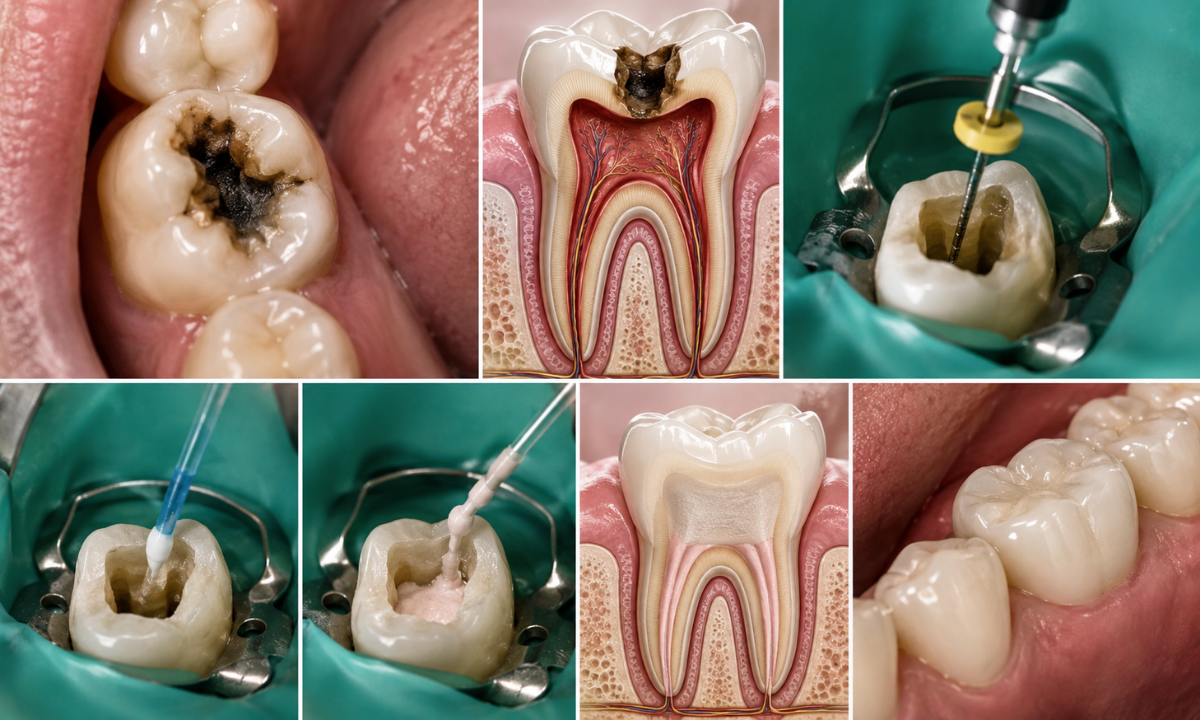
To care for your tooth properly, it helps to understand what actually happens during the root canal procedure. Inside every tooth is a soft core called the pulp, made up of nerves and blood vessels. When decay, a deep cavity, a crack, or repeated dental work allows bacteria to reach this pulp, it becomes infected or inflamed. That is what causes the throbbing, lingering pain many people associate with needing a root canal.
During treatment, the dentist numbs the area, removes the infected pulp, then cleans, shapes and disinfects the hollow canals inside the tooth. Once the inside is sterile, the canals are sealed with a biocompatible material to prevent bacteria from returning. Most root canals could have been avoided with earlier care, which is why ignoring a cavity for too long so often leads to this stage. This answers one of the most common worries patients have.
What Not to Do After a Root Canal
This is the section most people wish they had read sooner. Knowing what not to do after root canal treatment is what protects the work that has been done. The tooth is in a vulnerable in-between stage, especially before the permanent crown is fitted, so a little caution goes a long way.
Here is what to avoid in the first few days:
- Do not chew on the treated side. Before the permanent crown is in place, the tooth is held together by a temporary filling and is far weaker than it looks. Biting down on that side can crack it.
- Do not eat hard, crunchy or sticky foods. Nuts, chikki, hard chocolate, popcorn, ice and chewing gum are all risky. They can break the tooth or pull out the temporary filling, and many of these are among the foods that quietly damage your teeth even at the best of times.
- Do not eat very hot or very cold foods. While the tooth is settling, extreme temperatures can trigger uncomfortable sensitivity.
- Do not smoke. Tobacco slows healing, reduces blood supply to the area, and raises your risk of complications and reinfection.
- Avoid alcohol until your treatment is complete, especially while you are on antibiotics or painkillers, as it can interfere with how these medicines work and slow your recovery.
- Do not skip or delay your crown appointment. A tooth left without its permanent crown for weeks is one of the most common reasons a treated tooth eventually fractures.
- Do not poke the area with your tongue, finger or a toothpick. It is tempting, but it only irritates the healing tissue.
- Do not ignore worsening pain. Mild discomfort that improves day by day is expected. Pain that increases is a signal to call your clinic.
If you ever find yourself wondering what to avoid after a root canal, the simplest rule is this: be gentle with the tooth, keep it clean, and give it time. Almost every aftercare instruction comes back to those three ideas.
What You Should Do After RCT Treatment
Aftercare is not only about restrictions. The right habits actively speed up healing and keep you comfortable during recovery.
Here is what genuinely helps in the days after your appointment:
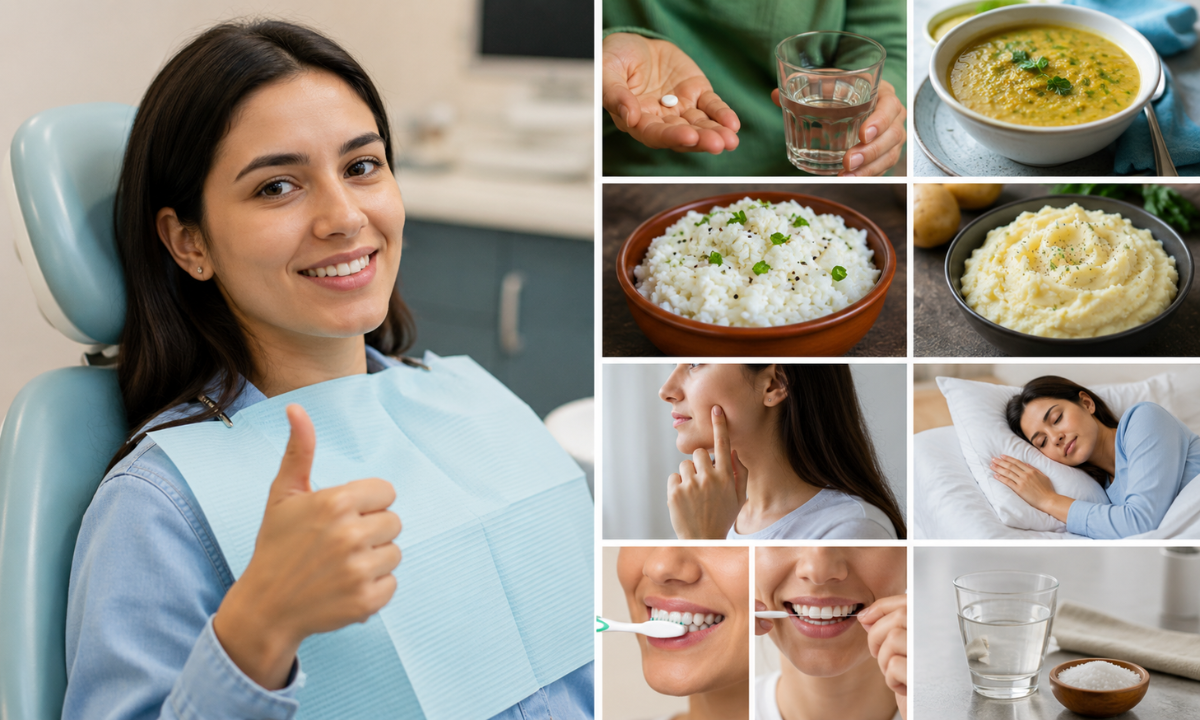
- Take any prescribed painkillers or antibiotics exactly as directed, and finish the full course of antibiotics even if you feel fine.
- Eat soft, nourishing foods such as curd rice, khichdi, dal, mashed potato, idli, soup, bananas and smoothies.
- Chew on the opposite side of your mouth until the permanent crown is fitted.
- Keep your head slightly elevated on the first night to help reduce any throbbing.
- Continue brushing and flossing as normal, simply being gentle around the treated tooth.
- Use a warm saltwater rinse to soothe the area and keep it clean.
For an easy reference, here is a side-by-side summary you can keep in mind:
| Do | Avoid |
|---|---|
| Soft foods like khichdi, curd rice and soup | Hard or crunchy foods like nuts, chikki and ice |
| Chew on the opposite side | Chewing on the treated tooth |
| Gentle brushing and flossing | Poking the area with a tongue or a toothpick |
| Take medicines exactly as prescribed | Smoking and alcohol |
| Attend your crown appointment on time | Delaying the permanent crown |
| Lukewarm foods and drinks | Very hot or very cold foods |
Sticking to this in the first week makes a real difference to how smoothly you heal after RCT treatment.
Can I Use Mouthwash or Rinse My Mouth After a Root Canal?
Oral hygiene worries a lot of patients, because nobody wants to undo the dentist’s work by cleaning too aggressively. A very common question is whether you can use mouthwash after a root canal. The answer is yes, but wait at least 24 hours, and choose an alcohol-free mouthwash, since alcohol can sting and irritate the healing tissue.
For the first few days, a gentle warm salt water rinse is even better than commercial mouthwash. Dissolve half a teaspoon of salt in a glass of lukewarm water and rinse softly two or three times a day, particularly after meals. Salt water is mildly antibacterial, soothes inflammation and helps keep food away from the treated area.
So if you are wondering whether you can rinse your mouth after a root canal, you absolutely can. The key is to be gentle. Avoid vigorous swishing in the first couple of days, as too much force can disturb a temporary filling.
How Long Does a Root Canal Take to Heal?

Healing happens in stages, which is why the answer is not a single number. Most patients feel noticeably better within a few days as the original infection clears and the anaesthetic fully wears off. Any mild tenderness when biting usually settles within one to two weeks. Beneath the surface, the surrounding bone and tissue continue to heal quietly over a few months, but this deeper recovery should not cause you any pain or interfere with daily life.
If you are wondering how long a root canal takes to heal in your particular case, the honest answer is that it depends on how severe the infection was beforehand and how closely you follow your aftercare. A tooth treated early, in someone who avoids hard foods and attends their crown appointment, tends to recover fastest.
Does a root canal hurt after the procedure? Some soreness or sensitivity when biting is normal for the first few days while the tissue around the root recovers. This is mild, expected, and easily managed with the pain relief your dentist prescribes. According to the NHS, a treated tooth should settle and feel normal again within a couple of weeks, while persistent or severe pain is worth getting checked.
The important distinction is between discomfort that fades and pain that grows. Soreness easing day by day is healing. Pain that intensifies, throbs or spreads is not, and it deserves a call to your clinic.
Aftercare for a Root Canal and Crown
Once your permanent crown is fitted, life gets much simpler. The crown restores the tooth’s full strength, so you can return to eating normally, including on that side. That said, a crowned tooth is not invincible and still needs everyday care.
Brush twice a day and floss gently around the crown, since the gum line where the crown meets the tooth is where problems tend to start. Avoid using the tooth to crack hard items like ice, betel nut or bones, and never use your teeth to open packets or bottle caps. Keep up your routine dental check-ups so your dentist can make sure both the crown and the natural tooth beneath it stay healthy. With sensible care, a well-treated root canal tooth with a good crown can last many years, often a lifetime.
When to See a Dentist
Most recoveries are smooth, but it is worth knowing the warning signs that need prompt attention rather than a wait-and-watch approach. Contact your clinic if you notice severe or increasing pain, swelling of the gum, cheek or face, a temporary filling that has fallen out, a return of the original symptoms, or a persistent bad taste that is not clear. These are not things to tolerate at home.
If you are searching for reliable RCT treatment in Vasanth Nagar, Bangalore, the team at Beyond Dental can assess your tooth, address any complications early, and guide your recovery from start to finish. For a routine post-treatment review or any general concern, our experienced dentist in Vasanth Nagar, Bangalore, is always happy to help you stay on track.
Final Thoughts
A root canal does most of the hard work in saving your tooth, but the recovery is genuinely in your hands. The first week matters most, so stick to soft foods, chew on the opposite side, and be gentle around the treated tooth until your permanent crown is in place. Keep up your follow-up appointments, maintain your usual brushing and flossing, and give the tooth a little time to settle. Do that, and there is every chance it will stay healthy and pain-free for years, often a lifetime. If anything feels off during recovery, such as rising pain or swelling, do not wait it out. A quick check with your dentist is always the safer, smarter choice.
Frequently Asked Questions
Do you retain the natural tooth in a root canal procedure?
Yes. The whole purpose of a root canal is to save your natural tooth by removing the infection inside it rather than extracting the tooth. A crown is usually fitted afterwards to protect and strengthen it.
What should you not do after a root canal?
Avoid chewing on the treated side, eating hard, sticky, or very hot and cold foods, smoking, drinking alcohol, and delaying your permanent crown. Be gentle with the tooth until it is fully restored.
Will I lose my tooth after a root canal?
No. The whole purpose of the root canal procedure is to save your natural tooth by removing the infection inside it rather than extracting it. A crown is usually fitted afterwards to protect and strengthen it, and the team at our dental clinic in Vasanth Nagar, Bangalore, can guide you through every step.
Can I rinse my mouth after a root canal?
Yes. Gentle rinsing, especially with warm salt water, helps keep the area clean. Just avoid vigorous swishing for the first couple of days so you do not disturb a temporary filling.
How long does a root canal take to heal?
Most people feel better within a few days, with mild tenderness settling in one to two weeks. Deeper tissue healing continues quietly over a few months without causing discomfort.
How long does a root canal take to heal?
Most people feel better within a few days, with mild tenderness settling in one to two weeks. Deeper healing of the tissue around the root continues quietly for a few months, though it should not cause you any discomfort or get in the way of daily life. If you want your recovery reviewed or need root canal treatment in Vasanth Nagar, Bangalore, our dentists can check that the tooth is healing as it should.
Does a root canal hurt after the procedure?
Some mild soreness or sensitivity when biting is normal for a few days and is easily managed with prescribed pain relief. Severe or worsening pain is not normal and should be checked by your dentist.
What can I eat after a root canal?
Stick to soft foods such as curd rice, khichdi, dal, soup, idlis, and bananas, and chew on the opposite side until your permanent crown is fitted.