
Most people know they have a cavity and put off getting it treated. Life gets busy, the pain comes and goes, and it never feels urgent enough to book an appointment.
But a cavity does not stay a cavity forever. The longer it is left untreated, the worse it gets. And what starts as a simple one appointment fix can turn into something far more complicated, painful, and expensive over time.
This blog breaks down exactly what happens when a cavity is ignored, what the warning signs are, and why early treatment always makes life easier.
What Is a Cavity?
A cavity is a small hole in the tooth caused by decay. It starts on the outer layer of the tooth, the enamel, and slowly works its way deeper into the tooth structure if left alone.
The process begins when bacteria in the mouth feed on sugar and starch from food and produce acids as a byproduct. These acids attack the enamel over time, weakening it and eventually breaking through. Once the enamel is breached, the decay moves inward toward the softer, more sensitive layers of the tooth.
The tricky part is that early stage cavities cause no pain at all. There are no obvious symptoms, no sensitivity, nothing that feels wrong. This is exactly why so many people walk around with a cavity for months or even years without realising it.
How a Cavity Progresses Over Time
Tooth decay does not stay in one place. It moves through the tooth in stages and each stage is more serious than the one before it.
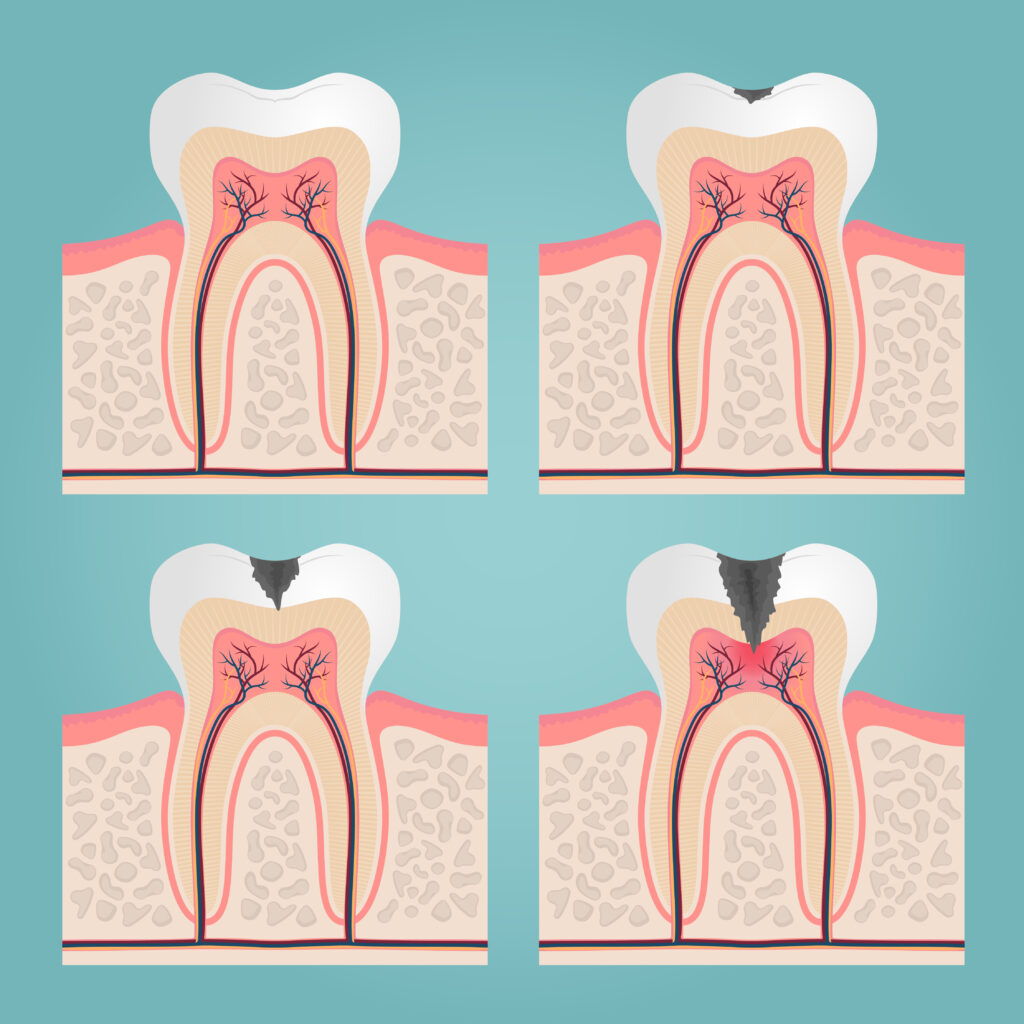
| Stage | What Is Happening | What You Might Feel |
|---|---|---|
| Stage 1 | Enamel starts to weaken and break down | Nothing at all |
| Stage 2 | Decay reaches dentine, the layer beneath enamel | Mild sensitivity to sweet or cold foods |
| Stage 3 | Decay reaches the pulp where the nerve lives | Throbbing pain, sensitivity to heat |
| Stage 4 | Infection spreads to surrounding bone and tissue | Severe pain, swelling, possible fever |
Most people only book a dental appointment somewhere around Stage 3 when the pain becomes impossible to ignore. By that point the treatment required is significantly more involved than it would have been at Stage 1 or 2. A filling that would have taken 30 minutes at Stage 1 has now become a root canal.
The Real Consequences of Waiting
This is what most people do not fully picture when they decide to put off a dental visit.
A cavity at Stage 1 or 2 needs a simple filling. The decayed part of the tooth is removed, cleaned, and filled with a tooth coloured composite material. One appointment, minimal discomfort, and it is done.
A cavity at Stage 3 means the decay has reached the pulp of the tooth where the nerve and blood supply live. At this point a root canal treatment is needed. The infected pulp is removed, the canals inside the tooth are cleaned and sealed, and a crown is placed on top to protect the tooth. It is a longer process and a significantly bigger investment compared to a filling.
A cavity at Stage 4 means the infection has spread beyond the tooth itself into the surrounding gum tissue and bone. This can require advanced gum treatment to address the damage to the supporting structures. In the most serious cases the tooth cannot be saved and needs to be extracted entirely.
Extraction then opens up another set of decisions. A missing tooth needs to be replaced to prevent bone loss, shifting of surrounding teeth, and changes to the bite. This means looking into implants, bridges, or dentures. What started as a cavity that could have been fixed in one appointment has now become a multi-step, multi-visit treatment process.
Warning Signs That a Cavity Has Already Progressed
Because early cavities cause no symptoms, most people only notice something is wrong once the decay has moved deeper. Here are the signs worth paying attention to:
- Toothache that comes and goes or feels constant
- Sharp pain when biting down on food
- Sensitivity to hot or cold that lingers after the food or drink is gone
- Sensitivity to sweet foods or drinks
- A visible dark spot, hole, or discolouration on the tooth
- Bad breath or a persistent bad taste in the mouth that does not go away with brushing
- Swelling around the tooth, jaw, or gums
- A small bump or pimple like swelling on the gum near the affected tooth
Any one of these is a reason to book a check-up. More than one at the same time and it is urgent.
Can a Cavity Heal on Its Own?
This is one of the most searched questions about cavities and the honest answer is no. Once decay has broken through the enamel and formed a cavity, it cannot reverse itself. The hole does not close, the decay does not stop, and the tooth does not repair the damage on its own.
What can be slowed down is very early stage enamel weakening, before a cavity has fully formed. This is called demineralisation and it can sometimes be addressed with fluoride treatments, remineralising toothpaste, and dietary changes. But this window is small and most people do not even know it is happening because there are no symptoms.
Once the cavity is there, it needs professional treatment. There is no home remedy, supplement, or habit that will fix it.
What Speeds Up Cavity Formation
Some people are more prone to cavities than others due to saliva composition, genetics, and existing dental conditions. But diet plays a very significant role for almost everyone.
Sugary and acidic foods and drinks are the biggest contributors to enamel erosion and cavity formation. Frequent snacking throughout the day, slow sipping of sweet drinks, and sticky foods that cling to teeth all accelerate the process significantly. If this is something worth looking into more, the blog on foods that are secretly damaging your teeth covers the most common dietary culprits in detail.
Dry mouth is another factor. Saliva neutralises acids and helps protect enamel naturally. People who have reduced saliva, whether from medication, dehydration, or other causes, are at higher risk of developing cavities faster.
What Treating a Cavity Actually Involves
A lot of people avoid the dentist because the treatment feels more intimidating than it actually is. Here is an honest breakdown of what each stage of treatment looks like.
Early cavity treated with a filling
The decayed material is removed using a drill, the area is cleaned, and the cavity is filled with a tooth coloured composite resin. The tooth looks and functions completely normally afterwards. Most people are in and out within 45 minutes and feel fine the same day.
Advanced cavity treated with a root canal
The infected pulp tissue inside the tooth is removed through the top of the tooth. The root canals are cleaned, shaped, and filled with a rubber like material called gutta percha. A crown is then placed over the tooth to protect it long term. The procedure is done under local anaesthesia and most patients find it far less uncomfortable than they expected. The pain people associate with root canals is usually the infection before treatment, not the procedure itself.
Severely infected tooth requiring extraction
If the tooth structure is too damaged or the infection too advanced to save the tooth, extraction is the final option. The gap is then assessed for replacement options. Leaving a gap unfilled leads to the surrounding teeth gradually shifting, bone loss at the extraction site, and changes to the overall bite over time.
The Connection Between Cavities and Gum Health

Something many people do not realise is that untreated cavities can directly affect gum health. When decay reaches the base of the tooth near the gum line, bacteria and infection spread into the surrounding gum tissue. This can trigger or worsen gum disease, causing inflammation, bleeding, and eventually damage to the bone that holds the tooth in place.
Gum disease and tooth decay often go hand in hand in patients who have been avoiding dental visits for a long time. Treating one without addressing the other rarely leads to a good long term outcome. A thorough dental check-up looks at both the teeth and the gums together.
How Regular Check-ups Catch Cavities Early
The most reliable way to catch a cavity before it causes symptoms is through routine dental visits. Dentists use X-rays to identify decay between teeth and in areas that are not visible to the naked eye. Many cavities are caught and treated at Stage 1 or 2 this way, long before any pain or sensitivity develops.
If you are not sure how frequently you should be visiting a dentist, this guide on how often you should really visit the dentist is a practical starting point.
The general recommendation for most adults is every six months. For people with a history of frequent cavities, gum disease, or other dental concerns, more frequent visits may be advised.
The Simple Takeaway
Cavities are one of the most common dental problems and also one of the most preventable and treatable when caught early. The only thing that turns a straightforward cavity into a complex problem is time.
A filling is quick, comfortable, and affordable. A root canal, gum treatment, or extraction is none of those things. The difference between the two is almost always just how long the cavity was left alone.
If there is a cavity you have been putting off, or if you simply have not had a check-up in a while, it is worth booking one sooner rather than later. Getting it looked at early is always the better option.
Book a check-up at Beyond Dental, Vasanth Nagar, Bangalore and get it assessed before it becomes a bigger problem.
FAQ’s
Q1. Does a cavity always hurt?
No. Early stage cavities cause no pain at all. Pain usually begins when the decay has reached the deeper layers of the tooth close to the nerve. By that point the cavity has already progressed beyond what a simple filling can fix.
Q2. How long does it take for a cavity to get serious?
It varies from person to person depending on diet, oral hygiene, saliva composition, and genetics. In some cases decay can progress quickly over a few months. In others it moves slowly over a year or more. There is no reliable way to know without a dental examination.
Q3. Can I wait until it hurts before getting treatment?
Waiting for pain is one of the most common mistakes people make with cavities. Pain means the decay has already reached the nerve, which means a root canal is likely needed rather than a filling. Waiting for symptoms always results in more complex and more expensive treatment.
Q4. Is a root canal as bad as people say?
No. Root canals have a reputation far worse than the reality. The procedure is done under local anaesthesia and most patients find it comparable to getting a filling in terms of discomfort. The pain people associate with root canals is the infection before treatment, not the procedure itself.
Q5. What happens if a cavity is left completely untreated for years?
The infection can spread from the tooth into the surrounding gum, bone, and in serious cases into the jaw and neck. A dental abscess that goes untreated can become a medical emergency. This is uncommon but entirely preventable with timely treatment.
Q6. Where can I get a cavity checked in Bangalore?
Beyond Dental in Vasanth Nagar, Bangalore offers routine check-ups, fillings, root canal treatment, and full dental assessments. Early detection makes treatment significantly simpler and more affordable.