
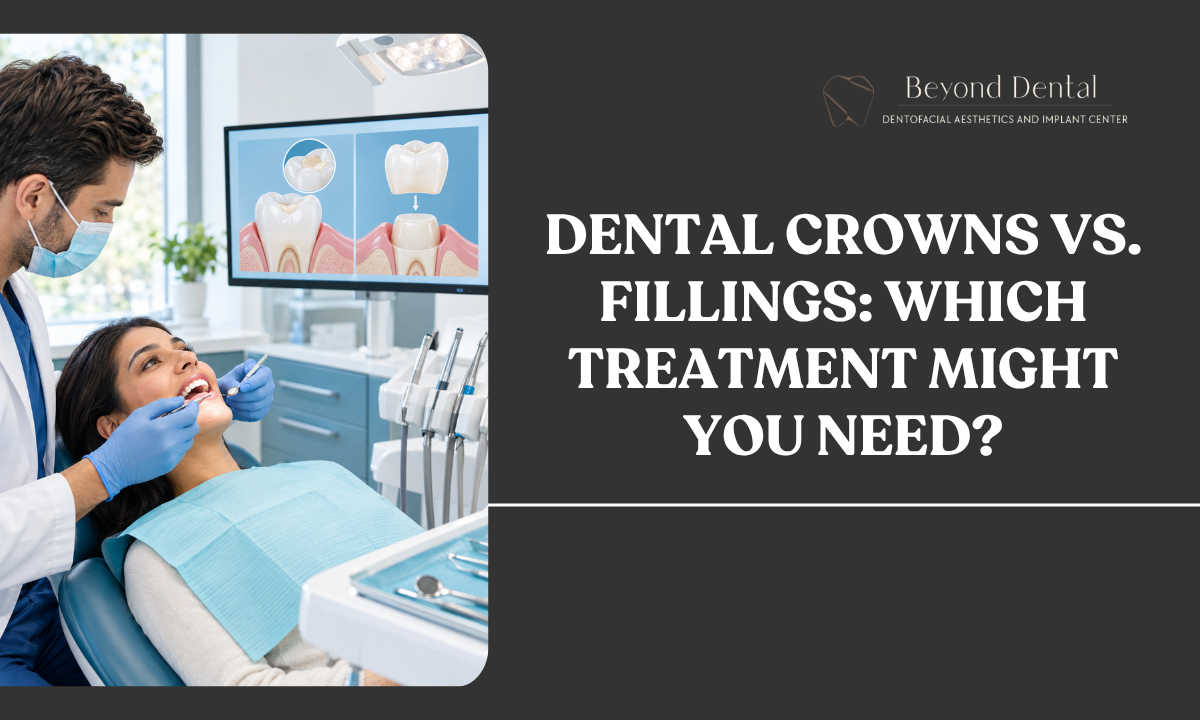
A cavity or a cracked tooth can leave you wondering whether a filling will be enough or whether you need a dental crown. The answer depends on three things: how much healthy tooth remains, where the damage is, and whether the tooth can withstand normal biting forces.
This guide explains the difference between a crown and a filling, what a dentist looks at before recommending either, and which questions are worth asking at your appointment. Only an examination can tell you what is right for your tooth.
Key Takeaways
- A filling repairs a smaller area when enough strong tooth structure remains.
- A crown covers and protects a tooth that is more extensively weakened.
- The decision depends on an examination (and often an X-ray), not on symptoms alone.
- Ask your dentist about alternatives, including inlays and onlays, and how much healthy tooth can be preserved.
What Does a Filling Do?
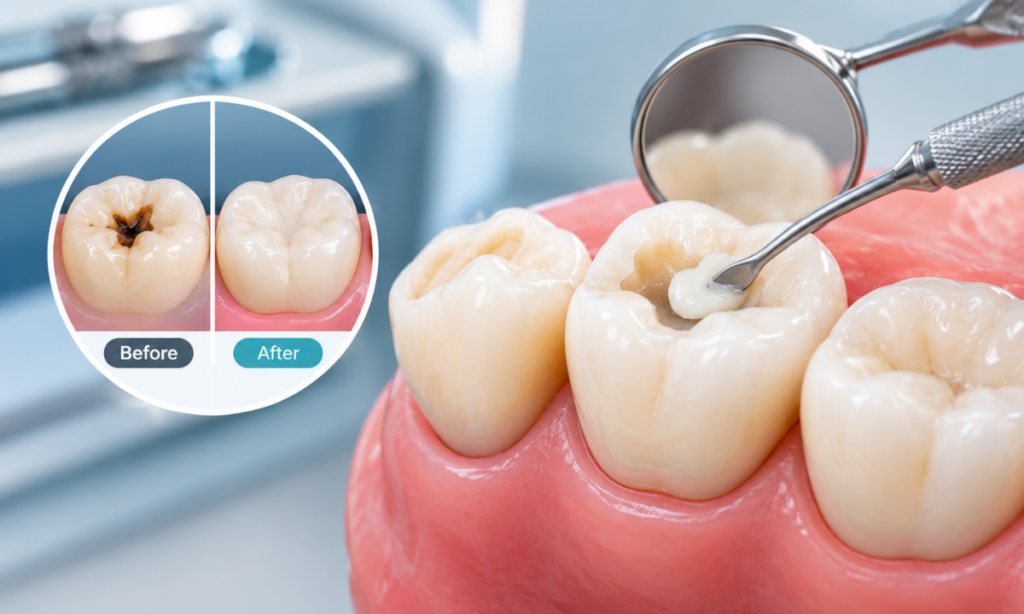
A filling repairs a limited area of damage. After removing decay or weakened material, the dentist fills the space with a restorative material to rebuild the tooth’s shape and function.
Fillings are usually considered when the damage is small or moderate and enough strong tooth remains to support the repair. The size and position of the cavity matter, especially on a back tooth that handles heavy chewing pressure.
When might a filling be enough?
A filling may be appropriate when:
- Decay is confined to a relatively small area
- The surrounding tooth walls are sound
- The tooth is not at high risk of splitting
Your dentist will also check whether an old filling has worn down or whether decay has formed around its edge. Catching decay early is the best way to keep treatment simple. Our guide to the 5 stages of tooth decay explains how to spot it before it spreads.
What Does a Crown Do?
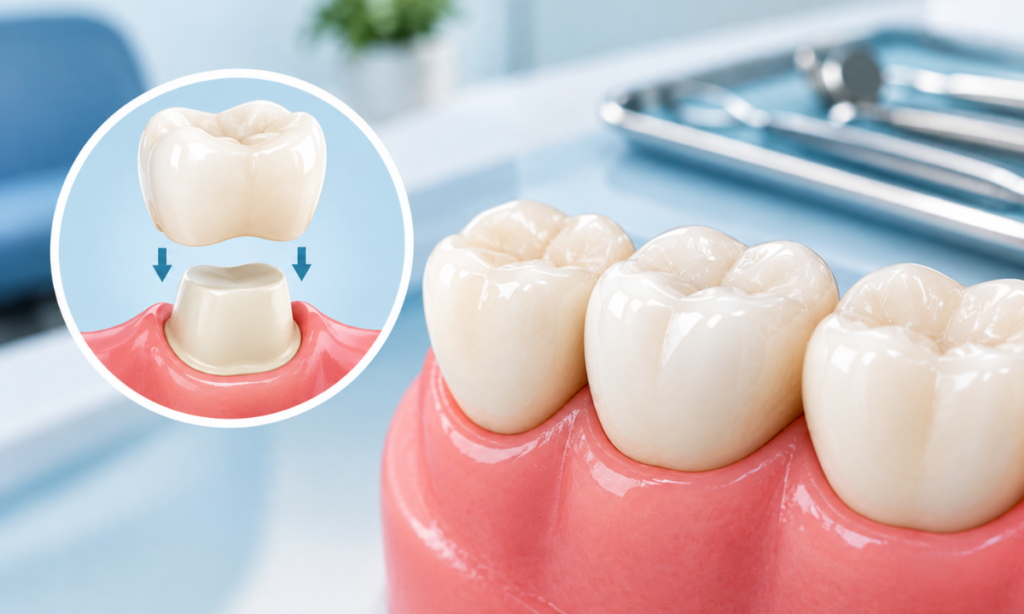
A crown (sometimes called a cap) covers the visible part of a tooth to restore its shape and protect weakened structure. A dentist may consider one when:
- A large cavity or fracture has left too little healthy tooth to hold a filling reliably
- A cracked tooth needs support to withstand biting forces
- A tooth has had root canal treatment and needs added protection
A crown is not automatically the better choice for every cavity. The goal is always to preserve as much healthy tooth as possible while providing a lasting repair. If a crown is advised, our article on which dental crown is best compares the options by tooth type and budget.
Crown vs Filling at a Glance
| Filling | Crown | |
| Best suited to | Small to moderate cavities with strong surrounding tooth | Extensively damaged, cracked or root-canal-treated teeth |
| Coverage | Repairs one area of the tooth | Covers the whole visible part of the tooth |
| Healthy tooth removed | Usually less | Usually more, as the tooth is shaped to fit the crown |
| Typical visits | Often one | Often more than one, depending on the method used |
| Decided by | Clinical examination and imaging | Clinical examination and imaging |
This table is a general guide. Your dentist will advise based on your own tooth.
Is There Something In Between?
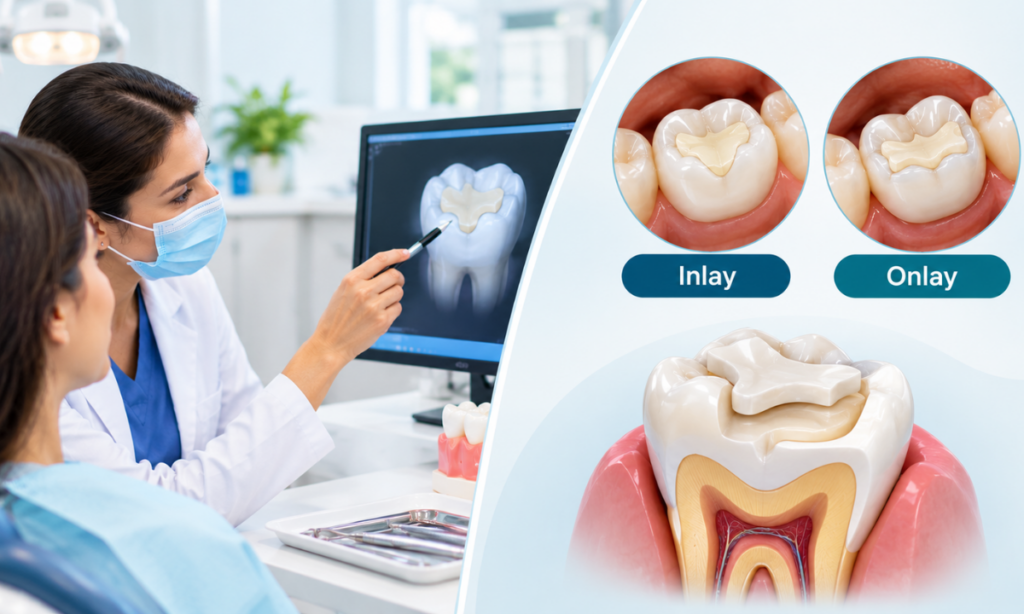
Sometimes.When a cavity is too large for a filling but the tooth is still strong enough to avoid a full crown, a dentist may suggest an inlay or onlay. These are custom-made restorations bonded to the tooth, and they preserve more natural structure than a crown. Read more in our guide to inlays and onlays for teeth.
How Does the Dentist Choose?

Your dentist will:
- Review your symptoms and dental history
- Examine the tooth, including the bite and any old fillings
- Assess the size and location of the damage, using dental imaging when needed
- Explain the likely benefits, limitations, steps and aftercare of each suitable option
Pain alone cannot make this decision. A tooth with little or no pain can still be badly damaged, and a very sensitive tooth may only need a small repair. If cold drinks are the main trigger, see why teeth are sensitive to cold.
Questions to Ask at Your Appointment
- How extensive is the damage?
- How much healthy tooth remains?
- Is the tooth at risk of cracking?
- What are the alternatives, and what are their trade-offs?
- How many visits might treatment take?
- What should I expect during recovery?
- What could happen if I leave the tooth untreated?
The best choice is specific to your tooth and should be made with a qualified dentist after assessment.
When to Book an Appointment
Arrange an evaluation rather than trying to diagnose the problem yourself if you have:
- Tooth pain or lingering sensitivity
- A broken, loose or worn-down filling
- A visible crack or chipped tooth
- Pain when biting down
Putting it off can allow damage to spread, which may limit your options later.
Frequently Asked Questions
Can a large cavity still be filled?
Sometimes, but the dentist must assess how much sound tooth remains and whether it can support a filling.
Does a crown always last longer than a filling?
Not necessarily. Longevity depends on the restoration, the tooth, your bite and your home care. Your dentist can discuss what to expect in your case.
Can I decide based on pain?
No. The amount of pain does not reliably show how much tooth structure is damaged.
Is a crown always needed after a root canal?
Not always, but a root-canal-treated tooth is often weaker, so a crown is commonly considered, particularly for back teeth. Your dentist will advise after examining the tooth.
Will I need an X-ray?
Often, yes. Imaging shows decay between teeth, under existing fillings and near the root, which cannot be judged by eye alone.