
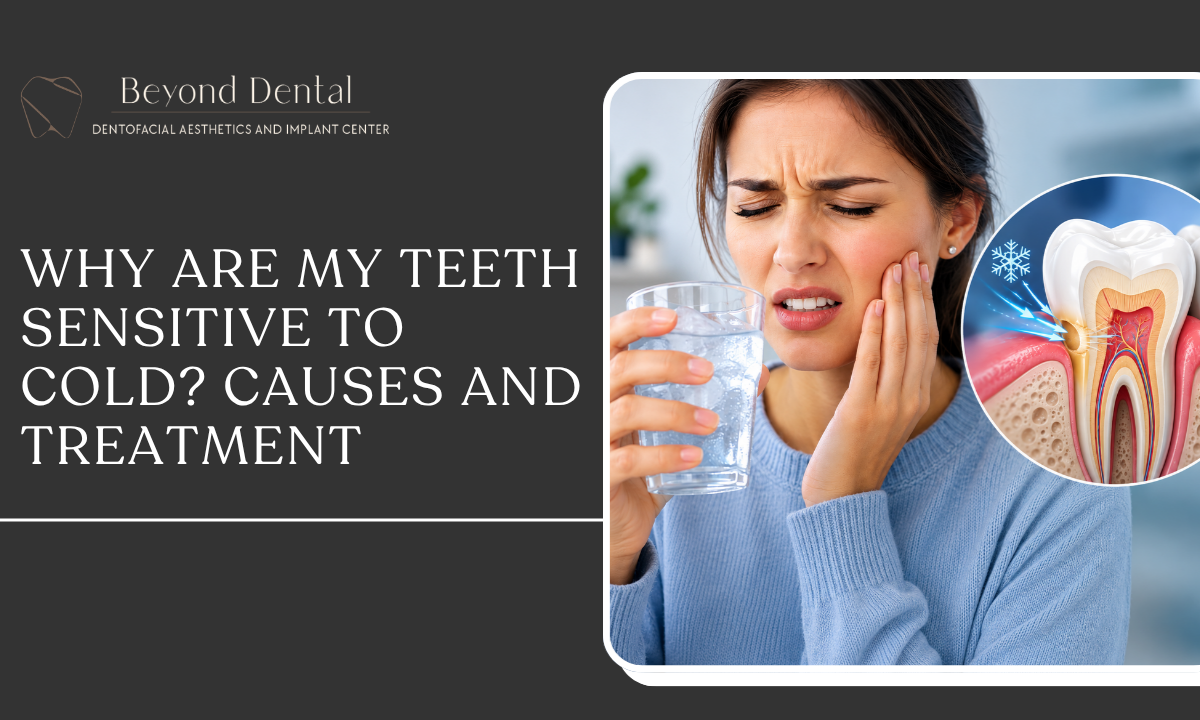
If a sip of cold water or a bite of ice cream sends a sharp jolt through your tooth, you’re dealing with tooth sensitivity to cold, one of the most common dental complaints people bring to a dentist in Vasanth Nagar, Bangalore. It can range from a mild twinge to a sharp, lingering pain, and while it’s rarely an emergency on its own, it’s almost always a sign that something underneath the surface needs attention.
This guide walks through why teeth become sensitive to cold, what’s normal versus what needs a dental visit, and the treatments that actually work.
What Causes Tooth Sensitivity to Cold
Cold sensitivity happens when the protective layers of your tooth are compromised, exposing the dentin underneath. Dentin is riddled with microscopic tubules that lead straight to the nerve, so when cold reaches them, you feel it almost instantly. A few things commonly cause this exposure.
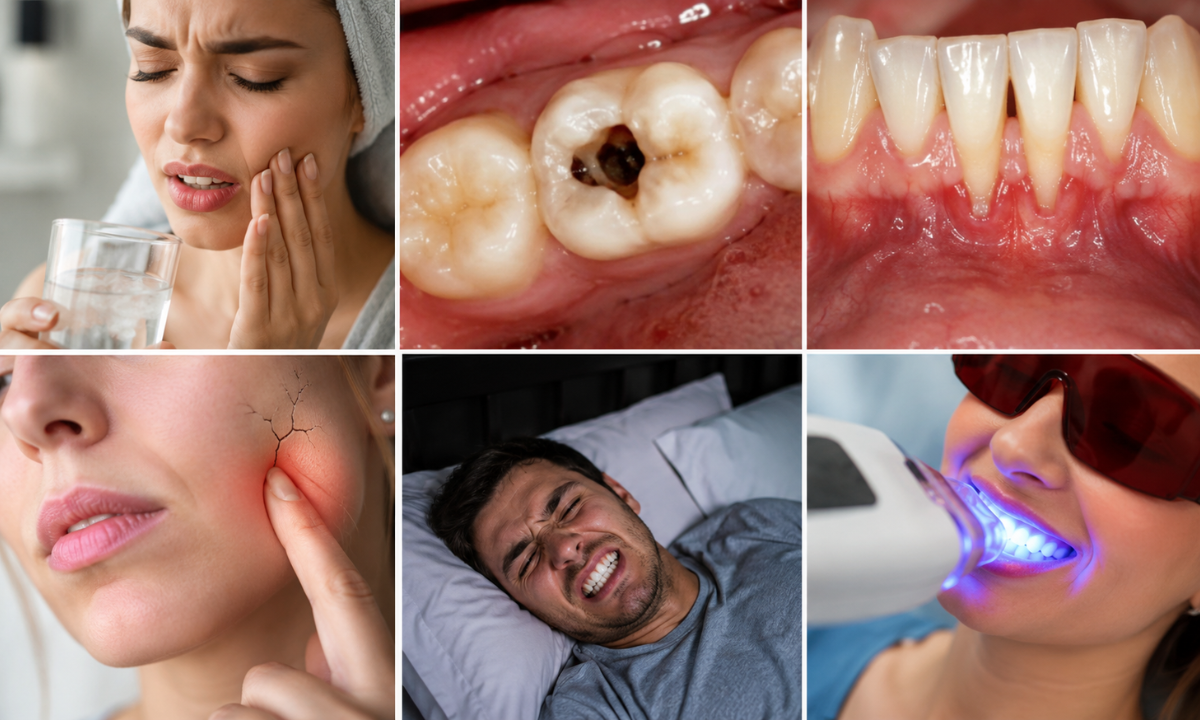
Enamel erosion: Acidic foods and drinks, aggressive brushing, or years of wear can thin the enamel that protects your teeth. Once it thins enough, cold easily reaches the nerve underneath.
Cavity or decay: A cavity forming below the enamel is one of the most frequent causes of new sensitivity. If you’re noticing sensitivity alongside a visible dark spot or hole, it’s worth reading through the tooth decay stages to understand how far it may have progressed.
Receding gums and gum disease: When gums pull back, they expose the tooth root, which has no enamel covering it at all. This is one of the most sensitive areas in the mouth once exposed. Gum recession is often linked to gum disease, so persistent sensitivity near the gumline is worth having checked.
Cracked or chipped teeth: Even a hairline crack can create a direct pathway for cold to reach the nerve, and this type of sensitivity often comes and goes depending on how you bite down.
Teeth grinding (bruxism): Grinding wears down enamel over time and can also cause gum recession, both of which increase cold sensitivity. If you wake up with jaw soreness or a partner has mentioned you grind at night, a mouthguard for teeth grinding is usually the first line of defence.
Recent dental work or teeth whitening: Fillings, cleanings, and especially teeth whitening treatments can all cause temporary sensitivity as the tooth adjusts. This usually settles within a couple of weeks on its own.
Causes at a Glance
| Cause | Typical Trigger | Usually Needs |
|---|---|---|
| Enamel erosion | Acidic food, hard brushing | Desensitizing toothpaste |
| Cavity or decay | Cold, sweet foods | Filling or further treatment |
| Receding gums | Cold air, cold drinks | Gum treatment |
| Cracked tooth | Biting pressure and cold | Dental evaluation, possible bonding |
| Teeth grinding | Cold, worse in the morning | Night guard |
| Recent dental work | Cold only, temporary | Usually resolves on its own |
Is It Normal, or Something to Worry About
A brief twinge that fades within a few seconds is generally nothing to worry about, especially after a recent cleaning, filling, or whitening treatment, since the tooth is simply adjusting. This kind of sensitivity, triggered only by direct contact with cold and gone almost as quickly as it arrives, rarely signals anything serious.
What’s worth paying attention to is sensitivity that lingers well after the cold is gone, pain that feels sharp rather than mild, or sensitivity that shows up spontaneously without any trigger at all. Sensitivity isolated to one specific tooth, rather than spread across several, is another signal worth noting, since it often points to a localised issue such as a cavity, crack, or exposed nerve that needs professional attention.
For instance, sensitivity that appears only when biting into something cold, like ice cream, but not with cold air or water, often points more specifically to a crack or a loose filling than to general enamel wear.
Home Remedies for Mild Sensitivity

For sensitivity that’s mild and manageable, a few changes often help:
- Switch to a desensitizing toothpaste containing potassium nitrate or stannous fluoride
- Use a soft-bristled toothbrush and avoid pressing too hard
- Avoid brushing immediately after acidic foods or drinks, when enamel is temporarily softened
- Cut back on frequency of acidic drinks like fizzy drinks and citrus juices
- Use a fluoride mouth rinse to help strengthen enamel over time
Give any new toothpaste routine at least two to four weeks before judging whether it’s working, since desensitizing agents build up gradually.
Professional Treatment Options
If home care isn’t enough, a dentist can offer more targeted solutions depending on the cause.
Fluoride varnish or gel strengthens enamel and blocks the tubules that transmit cold sensation, often applied directly in-clinic for a quicker result than toothpaste alone.
Dental bonding covers exposed root surfaces or small cracks with a protective resin, shielding the area from cold and reducing sensitivity almost immediately.
Filling or crown. If decay is the underlying cause, a filling removes the decayed tissue and seals the tooth, resolving the sensitivity at its source.
Gum treatment. For sensitivity caused by gum recession, treating the underlying gum disease and, in some cases, covering the exposed root, addresses the root cause rather than just masking symptoms.
Root canal treatment. In more advanced cases, where decay or damage has reached the nerve itself, root canal treatment may be the only way to fully resolve the pain.
Preventing Tooth Sensitivity
Prevention largely comes down to protecting your enamel and gums before damage sets in:
- Brush gently with a soft-bristled brush, twice daily
- Avoid brushing right after acidic meals or drinks
- Wear a night guard if you grind your teeth
- Limit frequent exposure to acidic or sugary foods and drinks
- Keep up with routine dental visits so early problems are caught before they cause pain
Knowing how often you should really visit the dentist makes a real difference here, since many of the underlying causes of sensitivity, from early decay to gum recession, show no symptoms until they’re already fairly advanced.
When to See a Dentist
Most cases of tooth sensitivity settle down on their own or respond well to a change in toothpaste, but certain signs mean it’s worth booking a proper evaluation rather than waiting it out. Get it checked if you notice:
- Sensitivity that persists for more than two to three weeks
- Pain isolated to one specific tooth rather than spread across several
- Visible damage, a dark spot, or a hole in the tooth
- Swelling, tenderness, or pain when biting down
- Pain that wakes you up at night or feels constant rather than triggered
A proper evaluation typically includes a visual check, sometimes an X-ray if decay or a crack is suspected, and a discussion of when the sensitivity started and what triggers it. This helps pinpoint the exact cause rather than guessing from symptoms alone. Our dental clinic in Vasanth Nagar, Bangalore offers full sensitivity evaluations along the same lines, so the treatment you get actually matches what’s causing the pain.
Frequently Asked Questions
Why are my teeth suddenly sensitive to cold?
Sudden sensitivity often follows a recent cleaning, whitening treatment, or new filling, and usually settles within a couple of weeks. If it appears without any recent dental work, it may point to a new cavity, crack, or gum recession worth having checked.
Is tooth sensitivity to cold a sign of a cavity?
It can be, particularly if the sensitivity is isolated to one tooth and accompanied by visible discoloration or a small hole. Not all sensitivity means a cavity, but it’s one of the more common causes.
Can sensitive teeth be cured permanently?
It depends on the cause. Sensitivity from enamel erosion or recent treatment often improves with desensitizing toothpaste, while sensitivity from a cavity, crack, or exposed root usually needs targeted treatment such as a filling, bonding, or gum care to resolve for good.
Does tooth sensitivity to cold mean I need a root canal?
Not usually. Most cases are resolved with far less invasive treatment such as fluoride application, bonding, or a filling. A root canal is typically only needed when decay or damage has reached the nerve itself.
How long does tooth sensitivity from whitening last?
Whitening-related sensitivity is usually temporary and resolves within a few days to two weeks as the tooth settles. If it persists beyond that, it’s worth having a dentist in Vasanth Nagar, Bangalore take a look.
Conclusion
Tooth sensitivity to cold is common, but it’s rarely something to ignore completely. Mild, short-lived sensitivity often responds well to a change in toothpaste and gentler brushing, while sensitivity that lingers or targets one specific tooth usually points to something that needs a closer look, whether that’s a cavity, receding gums, or a crack. Catching the underlying cause early keeps treatment simple and prevents the discomfort from getting worse.