
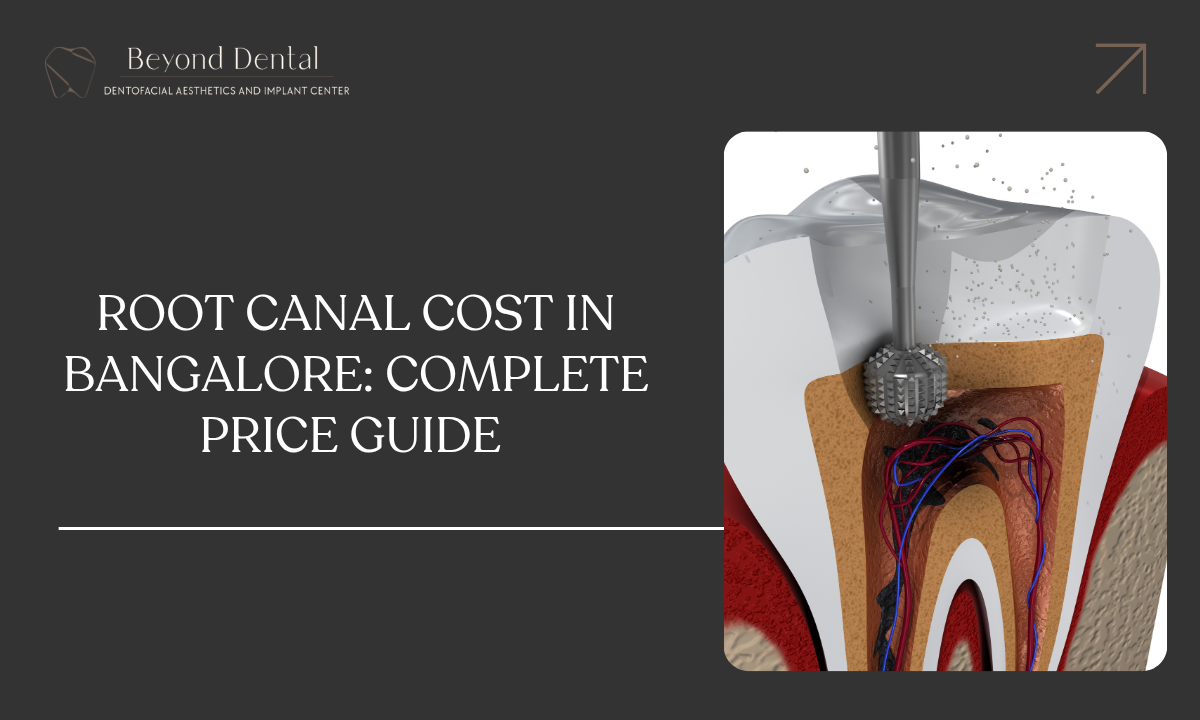
If you have been told you need a root canal, the first question on most people’s minds is the root canal cost in Bangalore, closely followed by whether it will hurt. Both are fair concerns, and the honest answer is that pricing depends heavily on which tooth is affected, how severe the infection is, and whether a crown is needed afterwards. There is no single number that applies to every case.
In this guide, we will break down root canal treatment cost in Bangalore by tooth type, explain exactly what drives the price up or down, and cover what a proper treatment actually includes. If you are considering root canal treatment in Vasanth Nagar, Bangalore, this guide will help you understand what to expect before you book a consultation.
What Is Root Canal Treatment?
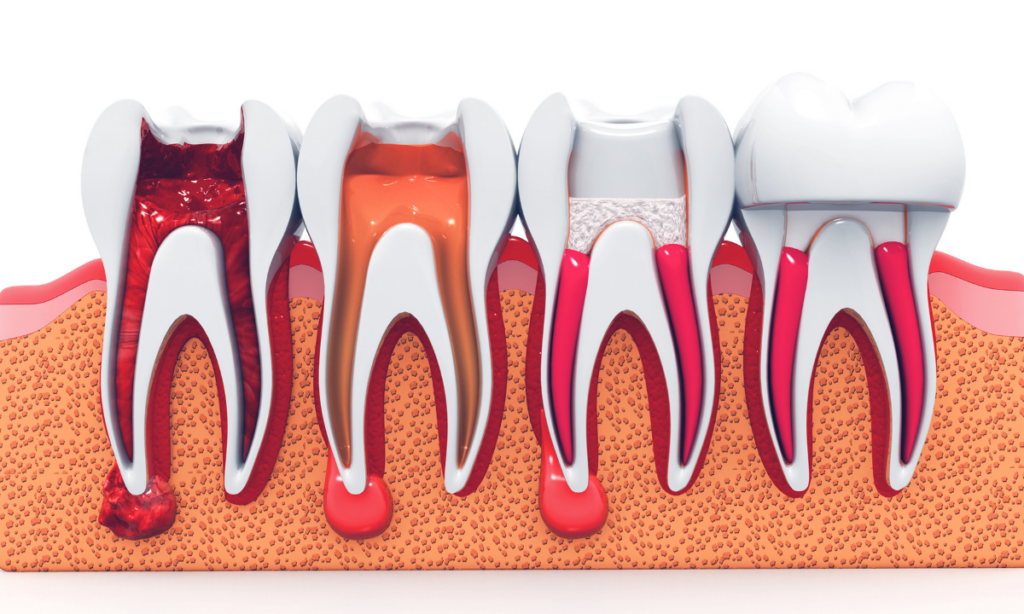
Root canal treatment, often shortened to RCT, is a procedure that saves a tooth when the soft tissue inside it, called the pulp, becomes infected or inflamed. This usually happens due to deep decay, a crack, or trauma that allows bacteria to reach the nerve and blood vessels at the centre of the tooth. . During treatment, the dentist removes the infected pulp, cleans and shapes the canal, and seals it to prevent further infection. The goal is always to preserve your natural tooth rather than extract it, since a natural tooth almost always functions better long-term than a replacement.
Root Canal Cost in Bangalore: Price Breakdown by Tooth Type
Here is a realistic breakdown of what root canal treatment costs in Bangalore, based on current market rates across the city.
| Tooth Type | Estimated Cost (Per Tooth) |
|---|---|
| Front tooth (incisor or canine) | ₹3,000 – ₹6,000 |
| Premolar | ₹5,000 – ₹8,000 |
| Molar (back tooth) | ₹6,000 – ₹15,000 |
| Retreatment (redoing a failed root canal) | ₹6,000 – ₹15,000 |
| Crown after root canal (material dependent) | ₹3,000 – ₹20,000 |
These figures are indicative estimates and may vary depending on your specific case. For an exact quote, please consult your dentist, since pricing can only be confirmed after an in-person examination of the tooth.
A front tooth is the least expensive to treat because it typically has a single, straight canal that is easy to access. Molars sit at the higher end because they usually have three to four canals, take longer to treat, and are positioned further back in the mouth, making the procedure more technically demanding.
Why the Cost Varies So Much Between Teeth
The difference between a ₹3,000 front tooth root canal and a ₹15,000 molar root canal comes down almost entirely to canal anatomy. More canals mean more time under the dentist’s care, more materials used, and a higher level of precision required to clean and seal each one properly. A molar with a complex canal structure or calcification can take significantly longer than a straightforward front tooth case, and the price reflects that additional clinical time and skill.
What Affects Root Canal Treatment Cost
Several factors influence where your specific treatment lands within these price ranges.
- Tooth location and canal complexity – front teeth are simpler and cheaper, while molars with multiple canals cost more
- Severity of the infection – a mild case may be resolved in a single sitting, while an abscess or extensive infection may need multiple appointments and medication in between
- Number of sittings required – single-visit root canals typically cost less than multi-visit treatment, since additional appointments add to the overall fee
- Whether a crown is needed afterwards – most molars and many premolars need a crown after root canal treatment to protect the weakened tooth, and this is priced separately
- Technology used – clinics using digital X-rays, rotary instruments, and dental microscopes for precision may charge more, but this often reduces the risk of missed canals and failed treatment
- Dentist’s experience – a specialist with advanced training may charge more than a general dentist, though this often reflects better long-term success rates, particularly for complex or previously failed cases
Single-Visit vs Multi-Visit Root Canal
Many patients ask whether a root canal can be completed in one sitting. For straightforward cases, particularly front teeth with a single canal and no significant infection, this is often possible. More complex cases, especially molars with an active infection or abscess, typically need two or more visits, with medication placed inside the tooth between appointments to clear the infection before it is permanently sealed. Your dentist will only recommend single-visit treatment when it is clinically appropriate, rather than rushing a complex case to save an appointment.
Why a Crown Is Often Needed After Root Canal Treatment
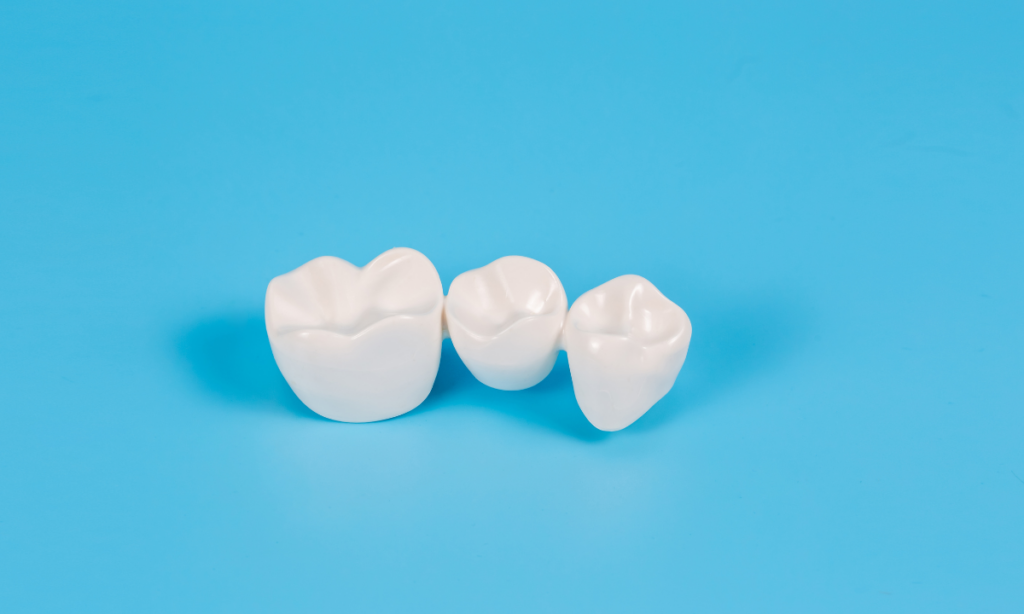
A root canal-treated tooth loses some of its blood supply and becomes more brittle over time, which means it is more prone to fracturing under normal biting pressure. This is especially true for molars, which absorb the most force during chewing. A crown covers and protects the treated tooth, distributing bite force evenly and preventing cracks. If you are planning your budget, it helps to understand the different crown types available alongside the root canal itself, since the two are usually done as a pair for back teeth.
What Is Included in Root Canal Treatment Cost
When you pay for root canal treatment at a proper clinic, the fee typically covers:
- Initial examination and diagnostic X-rays to assess the extent of infection
- Local anaesthesia to keep the procedure comfortable
- Removal of infected pulp tissue from the canal
- Cleaning, shaping, and disinfecting the canal system
- Sealing the canal with a biocompatible filling material
- A temporary filling to protect the tooth between visits, if multiple sittings are needed
- Follow-up review to confirm the infection has resolved
The crown, if required, is priced and billed separately, since it is a distinct procedure completed after the root canal has fully healed.
Root Canal Treatment Process
A typical root canal follows a consistent sequence, regardless of which tooth is involved.
- Diagnosis – your dentist examines the tooth and takes an X-ray to confirm the extent of infection and the canal structure
- Anaesthesia – the area is numbed so the procedure is comfortable throughout
- Access and cleaning – a small opening is made in the tooth to access the pulp chamber, and the infected tissue is removed
- Shaping and disinfection – the canals are cleaned, shaped, and disinfected to remove all traces of bacteria
- Sealing – once the canal is clean, it is filled and sealed with a biocompatible material to prevent reinfection
- Restoration – a filling or, more commonly for molars, a crown is placed to restore the tooth’s strength and function
Most straightforward cases are completed in one to two visits, while more complex or infected cases may need three.
Is Root Canal Treatment Painful?
This is one of the most common concerns patients raise, and it is largely a myth rooted in outdated dentistry. Modern root canal treatment, performed under proper local anaesthesia, is no more uncomfortable than getting a filling, since the procedure removes the source of pain rather than causing it. . Some mild soreness for a day or two afterwards is normal and settles on its own.
Why Choose Beyond Dental for Root Canal Treatment
At Beyond Dental, a trusted dental clinic in Vasanth Nagar, Bangalore, every root canal treatment begins with a proper examination and diagnostic imaging under Clinical Director Dr Chinmaya Bhandary, so the recommendation is based on your tooth’s actual condition rather than a generic quote.
We use modern technology to improve precision and reduce the chances of a missed canal, one of the most common reasons root canals fail and need retreatment. Our pricing is transparent, so the quote confirmed at your consultation covers exactly what is discussed, with no hidden additions for X-rays or follow-up visits.
If you are experiencing persistent tooth pain, sensitivity to hot or cold, or swelling around a tooth, these are signs worth having assessed by an experienced dentist in Vasanth Nagar, Bangalore, before the infection progresses further.
Book Your Root Canal Consultation in Bangalore
If you are dealing with tooth pain or have been told you need a root canal, the best next step is an in-person assessment. At Beyond Dental, a dental clinic in Vasanth Nagar, Bangalore, Dr Chinmaya Bhandary and the team will examine your tooth, explain exactly what treatment it needs, and give you a clear, all-inclusive quote before proceeding. Book a consultation with Beyond Dental to get your tooth assessed.
Frequently Asked Questions
How Much Does Root Canal Treatment Cost In Bangalore?
Root canal treatment in Bangalore typically costs between ₹3,000 and ₹15,000 per tooth, depending on whether it is a front tooth, premolar, or molar. A crown, if needed afterwards, is priced separately and generally ranges from ₹3,000 to ₹20,000.
Why Do Molars Cost More Than Front Teeth For Root Canal Treatment?
Molars have three to four canals and are positioned further back in the mouth, making them more technically demanding and time-consuming to treat than front teeth, which usually have a single, straight canal.
Is A Crown Always Required After A Root Canal?
In most cases, particularly for molars, yes. A root canal-treated tooth becomes more brittle over time, and a crown protects it from fracturing under normal biting pressure. Front teeth sometimes only need a filling, depending on how much natural tooth structure remains.
How Many Visits Does Root Canal Treatment Take?
Simple cases can often be completed in a single visit, while more complex or infected teeth typically need two to three visits, with medication placed between appointments to fully clear the infection.
Is Root Canal Treatment Painful?
No, not when performed under proper local anaesthesia. Most patients experience relief from their existing pain after treatment, with only mild soreness for a day or two afterwards.
What Happens If A Root Canal Is Left Untreated?
The infection can spread beyond the tooth into the surrounding bone, potentially causing an abscess, and the tooth may eventually need extraction rather than treatment. Addressing symptoms early keeps both the treatment and its outcome simpler.