
If your dentist has recommended a crown, the very next question is usually which one. There are several crown types for teeth, and each differs in strength, appearance, lifespan and price. Choosing well matters, because a crown is something you will live with every day for a decade or more.
In this guide, the team behind dental crowns in Vasanth Nagar, Bangalore at Beyond Dental compares the seven most common options, explains where each works best, and shares what our Clinical Director, Dr. Chinmaya Bhandary (MDS Prosthodontics), advises patients to consider before deciding.
What Is a Dental Crown and When Do You Need One?
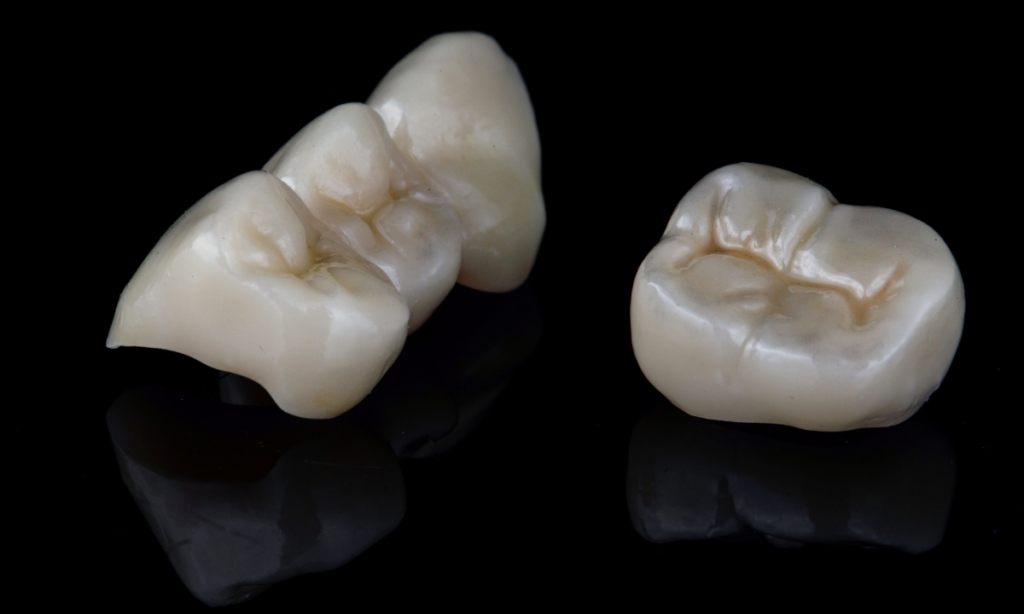
A dental crown, often called a tooth cap, is a custom-made cover that fits over a damaged, weakened or root canal treated tooth. It restores the tooth’s shape, strength and appearance, and protects what remains of the natural structure underneath. According to the American Dental Association, crowns are commonly recommended after root canal treatment, for teeth with large fillings, cracked or worn teeth, and as part of dental bridges or implant restorations.
Because the different types of teeth crowns vary so widely, the right choice depends on which tooth is being treated, how visible it is when you smile, how hard you bite, and your budget.
The 7 Different Types of Dental Crowns
Here are the different types of crowns in dentistry that you are most likely to be offered, starting with the oldest and moving towards the most modern.
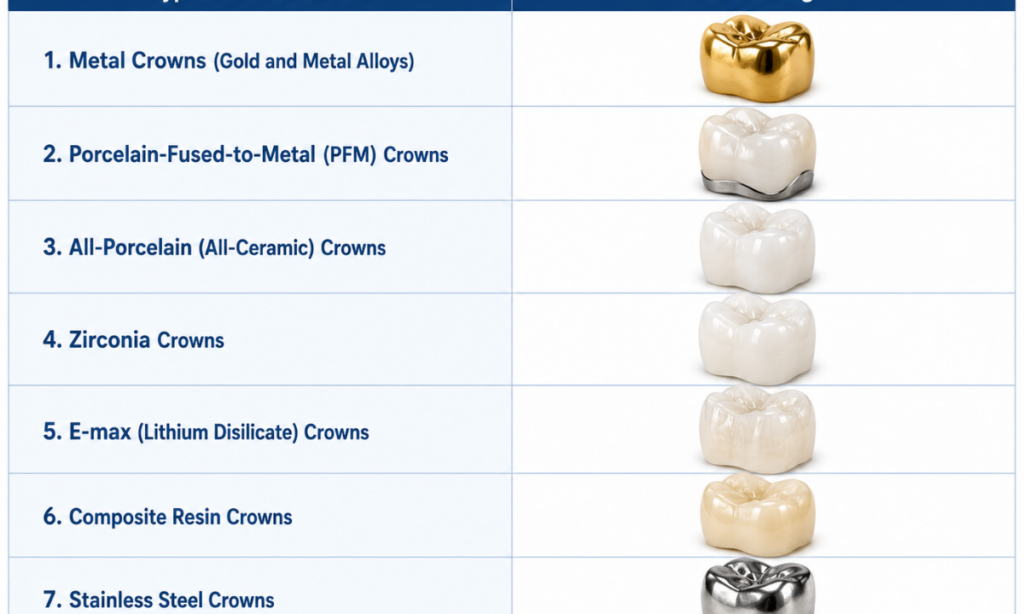
1. Metal Crowns (Gold and Metal Alloys)
Metal crowns are made from gold alloys or base metal alloys such as nickel-chromium. They are the most durable of all the different types of crowns for teeth, rarely chip or fracture, and require the least removal of natural tooth structure.
Best for: Out-of-sight molars where chewing force is highest.
Drawback: The metallic colour makes them unsuitable for visible teeth, and some patients are sensitive to certain alloys.
Typical lifespan: 20 years or more with good care.
2. Porcelain-Fused-to-Metal (PFM) Crowns
PFM crowns combine a metal base for strength with a porcelain outer layer for a tooth-like appearance. For decades they were the standard choice, balancing durability with reasonable aesthetics at a moderate price.
Best for: Back teeth and budget-conscious patients who still want a natural look.
Drawback: A grey line can appear at the gum margin over time as gums recede, and the porcelain layer can chip.
Typical lifespan: 10 to 15 years.
3. All-Porcelain (All-Ceramic) Crowns
All-porcelain crowns contain no metal at all, which allows light to pass through them much like natural enamel. They offer the most lifelike appearance and are completely metal-free, making them ideal for patients with metal allergies.
Best for: Front teeth, where appearance matters most.
Drawback: Traditionally less strong than metal-based options, so they are not always ideal for heavy grinders.
Typical lifespan: 10 to 15 years.
4. Zirconia Crowns
Zirconia crowns have become the most requested option in modern practice, and for good reason. Zirconium dioxide is an extremely strong ceramic that combines near-metal durability with a tooth-coloured finish. It is also highly biocompatible.
It helps to know that there are different types of zirconium crowns as well:
- Monolithic (solid) zirconia: Milled from a single block, the strongest version, ideal for molars and patients who grind their teeth.
- Layered zirconia: A zirconia core layered with porcelain for better translucency, suited to visible teeth.
- Translucent zirconia: A newer generation that sacrifices a little strength for a more natural, enamel-like appearance, often used on front teeth.
Best for: Almost any position in the mouth, especially where both strength and aesthetics matter.
Drawback: Costs more than metal or PFM crowns, and very hard monolithic zirconia can gradually wear opposing teeth if the bite is not adjusted carefully.
Typical lifespan: 15 to 20 years or more.
If you’re deciding between zirconia and porcelain, read our detailed guide on Zirconia Crowns vs Porcelain Crowns to understand which material is better for your tooth, bite, and aesthetic goals.
5. E-max (Lithium Disilicate) Crowns
E-max crowns are made from lithium disilicate, a glass-ceramic prized for its exceptional translucency. Cosmetically, they are widely considered the gold standard for front teeth, blending seamlessly with natural enamel.
Best for: Front teeth and smile makeovers where appearance is the top priority.
Drawback: Less suitable for heavy-force molars than zirconia, and among the more expensive options.
Typical lifespan: 10 to 15 years.
6. Composite Resin Crowns
Resin crowns are the most affordable option and are usually used as temporary or provisional crowns while a permanent one is being fabricated.
Best for: Short-term protection of a prepared tooth.
Drawback: They wear down and fracture far more quickly than other materials, so they are rarely a long-term solution.
Typical lifespan: A few months to a few years.
7. Stainless Steel Crowns
Stainless steel crowns are prefabricated caps used mainly on children’s milk teeth, typically after a pulpectomy or when a baby tooth is badly decayed. They protect the tooth until it falls out naturally, making way for the permanent tooth. The NHS notes that preformed metal crowns of this kind are a routine, safe paediatric treatment.
Best for: Children’s back teeth.
Drawback: Purely functional, with no cosmetic value.
Typical lifespan: Until the milk tooth is naturally lost.
Crown Types Compared at a Glance
| Crown Type | Strength | Aesthetics | Best Position | Relative Cost | Lifespan |
| Metal (gold/alloy) | Excellent | Poor | Molars | Moderate | 20+ years |
| PFM | Good | Fair | Back teeth | Moderate | 10 to 15 years |
| All-porcelain | Fair | Excellent | Front teeth | Moderate to high | 10 to 15 years |
| Zirconia | Excellent | Very good | Any | High | 15 to 20+ years |
| E-max | Good | Excellent | Front teeth | High | 10 to 15 years |
| Composite resin | Low | Fair | Temporary use | Low | Months to a few years |
| Stainless steel | Good | Poor | Children’s molars | Low | Until natural loss |
How Much Do Different Types of Dental Crowns Cost?
Prices vary with the material, the laboratory work involved and the complexity of your case. As a general pattern, resin and stainless steel sit at the lower end, PFM and metal in the middle, and zirconia and E-max at the premium end. If you are comparing prices for dental crowns in Bangalore, we have broken down current ranges material by material in our detailed guide to the tooth cap cost in Bangalore. It is worth reading before you decide, because the cheapest crown upfront is not always the most economical over its lifetime.
How to Choose the Right Crown Type for Your Tooth
Dr. Chinmaya Bhandary, MDS (Prosthodontics) and Clinical Director at Beyond Dental, advises patients to weigh four factors together rather than choosing on price or appearance alone:
- Position of the tooth. Front teeth demand translucency, so E-max or layered zirconia usually win. Molars endure enormous chewing forces, so monolithic zirconia or metal makes more sense.
- Your bite and habits. If you clench or grind your teeth, a stronger material protects both the crown and the opposing teeth.
- Gum health and allergies. Metal-free options such as zirconia and E-max suit patients with metal sensitivities and tend to be kinder at the gum margin.
- Long-term value. A crown that lasts twenty years often costs less per year than a cheaper one replaced twice in the same period.
As a prosthodontics-led practice offering dental crowns in Vasanth Nagar, Bangalore, we assess all four factors during your consultation and show you material samples, so the decision is made with you rather than for you. Patients searching for quality crowns in Bangalore often travel to us precisely for this specialist-led approach to crown selection and fit.
The Takeaway
All seven crown types for teeth have a legitimate place in modern dentistry. Metal remains unbeatable for raw durability, E-max leads on aesthetics, and zirconia has emerged as the versatile all-rounder that suits most patients. The best crown is the one matched to your tooth, your bite and your long-term goals.
If you are still weighing up your options, visit our dental clinic in Vasanth Nagar, Bangalore for a consultation. Dr. Chinmaya Bhandary and the Beyond Dental team will examine your tooth, walk you through the materials in person and help you choose dental crown treatment in Vasanth Nagar that you will be happy with for years to come.
Frequently Asked Questions
Which Crown Type Is Best For Front Teeth?
E-max and layered or translucent zirconia are generally the best choices for front teeth because they mimic the translucency of natural enamel. All-porcelain crowns are also a strong option when maximum aesthetics is the goal.
Which Type Of Dental Crown Lasts The Longest?
Gold and metal alloy crowns have the longest track record, often lasting more than 20 years. Among tooth-coloured options, monolithic zirconia offers the best combination of strength and longevity.
What Is The Difference Between A Tooth Cap And A Crown?
There is no difference. Cap is simply the everyday term, while crown is the clinical name for the same restoration.
Is Zirconia Better Than E-Max?
Neither is universally better. Zirconia is stronger and better for molars and grinders, while E-max is more translucent and better for front teeth. Many treatment plans use both, matched to the position of each tooth.
Does Getting A Dental Crown Hurt?
No. The tooth is numbed with local anaesthesia before the procedure, so you should not feel pain during crown placement. After the anaesthesia wears off, it is normal to experience mild sensitivity or discomfort for a few days, which usually settles on its own. If the discomfort persists or worsens, contact your dentist for an evaluation.
Can A Crowned Tooth Still Get A Cavity?
Yes. The crown itself cannot decay, but the natural tooth at the gum margin can. Daily brushing, flossing around the crown and regular check-ups with your dentist in Vasanth Nagar, Bangalore keep the margin healthy.
How Do I Know Which Crown Type Is Right For Me?
The honest answer is that it depends on the tooth, your bite and your priorities, which is why a clinical examination matters more than any article. A prosthodontist can assess your case and recommend the material that balances strength, appearance and budget for your specific tooth.