
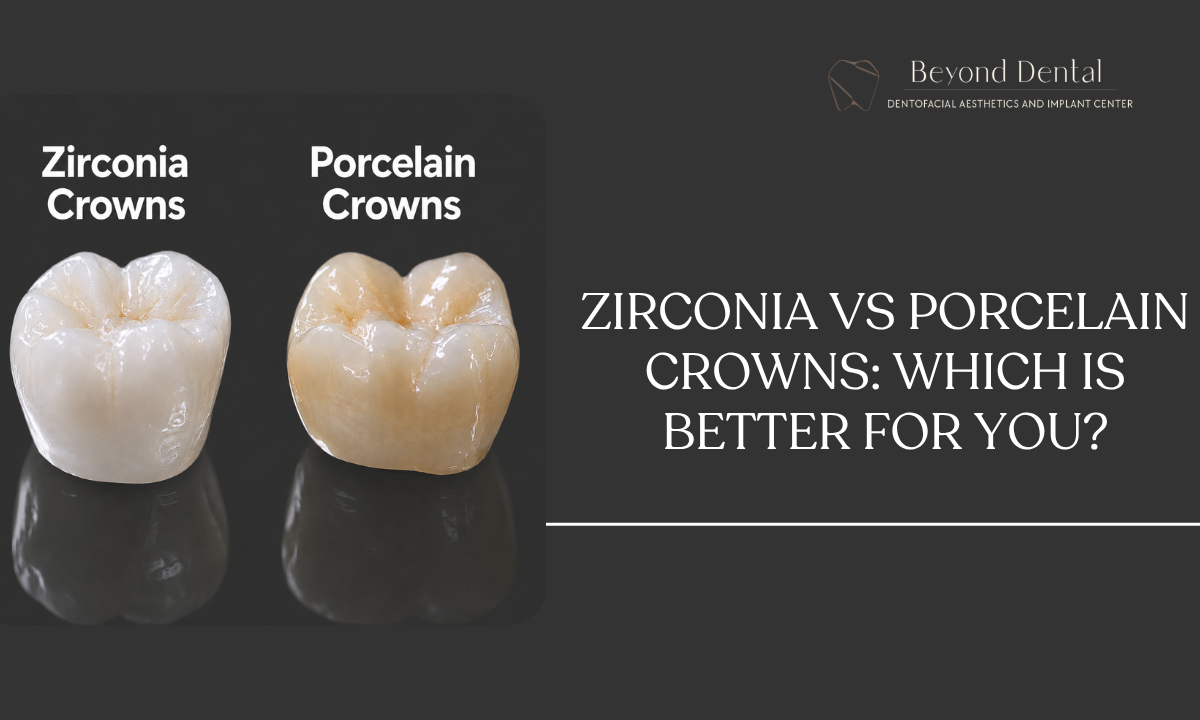
Choosing a dental crown is not a decision most people make more than once or twice in a lifetime. Yet it is one of the most consequential choices in restorative dentistry, because the material your crown is made from directly affects how it looks, how long it lasts, how it feels in your mouth, and how well it protects the tooth underneath.
For anyone considering a dental crown in Bangalore and trying to decide between zirconia and porcelain, the answer is rarely straightforward. Both materials are metal-free, both can be colour-matched to your natural teeth, and both are used extensively across clinics in the city. Yet they are fundamentally different in ways that matter enormously depending on which tooth needs the crown, what your bite is like, and what outcome you are prioritising.
What Is a Dental Crown and When Do You Need One?
A dental crown is a custom-made cap that fits over a damaged, weakened, or aesthetically compromised tooth, restoring its shape, strength, and appearance. It covers the entire visible portion of the tooth above the gumline and is permanently cemented in place.
Crowns are recommended in a range of clinical situations, including after root canal treatment, for teeth with large cavities where a filling is insufficient, for cracked or fractured teeth, to cover a dental implant, or as part of a cosmetic dentistry plan to improve the appearance of a discoloured or misshapen tooth.
The material a crown is made from determines how it performs over time, which is why the zirconia versus porcelain question deserves more than a surface-level answer.
What Is a Zirconia Crown?
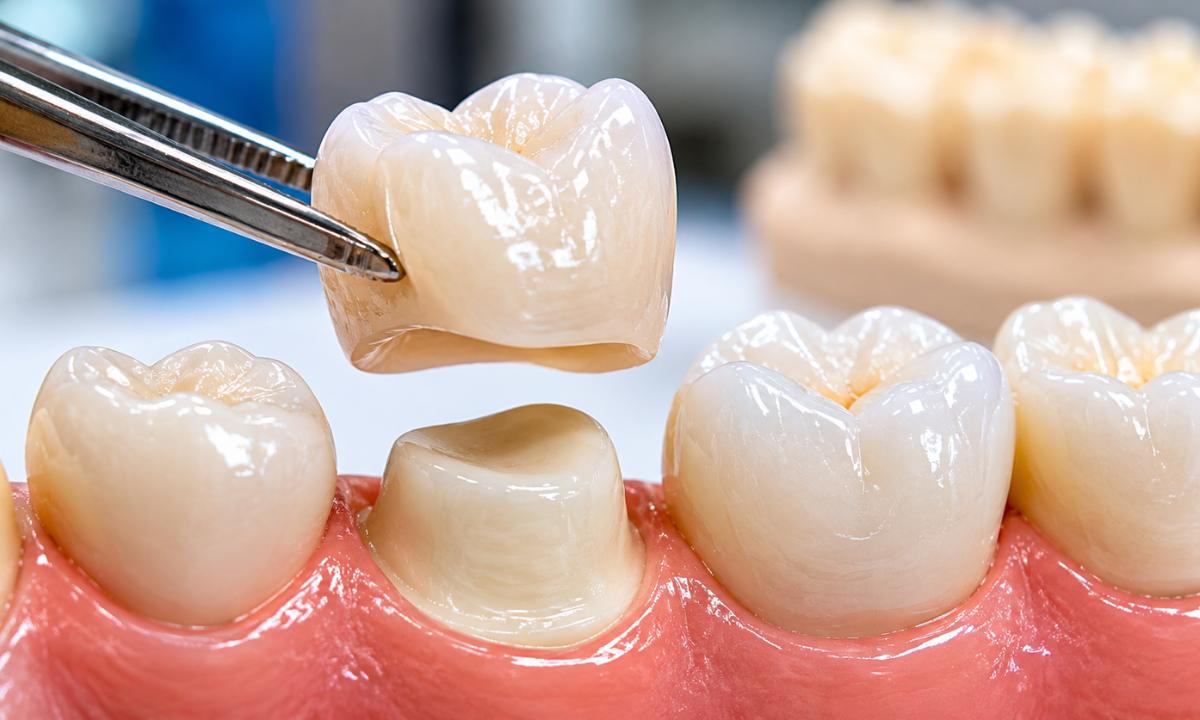
Zirconia is a form of zirconium dioxide, an advanced ceramic material originally developed for industrial applications before being adopted in dentistry for its exceptional properties. It is metal-free, biocompatible, and extraordinarily strong.
Zirconia is completely inert, meaning it does not cause allergic reactions, gum irritation, or the dark metal lines near the gumline that are commonly seen with older porcelain-fused-to-metal crowns.
Modern zirconia crowns come in two forms: monolithic zirconia, which is milled from a single solid block and is extremely strong, and layered zirconia, which has a zirconia core with a porcelain overlay that provides enhanced aesthetics. The development of high-translucency zirconia in recent years has significantly improved its appearance, bringing it much closer to the natural look of tooth enamel than earlier versions could achieve.
For patients seeking a zirconia crown in Bangalore, the material’s combination of strength, biocompatibility, and improved aesthetics has made it the fastest-growing choice in modern restorative dentistry, particularly for back teeth and implant-supported restorations.
What Is a Porcelain Crown?
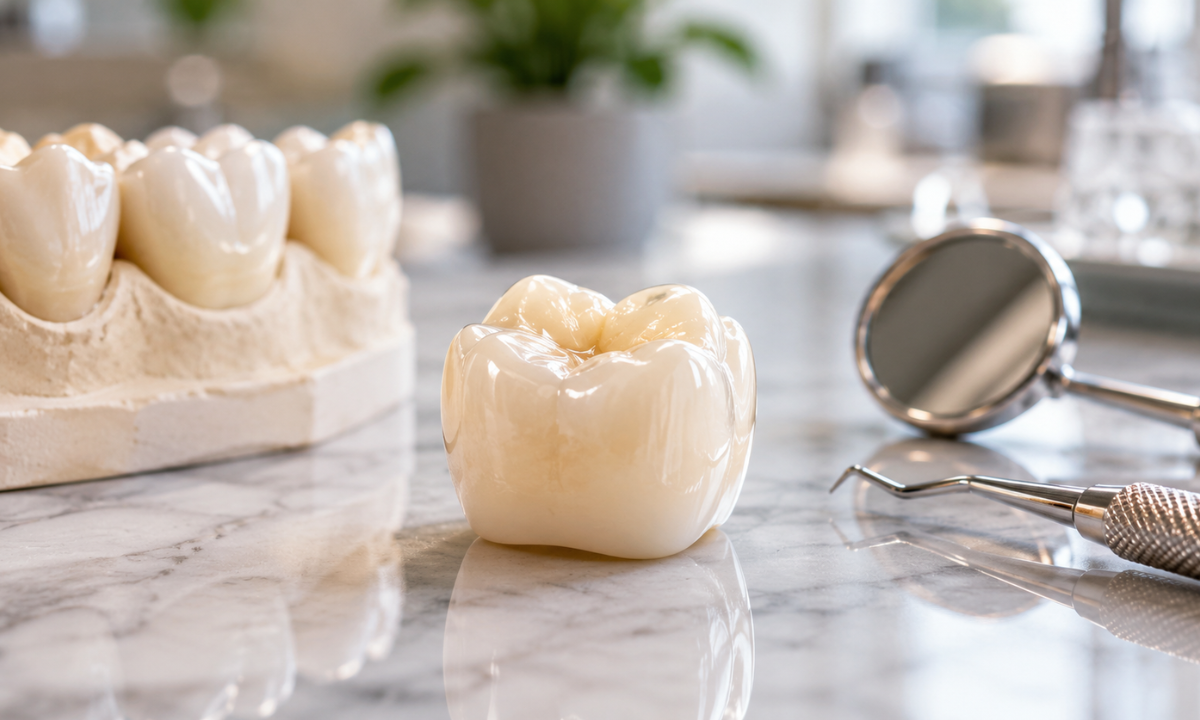
Porcelain crowns, also referred to as all-ceramic crowns, are made entirely from a glass-like ceramic material that closely replicates the colour, translucency, and surface texture of natural tooth enamel and rrenowned for their lifelike appearance, mimicking the translucency and gloss of natural tooth enamel, making them an ideal choice for restoring front teeth where aesthetics matter most.
Porcelain has been used successfully in restorative dentistry for decades and remains the benchmark for aesthetic restorations in visible areas of the mouth. The material allows light to pass through in a way that creates depth and realism, producing a result that is often indistinguishable from a natural tooth.
The trade-off is strength. Porcelain is more susceptible to chipping or cracking under heavy biting forces compared to zirconia, which is why material selection based on tooth location is so important.
For patients considering a porcelain crown in Bangalore, it remains the gold standard for visible teeth, where achieving a completely natural, seamless result is the primary clinical goal.
Zirconia vs Porcelain – Comparison
| Feature | Zirconia Crown | Porcelain Crown |
|---|---|---|
| Strength | Extremely high – 900 to 1200 MPa | Moderate – 100 to 400 MPa |
| Aesthetics | Very good, especially high-translucency zirconia | Exceptional, most natural-looking |
| Durability | 15 to 20 years or more | 10 to 15 years with proper care |
| Biocompatibility | Excellent, fully metal-free and inert | Excellent, metal-free |
| Best suited for | Back teeth, high-pressure areas, and implant crowns | Front teeth, cosmetic restorations |
| Tooth wear on opposing teeth | Can cause wear if the surface is not polished | Gentler on opposing teeth |
| Cost | Higher | Moderate |
| Sensitivity post-placement | Minimal | Occasional, usually temporary |
What Actually Determines Which Crown Is Right for You
The Tooth Location Principle
The single most important factor in crown material selection is where the crown is going. Before evaluating cost or aesthetics, an experienced dentist will always assess tooth location first because the demands placed on a crown differ significantly depending on where it sits in the mouth.
- Molars are subject to the highest biting and grinding forces in the mouth. Zirconia is the clinically preferred material here due to its fracture resistance and longevity.
- Front teeth and canines are the most visible teeth when smiling and speaking. Porcelain’s superior translucency and lifelike appearance make it the logical choice for aesthetic restorations.
- Premolars sit at the intersection of function and aesthetics. The decision here depends on individual bite assessment and aesthetic priorities.
- Implant crowns widely use zirconia due to its strength, biocompatibility, and resistance to bacterial adhesion at the gumline.
Where it gets nuanced is the premolar region, visible enough to matter cosmetically yet under enough pressure to raise durability concerns. This is why a clinical evaluation that includes a bite analysis is essential before any crown material decision is finalised.
Your Bite and Grinding Habits
Bite patterns and grinding habits are among the most underaddressed factors in crown material selection, yet they have a direct impact on how long any crown lasts. Patients who grind or clench their teeth at night place significantly higher forces on their crowns than the average patient.
- Bruxism patients face a higher risk of porcelain chipping or fracturing over time, making zirconia the clinically safer choice regardless of tooth location.
- Normal bite patients without grinding habits have more flexibility in material selection and can consider porcelain even for premolars.
- Patients with worn teeth from long-term grinding should discuss a full bite assessment before crown placement to ensure the material and positioning are optimised for longevity.
If you clench or grind your teeth and have not discussed this with your dentist before crown placement, it is worth raising before any material decision is made.
The Opposing Tooth Factor
An equally important consideration is the impact the crown material has on the opposing natural tooth. Zirconia is exceptionally hard, and while this is an advantage for the crown itself, it can cause accelerated wear on the opposing natural tooth if the crown surface is not properly polished and adjusted after placement.
- Zirconia crowns require precise polishing after placement to minimise wear on opposing teeth. A well-placed and properly finished zirconia crown poses minimal long-term risk.
- Porcelain crowns are generally gentler on opposing teeth due to their lower hardness, making them a comfortable option for patients with concerns about tooth wear.
- Proper placement by an experienced dentist is the single most important factor in eliminating opposing tooth wear risk, regardless of the material chosen.
This underscores why the skill and precision of the dentist placing the crown matter as much as the material itself.
Gumline Aesthetics and Long-Term Tissue Health
One of the most visually significant differences between materials becomes apparent over time rather than immediately after placement. Both modern zirconia and all-ceramic porcelain crowns are metal-free, eliminating the dark grey gumline that was commonly seen with older porcelain-fused-to-metal crowns.
- Zirconia’s dense and smooth surface resists plaque and bacteria accumulation at the gumline, supporting better long-term gum health around the crowned tooth.
- Porcelain crowns are also biocompatible and gum-friendly, but may require more diligent cleaning around the crown margin to prevent plaque buildup over time.
- Patients with a history of gum issues should discuss crown material alongside any recommended advanced gum treatment to ensure the best long-term outcome for both the crown and surrounding tissue.
The Cost Question – What You Are Actually Paying For
When evaluating the best dental crown material for your specific situation, it is important to look beyond the upfront cost and consider the total value over the crown’s lifespan. A zirconia crown placed correctly by an experienced dentist in a high-pressure molar position will almost always outlast a porcelain crown in the same location, making the higher initial investment the more cost-effective choice over time.
Zirconia crowns cost more than porcelain crowns in most dental clinics in Bangalore, and the difference is not arbitrary. Zirconia requires specialised milling equipment, high-precision CAD/CAM technology, and a more complex fabrication process. The material itself is also significantly more expensive at the source.
What patients are paying for with zirconia is longevity and strength. Zirconia crowns can last 15 to 20 years or more with proper care, while porcelain crowns typically last 10 to 15 years. Over 20 years, the higher upfront cost of a zirconia crown often represents better value than replacing a porcelain crown that has chipped or worn down.
For front teeth where aesthetics are the primary concern and biting forces are lower, porcelain’s lower cost combined with its superior appearance often makes it the more sensible investment, provided the patient’s bite and habits do not present elevated risk factors.
What About Porcelain-Fused-to-Metal Crowns?
It is worth addressing this because many patients have older PFM crowns and are curious about replacement options. Porcelain-fused-to-metal crowns were the standard in restorative dentistry for decades, combining the aesthetic benefit of porcelain with the structural support of a metal substructure. For their time, they were a significant improvement over full metal crowns and served patients well across many years of clinical use.
However, PFM crowns come with limitations that have become increasingly apparent as better materials have emerged. The metal core beneath the porcelain veneer can create a greyish shadow at the gumline, which becomes more visible as gum tissue naturally recedes with age. The porcelain layer is also prone to chipping away from the metal base over time, particularly under heavy biting forces. And for patients with metal sensitivities, the alloy content in PFM crowns can occasionally cause gum irritation or discoloration of surrounding tissue.
Both all-ceramic porcelain and zirconia crowns address every one of these limitations. They are fully metal-free, produce no gumline shadowing, and offer superior biocompatibility. For patients replacing old PFM crowns, the upgrade to either modern material represents a meaningful clinical and aesthetic improvement. The choice between zirconia and porcelain for the replacement follows the same principles covered throughout this guide: tooth location, bite assessment, and clinical priorities.
How the Crown Placement Process Works at Beyond Dental
Regardless of which material is selected, the crown placement process at a quality clinic follows a structured, multi-stage protocol designed to ensure the best possible clinical and aesthetic outcome.
At Beyond Dental, the process begins with a comprehensive clinical assessment that includes digital X-rays, a full bite analysis, and a detailed evaluation of the tooth being crowned and the surrounding teeth. This assessment directly informs the material recommendation, ensuring the crown selected is the one most appropriate for your specific clinical situation rather than a default choice.
The tooth is then prepared by removing a precise and minimal amount of enamel to create the necessary space for the crown. Digital impressions are taken using intraoral scanning technology to ensure an accurate fit, and a temporary crown is placed to protect the prepared tooth while the permanent restoration is being fabricated.
Once the permanent crown is ready, it is fitted, adjusted for bite accuracy across all positions of the jaw, and permanently cemented. This bite adjustment stage is particularly important for zirconia crowns, ensuring the surface is correctly polished and that contact with opposing teeth is balanced to prevent any uneven wear over time.
Post-placement instructions and a follow-up review are provided to ensure the crown has seated correctly, the surrounding gum tissue has responded well, and any minor adjustments needed are addressed promptly.
For patients considering crowns as part of a broader cosmetic dentistry plan, including smile designing, veneers, or Invisalign aligners, crown material selection is integrated into the overall treatment plan to ensure a cohesive, natural-looking final result across all treated teeth.
Which Crown Is Right for You – A Simple Decision Framework
If you are trying to narrow down which material makes the most sense for your situation, here is a practical framework based on clinical principles:
Choose zirconia if:
- The crown is going on a molar or premolar
- You grind or clench your teeth
- You want maximum longevity from your investment
- The crown is for a dental implant
- You have a history of breaking or chipping dental work
Choose porcelain if:
- The crown is on a front tooth or canine
- Aesthetics are your primary priority
- Your bite is normal with no grinding habits
- You are undergoing a cosmetic smile makeover, where appearance consistency across teeth is critical
Discuss further with your dentist if:
- The crown is on an upper or lower premolar
- You have significant existing restorations nearby
- You are replacing an older crown and are unsure of your bite patterns
The most important thing to remember is that neither material is universally superior. The right choice is the one that matches your specific clinical situation, and that determination should be made with a qualified dentist in Vasanth Nagar, Bangalore, who has examined your teeth, assessed your bite, and understands your priorities.
Conclusion
Zirconia and porcelain are both excellent crown materials – and the question of which is better does not have a single answer. It has a personalised one. Zirconia delivers unmatched strength and longevity for high-pressure areas of the mouth. Porcelain delivers unmatched aesthetics for visible teeth where appearance is the priority.
For anyone seeking dental crowns in Vasanth Nagar, Bangalore, Beyond Dental offers a comprehensive clinical assessment before any crown material decision is made. Our team evaluates tooth location, bite patterns, gum health, and aesthetic priorities to ensure every crown recommendation is grounded in what is right for your specific situation, not a generic preference for one material over another. To book a consultation, contact our team today.
Frequently Asked Questions
Can a zirconia crown look as natural as porcelain?
Modern high-translucency zirconia has significantly improved in aesthetics and can look very natural, particularly for back teeth. However, for front teeth where the finest aesthetic detail matters most, all-ceramic porcelain still offers superior translucency and a more lifelike appearance in most cases.
How long does it take to get a crown at Beyond Dental?
The process typically involves two appointments. The first appointment covers tooth preparation and impression-taking, with a temporary crown placed. The permanent crown is fitted at the second appointment, usually one to two weeks later, depending on the fabrication timeline.
Will a crown feel different from a natural tooth?
There is typically a brief adjustment period of a few days as your bite adapts to the new crown. A well-fitted crown should feel comfortable and natural within a week of placement. Any persistent discomfort or sensitivity beyond this should be reviewed by your dentist.
Do crowns require special care?
Crowns do not require special maintenance beyond standard oral hygiene brushing twice daily, flossing around the crown margin, and attending regular dental check-ups. Avoiding excessively hard foods and wearing a night guard if you grind your teeth will significantly extend the life of any crown.
Can I get a crown replaced if I am unhappy with the appearance?
Yes. Crowns can be replaced if they are aesthetically unsatisfactory, provided the underlying tooth structure is healthy. This is best discussed during an initial consultation so that material selection, shade matching, and treatment planning are aligned with your expectations from the outset.