
Bruxism, the medical term for teeth grinding, is far more common than most people think. Research suggests it affects roughly one in five adults in some form, though many never realise they do it since it usually happens during sleep. A mouthguard for teeth grinding is the most common and effective way to protect your teeth from the damage grinding causes, but with so many types on the market, from pharmacy shelves to dentist-made appliances, picking the right one can be confusing.
This guide breaks down what bruxism actually is, the different mouthguard types available, what they cost, and how to know which one fits your situation, with insight from the team at Beyond Dental Clinic, Vasanth Nagar.
What Is Bruxism and Why Does It Happen?
Bruxism is the involuntary clenching or grinding of teeth, and it comes in two forms: sleep bruxism, which happens unconsciously at night, and awake bruxism, which happens during the day, often without the person noticing, especially when concentrating or under stress.
Common triggers include:
- Stress and anxiety, one of the most well-documented risk factors
- An uneven bite or misaligned teeth
- Sleep disorders such as obstructive sleep apnoea
- Lifestyle factors like high caffeine or alcohol intake, and smoking
- In children, jaw development, which usually resolves on its own
Grinding forces during an episode can be significantly higher than normal chewing forces, which is why even a short nightly habit can wear down enamel surprisingly fast.
Signs You Might Need a Mouthguard for Teeth Grinding
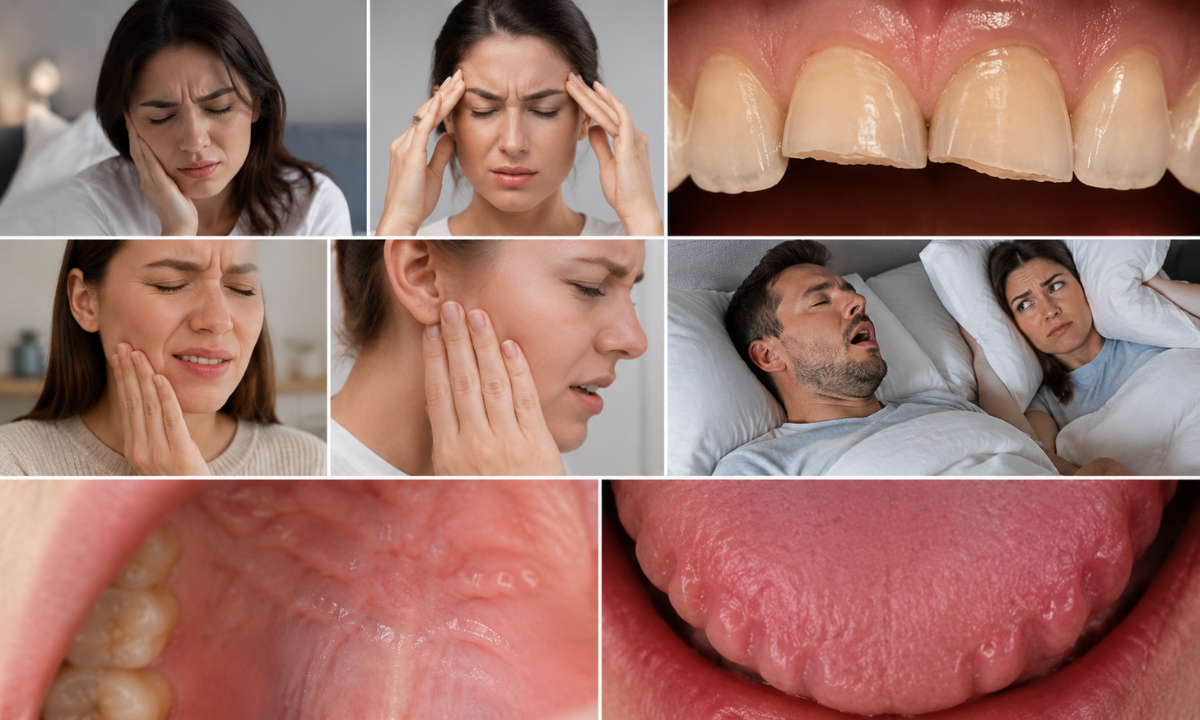
- Waking up with a sore or tight jaw, particularly first thing in the morning
- Frequent dull headaches, especially around the temples
- Flattened, chipped or worn tooth edges that were not there before
- Increased tooth sensitivity to hot, cold or sweet foods
- Clicking, popping or locking in the jaw joint (sometimes needing a mouth guard for jaw popping rather than a standard grinding guard)
- A partner or family member reporting grinding sounds during sleep
- Indentations along the inside of the cheeks or a scalloped tongue
If sensitivity is your main complaint, treating sensitive teeth at home alongside a mouthguard can help. If a few of these sound familiar, it’s worth getting your bite checked before the wear becomes permanent.
Night Guard vs Mouthguard: What’s the Difference?
Short answer: there isn’t one, and this trips a lot of people up. If a dentist says “night guard,” a pharmacy label says “night mouth guard,” they’re all describing the same product: a removable plastic or acrylic cover that fits over your teeth, worn mainly while you sleep, to stop your upper and lower teeth from grinding directly against each other.
The word “night” is simply there because that’s when most grinding happens, while you’re asleep and unaware of it. So it doesn’t matter which term you search for or ask your dentist about; they all lead to the same device.
What’s actually different, and worth knowing, is that a night guard is not the same as a sports mouthguard (worn during physical activity to prevent injury) or an anti-snoring device (designed to help with airway and breathing, not grinding). These look similar but serve completely different purposes, so it’s worth making sure you’re buying the right one for your actual problem.
Types of Mouthguards for Teeth Grinding
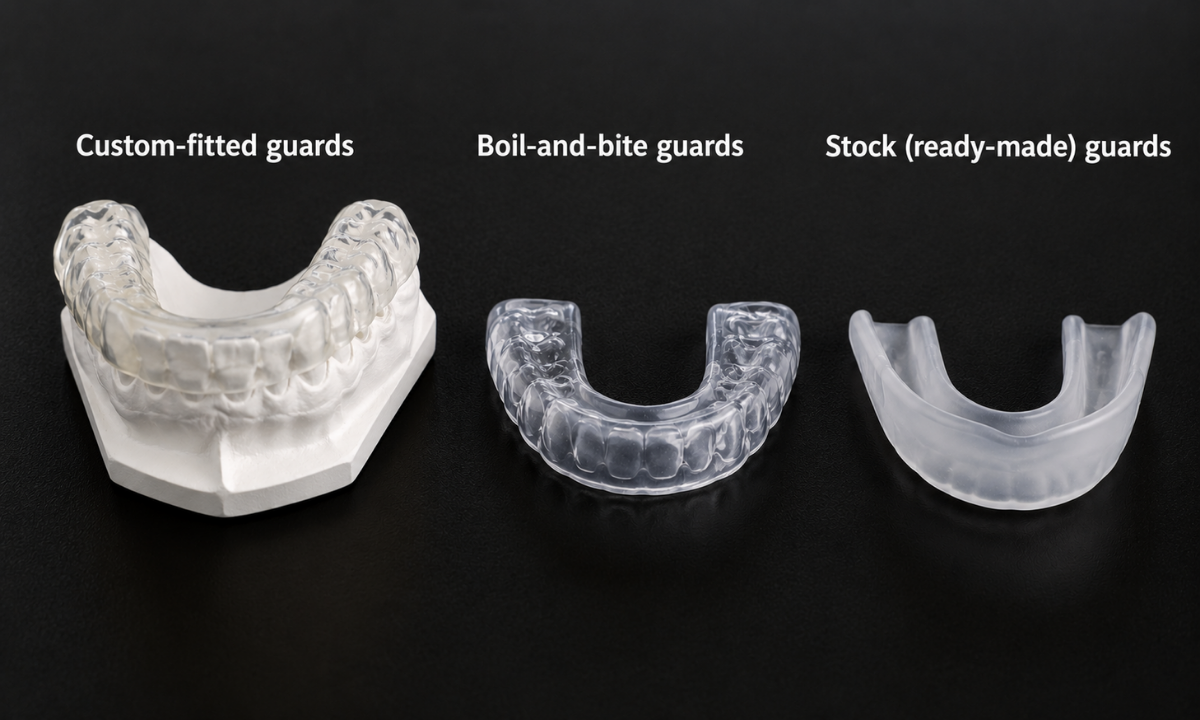
Mouthguards differ along two dimensions: how they’re fitted, and what material they’re made from. Understanding both helps explain why prices and comfort vary so much. Getting the fit and material right matters beyond just tooth protection too, since a poorly matched guard can add pressure to the jaw joint rather than easing it, something the NIDCR notes is closely tied to TMJ-related discomfort.
How They’re Fitted
Custom-fitted guards are made from a dental impression of your own teeth and fabricated in a lab, giving the most precise, secure fit. They’re generally recommended for moderate to severe grinding or once damage has already appeared.
Boil-and-bite guards are thermoplastic guards softened in hot water and bitten into to form a rough mould of your teeth. They fit better than off-the-shelf options without the cost of a custom appliance, making them a reasonable choice for mild to moderate grinding.
Stock (ready-made) guards come pre-formed in a few standard sizes and are the cheapest, most widely available option at pharmacies. The trade-off is a loose, one-size-fits-all fit that can be uncomfortable and, in some cases, less effective.
By Material
Soft guards, usually 1 to 3mm of flexible material, are the most comfortable and suit mild to moderate grinders. They tend to wear through faster if grinding is heavy.
Hard guards, made from rigid acrylic or PETG, are built for severe grinders and clenchers, offering the most durability but less initial comfort.
Dual-laminate (hybrid) guards combine a soft inner layer against the teeth with a hard outer shell, balancing comfort and durability. These are often the middle-ground recommendation for moderate to heavy grinders.
Mouthguard Types Compared at a Glance
| Mouthguard Type | Fit | Comfort | Durability | Best For | Relative Cost |
|---|---|---|---|---|---|
| Custom-fitted | Excellent | Very good | 3 to 5 years | Moderate to severe bruxism | High |
| Boil-and-bite | Good | Fair | 6 months to 1 year | Mild to moderate grinding | Moderate |
| Stock (ready-made) | Poor | Poor | A few months | Occasional, mild grinding | Low |
| Soft material | Varies by fit | High | Lower | Mild to moderate grinders | Low to moderate |
| Hard material | Varies by fit | Lower | High | Severe grinders/clenchers | Moderate to high |
| Dual-laminate | Varies by fit | Good | High | Moderate to heavy grinders | Moderate to high |
How Much Does a Mouthguard for Teeth Grinding Cost?
Cost depends mainly on the fit method and material used. Stock guards, bought off a pharmacy shelf, are the cheapest since they need no dental visit or lab work. Boil-and-bite guards sit in the middle, slightly costlier but offering a better mould of your teeth. Custom-fitted guards cost the most upfront, especially in hard or dual-laminate materials, since they require an impression and lab fabrication.
Looked at purely on upfront cost, stock and boil-and-bite guards seem cheaper. But a custom guard typically lasts 3 to 5 years with proper care, while stock and boil-and-bite guards need replacing every few months to a year. Factoring in replacement frequency, a custom guard often works out more economical over time, especially for moderate to severe grinders. For long-term, severe grinding that has already caused extensive damage, the cost conversation often shifts to full-mouth rehabilitation.
How to Choose the Right Mouthguard
A mouthguard is usually the first line of teeth grinding treatment, but three things matter most when deciding which type you need:
- Severity of grinding. Visible tooth wear, chips or sensitivity point towards a custom or dual-laminate guard rather than a basic stock option
- Underlying cause. If grinding is linked to an uneven bite, sleep apnoea, or jaw joint issues like popping, a guard alone may not fully solve the problem, and the cause needs assessing separately
- Comfort and consistency of wear. A guard only works if you actually wear it every night, so fit and material comfort matter as much as strength
A dental check-up is the most reliable way to match the right type to your specific grinding pattern, since self-selecting a guard without an assessment can mean under- or over-treating the problem. This is the kind of assessment offered at a dental clinic in Vasanth Nagar, Bangalore, experienced in treating bruxism and TMJ-related concerns.
Caring for Your Night Guard
- Rinse it with cool water immediately after each use
- Brush it gently with a soft toothbrush, avoiding toothpaste, which can be abrasive
- Store it in a ventilated case, not a sealed bag, to prevent bacterial growth
- Avoid hot water or direct sunlight, which can warp the material
- Bring it to your dental check-ups so it can be inspected for wear
- Replace it once it becomes thin, cracked or no longer fits snugly
Can a Mouthguard Help With Jaw Popping Too?
Jaw popping or clicking is usually linked to the temporomandibular joint (TMJ) rather than the teeth directly, and it can occur alongside bruxism or independently. A mouth guard for jaw popping is often designed differently to a standard grinding guard, since it aims to reposition the jaw and reduce joint pressure rather than just cushion the teeth. If popping comes with pain, locking or difficulty opening the mouth fully, the joint should be assessed separately, since a standard night guard may not resolve it.
The Takeaway
Teeth grinding is far more common than most people assume, and because it usually happens during sleep, many live with it for years before realising the damage it’s causing. A mouthguard for teeth grinding remains the simplest way to protect your teeth, but which type you need depends on how severe the grinding is: mild grinders often do fine with a boil-and-bite or soft guard, while moderate to severe grinders generally need a custom-fitted, hard or dual-laminate one to actually hold up.
The most reliable way to know which category you fall into is a proper dental assessment. A dentist in Vasanth Nagar, Bangalore, like Beyond Dental can check for wear patterns, rule out related jaw issues like popping or clicking, and recommend a guard matched to your bite rather than a generic pharmacy option.
Frequently Asked Questions
Does a Mouthguard Stop Teeth Grinding, or Just Protect the Teeth?
A mouthguard doesn’t stop the grinding reflex itself, since bruxism is largely involuntary. It creates a barrier between the upper and lower teeth so the grinding force is absorbed by the guard instead of the enamel. Reducing the grinding itself usually means addressing the underlying trigger, such as stress or an uneven bite.
How Long Do Night Guards Last?
Custom-fitted guards typically last 3 to 5 years with proper care; boil-and-bite guards need replacing every 6 months to a year, and stock guards wear out within a few months. Heavier grinders wear through any guard faster.
Can Children Wear a Mouthguard for Teeth Grinding?
Children can grind their teeth too, often linked to jaw development, and it frequently resolves on its own. A dentist should assess whether it’s a normal developmental phase or something needing a guard, since children’s jaws are still growing.
Is a Custom Mouthguard Worth the Extra Cost Compared to a Boil-and-Bite One?
For mild, occasional grinding, boil-and-bite can be sufficient. For moderate to severe bruxism, or once tooth wear is already visible, custom-fitted guards tend to be worth the extra cost since they last longer and fit more precisely.
Does Beyond Dental Offer Custom Night Guards for Teeth Grinding?
Yes. Beyond Dental, Vasanth Nagar, fits custom night guards after assessing your grinding pattern, bite and jaw health, rather than recommending a one-size-fits-all guard. This means the guard is moulded specifically to your teeth for a more secure, comfortable fit than anything bought off a pharmacy shelf, and lasts significantly longer with proper care.
What Happens if Bruxism Is Left Untreated?
Untreated bruxism can lead to worn, chipped or loose teeth, jaw disorders and headaches, with severe cases sometimes needing crowns, root canals or implants to repair the damage. A systematic review published on the National Center for Biotechnology Information’s database estimates global bruxism prevalence at around 22%, underlining how common, and how commonly under-treated, the condition is.