
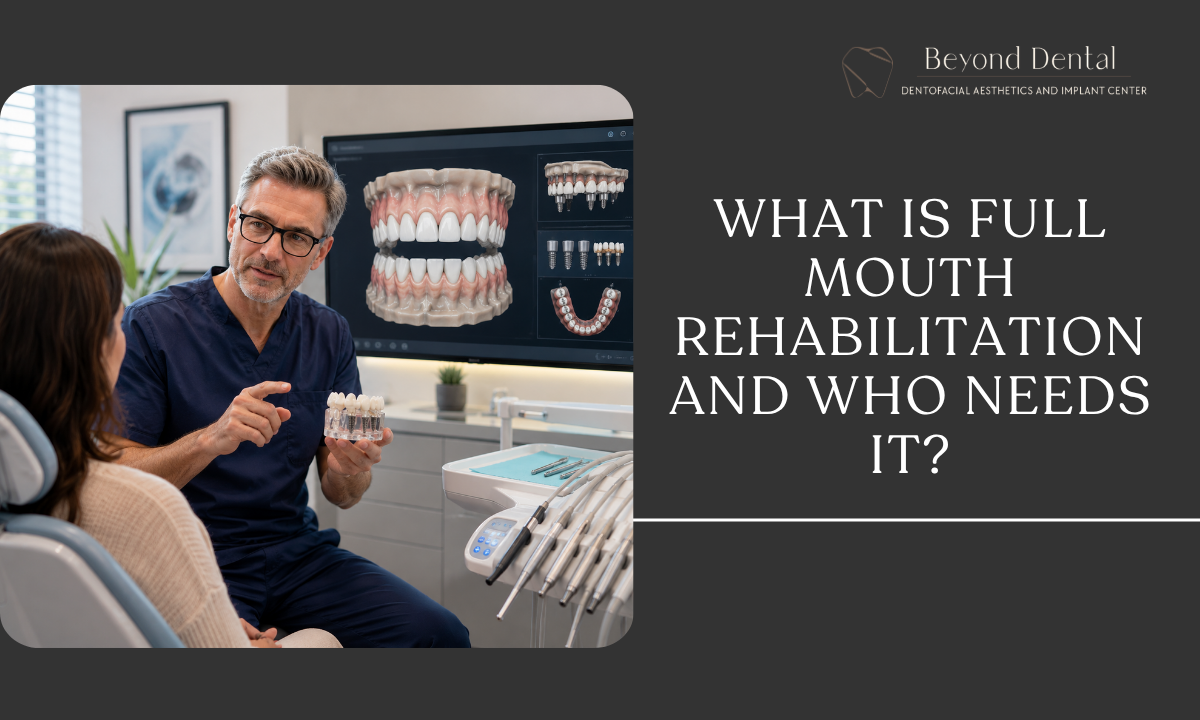
Losing the comfort, function, or appearance of your teeth affects far more than your smile. It changes how you eat, speak, and feel about yourself every day. Full mouth rehabilitation is a comprehensive approach that restores the health, function, and look of your entire mouth, often combining several treatments into one carefully planned journey.
If you have multiple dental problems that feel overwhelming to tackle one by one, this is the treatment designed to bring everything back together. For anyone searching for a trusted dentist in Vasanth Nagar, Bangalore, understanding what full mouth rehabilitation involves is a helpful first step.
Full Mouth Rehabilitation
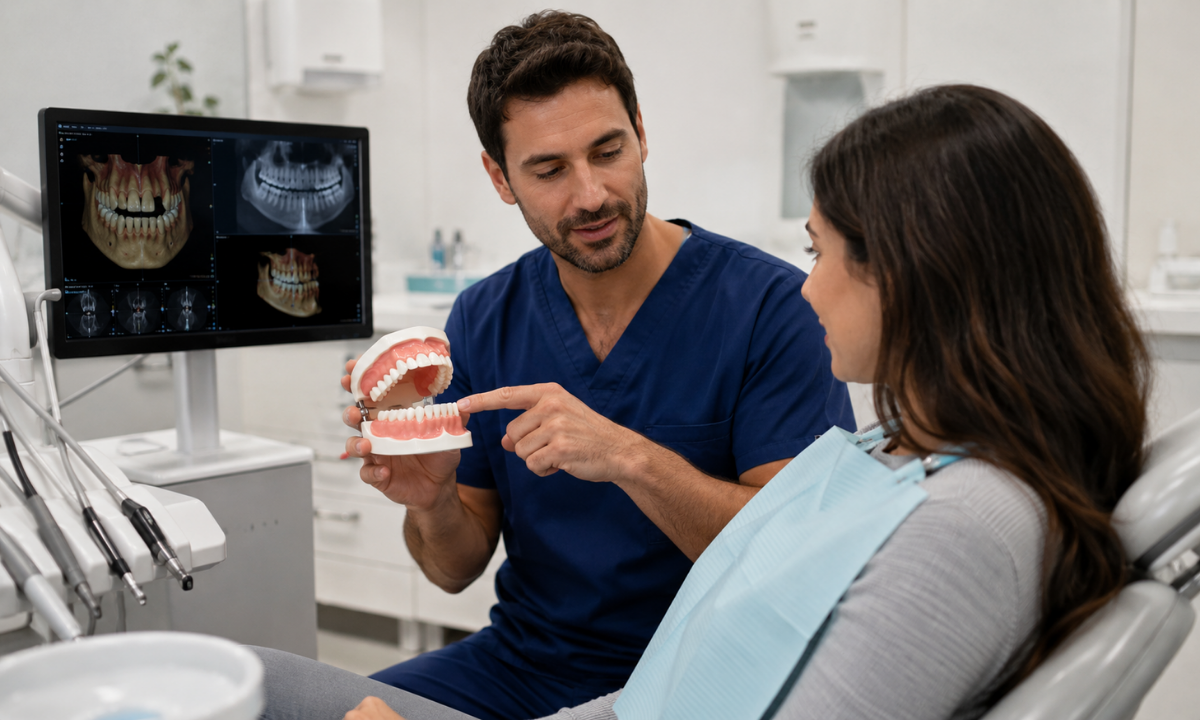
Full mouth rehabilitation, sometimes called full mouth reconstruction, is the process of rebuilding or restoring all the teeth in both the upper and lower jaws. Rather than treating a single tooth in isolation, it looks at your mouth as a whole, addressing the teeth, gums, bite, and supporting structures together so that every part works in harmony.
It is not a single procedure but a personalised treatment plan that can combine restorative and cosmetic dentistry. Depending on your needs, it might bring together crowns, bridges, implants, veneers, gum treatment, and bite correction, all sequenced in a way that builds towards a healthy, functional, and natural-looking result. The aim is straightforward. By the end of treatment, your teeth should work properly, feel comfortable, and look the way you want them to.
Why Is Full Mouth Rehabilitation Needed?
Many people reach a point where dental issues have quietly built up over the years. A cracked tooth here, a missing one there, worn enamel, and ongoing discomfort can combine into a situation that piecemeal fixes no longer solve. Full mouth rehabilitation steps in precisely when several problems need to be corrected together for the result to last.
It also matters for your overall health, not just your appearance. When your bite is uneven or teeth are missing, the effects ripple outward into jaw pain, difficulty chewing, headaches, and even further tooth loss over time. Restoring the full mouth interrupts that cycle and protects your long-term oral health, which is why dentists often recommend a complete approach rather than years of isolated repairs.
Who Needs Full Mouth Rehabilitation?
Full mouth rehabilitation is not for everyone, but for the right person, it can be genuinely life-changing. It tends to suit people who are dealing with several dental problems at once rather than a single isolated issue. The clearest signs that you might be a candidate include:
- Multiple missing teeth that affect chewing, speech, or confidence
- Severely worn teeth from grinding, acid erosion, or age
- Extensive decay involving several teeth at the same time
- Cracked, broken, or damaged teeth beyond a simple repair
- Ongoing jaw pain or bite problems, including TMJ-related discomfort
- Old or failing dental work, such as worn crowns, bridges, or fillings
- Gum disease that has weakened the foundation of your teeth
If any of these feel familiar, a thorough assessment at a well-equipped dental clinic in Vasanth Nagar, Bangalore can help you understand whether full mouth rehabilitation is the right path, or whether a simpler treatment would do.
Common Causes That Lead to Full Mouth Rehabilitation
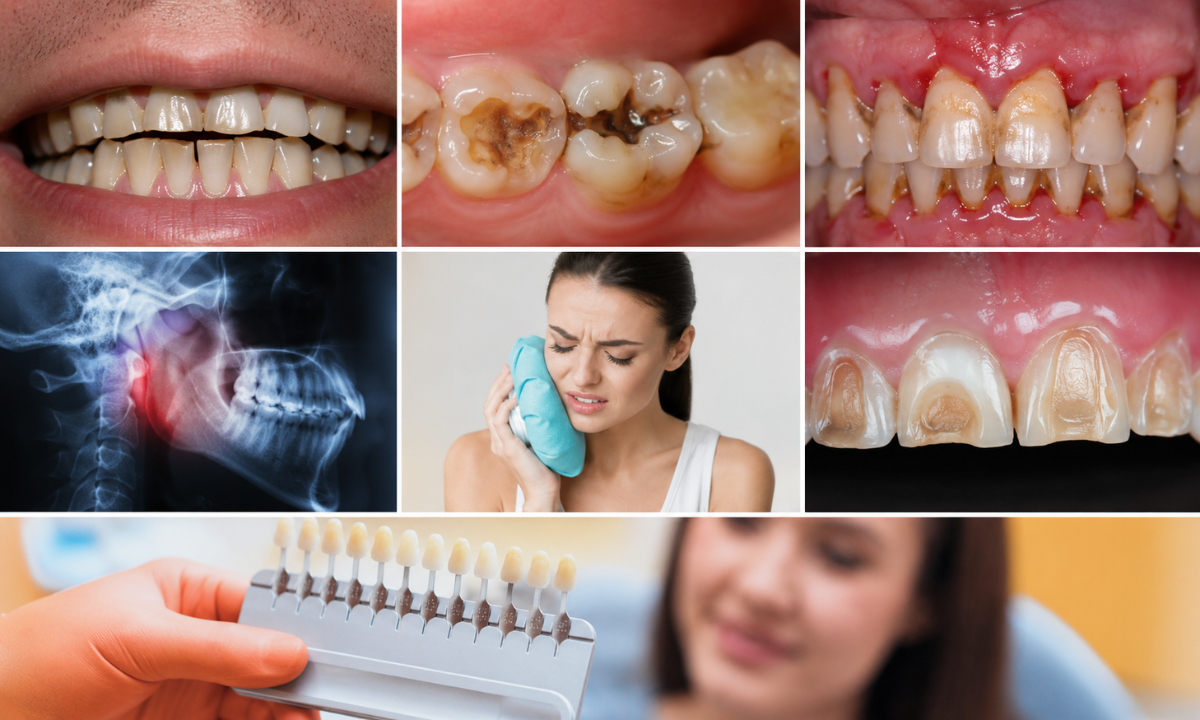
Recognising what leads to this stage can help you act earlier. In most cases, it is not one dramatic event but a gradual build-up of factors. Long-term teeth grinding, known as bruxism, slowly wears teeth down over the years.
Untreated decay or gum disease spreads quietly until several teeth are affected. Trauma or injury can damage multiple teeth at once, while acid erosion from diet or certain medical conditions weakens enamel over time.
Occasionally, congenital conditions affecting tooth development or enamel play a part too. More often than not, it is a combination of these that brings someone to the point where a complete, planned approach makes more sense than treating each problem on its own.
What Does Full Mouth Rehabilitation Involve?
Every plan is unique, shaped around your mouth and your goals, but most journeys follow a recognisable path. It begins with a comprehensive examination, where your dentist studies your teeth, gums, jaw, and bite, usually with the help of X-rays, scans, and photographs to build a complete picture. From there, a personalised treatment plan is drawn up, sequencing each step in the right order so the work builds logically rather than randomly.
The restorative phase forms the core of treatment, addressing function first. This is where implants replace missing teeth, crowns and bridges rebuild damaged ones, gum treatment restores healthy foundations, and bite correction brings everything into proper alignment. Once the function is secure, cosmetic refinements such as veneers or whitening polish the final appearance. The process closes with maintenance and follow-up, because regular check-ups are what protect the result and keep your new smile healthy for years to come.
The Benefits of Full Mouth Rehabilitation
The advantages reach well beyond a better-looking smile. The table below sets out what most people gain, and why it matters in daily life.
| Benefit | What It Means for You |
|---|---|
| Restored chewing and eating | Enjoy food comfortably again without pain or difficulty |
| Improved speech | Clearer speech once missing or damaged teeth are restored |
| Relief from jaw pain | A corrected bite eases headaches and TMJ-related discomfort |
| Prevention of further damage | Stops small problems from snowballing into bigger ones |
| Renewed confidence | A natural, healthy smile you feel comfortable showing |
| Better long-term oral health | A stable, functional mouth that is easier to maintain |
For many people, the biggest change is the simplest one: living without the constant background worry of dental problems.
How Long Does Full Mouth Rehabilitation Take?
This depends entirely on the complexity of your case, so timelines vary from person to person. Some plans wrap up within a few months, while more involved cases, particularly those that include implants, naturally take longer because the body needs healing time between certain stages. Your dentist will give you a realistic timeline once your plan is finalised, so there are no surprises, and you know what to expect from the very beginning.
Is Full Mouth Rehabilitation Worth It?
For anyone dealing with multiple dental issues, the answer is usually yes. Treating problems together, in a thoughtfully planned sequence, tends to produce a more comfortable, longer-lasting, and more natural result than chipping away at them one at a time over many years. It is best understood as an investment in both your health and your quality of life. According to the World Health Organization, oral diseases affect billions of people worldwide and are closely tied to overall health, which is a useful reminder that restoring full oral function is about far more than appearance.
Choosing the Right Dentist for Full Mouth Rehabilitation
Because full mouth rehabilitation weaves several treatments into one plan, the skill and judgement of your dentist shape the outcome more than almost anything else. These cases are often handled by a prosthodontist, a specialist trained in restoring and replacing teeth, though many experienced general dentists carry out full mouth rehabilitation too. It is worth looking for a clinic that offers a genuinely thorough assessment, communicates clearly, and builds an honest, personalised plan rather than pushing a one-size-fits-all package. A good dentist takes the time to walk you through each stage, explains your options in plain language, and makes sure you feel comfortable and informed before any treatment begins.
In Summary
Full mouth rehabilitation is a complete, personalised approach to restoring the health, function, and beauty of your smile. It suits people facing multiple dental issues that are better treated together than separately. While it is a significant step, the results can transform not only your teeth but also your comfort, confidence, and everyday quality of life. If you recognise the signs in your own situation, the best starting point is simply a detailed consultation to understand exactly what your mouth needs.
If you have been putting off treatment because your dental concerns feel too complex to fix, full mouth rehabilitation offers a clear, structured way forward. Under the care of an experienced dentist in Vasanth Nagar, Bangalore, like Dr Chinmaya Bhandary, each stage is planned around your needs, so you always understand what is happening and why. With the right guidance, restoring your smile becomes far less daunting and far more achievable than tackling each problem alone.
Frequently Asked Questions
Is full mouth rehabilitation painful?
Most treatments are carried out under local anaesthesia, so you should feel little to no pain during the procedures themselves. Some mild soreness afterwards is normal and usually settles quickly with simple care and any medication your dentist recommends.
How long does full mouth rehabilitation take to complete?
The timeline depends on the complexity of your case and which treatments are involved, ranging from a few weeks to several months for more extensive plans. At Beyond Dental, your treatment is sequenced carefully so that each stage heals properly before the next begins, and if dental implants form part of your plan, additional healing time is built in to ensure a strong, lasting result.
How much does full mouth rehabilitation cost?
The cost varies widely depending on how many teeth are involved and which treatments are needed. Because every plan is personalised, the most reliable way to get an accurate figure is through a consultation and full assessment.
How long do the results last?
With good oral hygiene and regular check-ups, the results can last many years. Implants in particular, are designed as a long-term solution when they are cared for properly.
Can full mouth rehabilitation fix my bite?
Yes. Correcting the bite is often a central part of the process, which can relieve jaw pain, headaches, and the discomfort caused by an uneven or misaligned bite.
How do I know if I need full mouth rehabilitation?
If you are dealing with several dental problems at once, such as missing, worn, or damaged teeth alongside bite or gum issues, you may well be a candidate. A thorough dental examination is the only way to know for certain.