
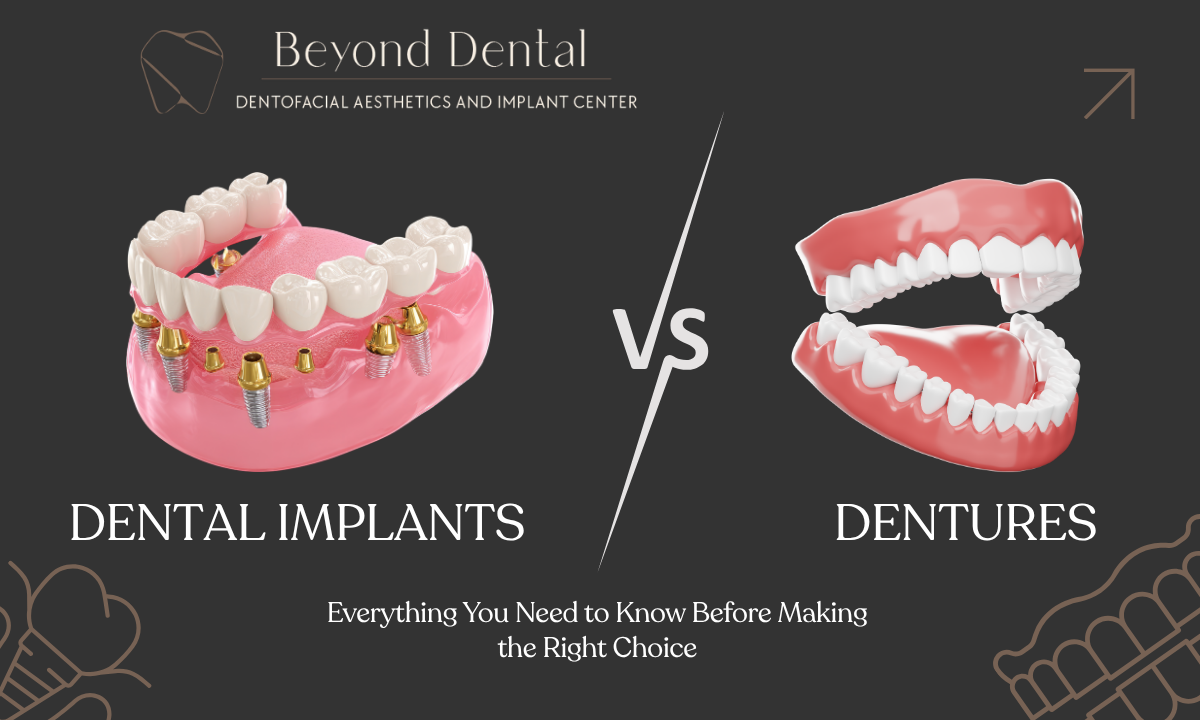
Dental implants and dentures both replace missing teeth, but they differ significantly in cost, comfort, lifespan, maintenance, and long-term oral health. If you’re unsure which option is right for you, this guide compares them side by side.
Dental Implants vs. Dentures: Quick Comparison
| Factor | Dental Implants | Dentures |
|---|---|---|
| Type | Permanent, fixed | Removable |
| Looks & Feel | Very close to natural teeth | Good, but less natural |
| Lifespan | 20+ years with proper care | 5–7 years before relining/replacement |
| Bone preservation | Yes stimulates jawbone | No bone loss continues |
| Maintenance | Brush and floss normally | Daily removal and soaking |
| Longevity | 95–98% success over 10 years | May require relining or replacement over time |
| Procedure | Surgical | Non-surgical |
| Cost (India) | Higher initial cost, lower long-term replacement needs | Lower initial cost, ongoing maintenance and replacement |
| Recommended For | Patients seeking a permanent, long-term solution | Patients looking for an affordable, non-surgical option |
| Comfort & Stability | Permanently fixed in the jaw | May shift or slip while eating or speaking |
| Eating Ability | Almost like natural teeth | May limit hard or sticky foods |
| Speech | Natural speech | Initial adjustment may affect pronunciation |
Quick takeaway: Dental implants are generally the better long-term option because they provide greater stability, preserve jawbone, and function like natural teeth. Dentures are a practical choice for patients seeking a more affordable or non-surgical tooth replacement solution.
What Are Dental Implants?
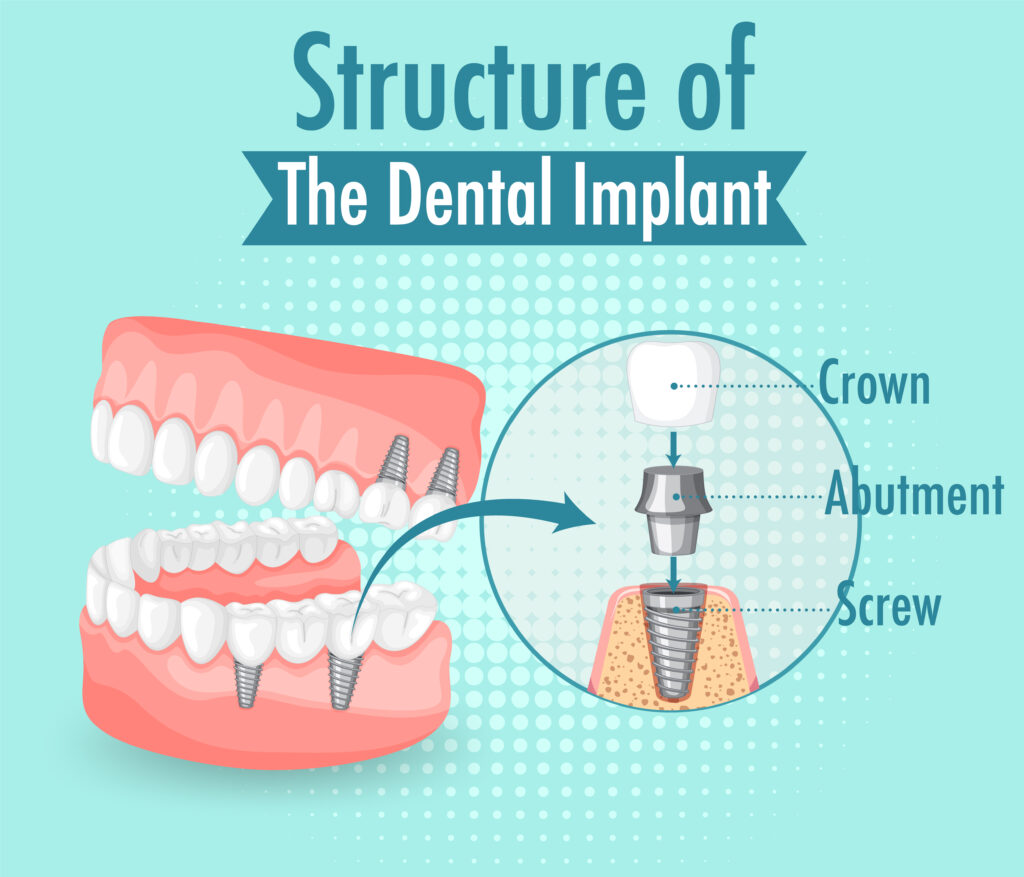
A dental implant is a titanium post that is surgically placed into the jawbone to act as an artificial tooth root. Once the implant integrates with the bone a process called osseointegration a crown is attached on top. The result looks, feels, and functions like a natural tooth.
The procedure involves three main parts:
- The implant post a titanium screw placed into the jawbone
- The abutment a connector piece that sits above the gum line
- The crown the visible tooth-shaped cap on top
Implants can replace a single tooth, multiple teeth, or even a full arch (known as All-on-4 or All-on-6 implants).
What Are Dentures?

Dentures are removable prosthetic devices designed to replace missing teeth and surrounding tissue. They come in two main types:
| Type | Description | Best For |
|---|---|---|
| Complete dentures | Replace all teeth in the upper or lower jaw | Total tooth loss |
| Partial dentures | Fill gaps when some natural teeth remain | Multiple missing teeth |
| Implant-supported dentures | Dentures anchored to implants for stability | Better retention without full implants |
Dentures sit on top of the gums and are held in place by suction, adhesives, or in the case of implant-supported dentures by attachment to implants.
The Data What Research Actually Says
This is where the two options differ most significantly.
Dental Implant Success Rates
- Studies show a success rate of 90–95% for dental implants over a 10-year period.
- Success rates range from 95% to 98%, and with correct installation and proper maintenance, implants can keep patients smiling for at least 25 years.
- A 2024 meta-analysis consolidating 20-year data reported a mean survival rate of 92%, meaning 4 out of 5 dental implants are still functioning after 20 years a record unmatched by bridges, dentures, or any other tooth replacement method.
- The cumulative prosthetic survival rate of All-on-4 dental implants is 98.8%.
Denture Longevity
- Removable dentures typically last 5–7 years before requiring relining or replacement due to continued jawbone resorption. Around 20% of denture wearers had to have their fittings readjusted in as short as three years, caused by natural changes in the mouth as new tooth loss occurs.
Patient Preference
- According to stats published in the Journal of Dental Research, nearly 70% of adults express a preference for dental implants over traditional dentures or bridges due to their permanence and ease of maintenance.
The Bone Loss Factor Why It Matters More Than Most People Think
This is one of the most important and least discussed differences between the two options, and it connects closely to what you eat and how you care for your teeth every day.
When a tooth is lost, the jawbone beneath it begins to resorb (shrink) because it no longer receives stimulation from a tooth root. This is a natural biological process. Over time, bone loss changes the shape of the face, causes the cheeks to appear sunken, and makes dentures increasingly difficult to fit properly.
Dental implants are the only tooth replacement option that prevents this. The titanium post acts like a tooth root and transmits chewing forces into the jawbone, keeping it stimulated and intact.
Dentures do nothing to prevent bone loss. This is why denture wearers often find that their fit changes over time the bone underneath is gradually changing shape.
| Bone Health Over Time | Dental Implants | Dentures |
|---|---|---|
| Year 1 | Bone preserved | Mild bone loss begins |
| Year 3–5 | Bone fully stable | Noticeable resorption, fit changes |
| Year 10+ | Bone intact | Significant bone loss, facial changes possible |
Cost The Honest Breakdown
Cost is one of the biggest deciding factors, especially in the Indian context. Here is a realistic picture.
| Cost Factor | Dental Implants | Dentures |
|---|---|---|
| Upfront Cost (India) | ₹25,000–₹80,000 per implant (excluding additional procedures) | ₹10,000–₹35,000 for a full set |
| Maintenance Cost | Routine dental check-ups and good oral hygiene; generally low maintenance | Adhesives, relining, repairs, and periodic adjustments may add to long-term costs |
| Replacement Frequency | Can last 20+ years or longer with proper care | Typically require relining or replacement every 5–7 years |
| Long-Term Cost (10–15 Years) | Higher initial investment but often lower overall cost due to fewer replacements and greater durability. | Lower upfront cost but recurring maintenance and replacements can increase total expenditure |
| Overall Value | Best for patients seeking a durable, long-term tooth replacement | Suitable for those looking for an affordable, non-surgical solution |
Note: The costs above are approximate and may vary depending on the number of teeth being replaced, the need for bone grafting or other preparatory procedures, the implant system used, and the dentist’s expertise and clinic location.
Quick Takeaway:
While dentures are generally more affordable initially, dental implants often provide better long-term value because they require fewer replacements and ongoing adjustments. The most cost-effective option ultimately depends on your oral health, budget, and treatment goals.
Comfort and Daily Life A Real Comparison
This is what patients most often ask about before making a decision.
Eating
- Dental implants function like natural teeth most foods including hard and crunchy ones can be eaten normally
- Dentures reduce chewing efficiency. Studies suggest denture wearers have about 20–30% less chewing force compared to natural teeth or implants
- Sticky and hard foods are often avoided by denture wearers to prevent slipping or damage
Speaking
- Implants have no adjustment period speech is natural immediately after healing
- New denture wearers often experience a temporary lisp or difficulty with certain sounds until the mouth adjusts
Confidence
- Implants are fixed and do not move no concern about slipping during conversation or eating
- Dentures, especially older or poorly fitting ones, can shift or click, which affects confidence in social situations
Maintenance
| Task | Dental Implants | Dentures |
|---|---|---|
| Daily cleaning | Brush and floss normally | Remove and soak overnight |
| Special products needed | No | Denture cleansers, adhesives |
| Dentist visits | Routine check-ups | Check-ups + periodic relining |
| Risk of breakage | Very low | Moderate can crack if dropped |
Who Is a Good Candidate for Dental Implants?
Implants are not suitable for everyone. A thorough dental evaluation is needed before proceeding. Good candidates generally have:
- Sufficient jawbone density to support the implant post
- Healthy gums with no active periodontal disease
- Good overall health no uncontrolled diabetes or conditions that affect healing
- Non-smokers or those willing to quit before and after the procedure
- Fully developed jaw typically adults aged 18 and above
Factors that may affect implant suitability:
| Factor | Impact on Implant Success |
|---|---|
| Smoking | Reduces blood supply, slows healing, increases failure risk |
| Uncontrolled diabetes | Poor healing, higher infection risk |
| Bone loss/insufficient bone | May require bone grafting first |
| Active gum disease | Must be treated before implant placement |
| Certain medications | Blood thinners and some bone medications need review |
The good news: implants placed in bone-grafted sites achieved a success rate of 97.83%, statistically comparable to implants placed in patients with adequate native bone meaning even those with bone loss are often still candidates after preparatory treatment.
Who Might Be Better Suited to Dentures?
Dentures remain a valid and practical choice in several situations:
- Multiple or full arch tooth loss where implants for every tooth would be cost-prohibitive
- Patients with significant bone loss not suitable for implants (without grafting)
- Those who prefer a non-surgical option
- Patients who need an immediate temporary solution while planning longer-term treatment
- Budget constraints where the upfront cost of implants is not feasible at the time
It is also worth noting that implant-supported dentures are a middle-ground option dentures that are anchored to 2–4 implants for significantly better stability and bone preservation, without the cost of replacing every individual tooth.
Implants vs. Dentures Which Lasts Longer?
| Timeframe | Implants | Dentures |
|---|---|---|
| 5 years | 97–98% survival rate | Usually fine, may need minor adjustments |
| 10 years | 90–95% survival rate | Likely need relining or replacement |
| 20 years | 92% mean survival (meta-analysis) | Typically replaced 2–3 times |
| Lifetime | Possible with proper care | Not realistic without multiple replacements |
Summary How to Decide
There is no universal answer. The right choice depends on several personal factors.
Consider dental implants if:
- Long-term investment in oral health is the priority
- Only one or a few teeth are missing
- Bone preservation is a concern
- A permanent, low-maintenance solution is preferred
- Overall health supports a surgical procedure
Consider dentures if:
- Budget is a significant constraint right now
- Full arch replacement is needed and implants for every tooth are not feasible
- A non-surgical approach is preferred
- It is being used as a temporary or transitional solution
Consider implant-supported dentures if:
- Full arch replacement is needed but better stability and bone preservation are important
- A balance between cost and long-term benefit is the goal
A consultation with a specialist in Prosthodontics and Implantology is the most reliable way to determine which option is clinically appropriate for a specific case.
Book a Consultation
Beyond Dental | Vasanth Nagar, Bangalore www.beyondental.in
Dr. Chinmaya Bhandary specialises in Prosthodontics and Implantology and offers detailed evaluations for both implant and denture candidacy, including digital planning and full-mouth assessments.
Frequently Asked Questions
Q1. Are dental implants painful?
The procedure is done under local anaesthesia, so there is no pain during placement. Some soreness and swelling in the days after is normal and manageable with prescribed medication. Most patients report the discomfort is much less than they expected.
Q2. Can anyone get dental implants?
Not everyone is an immediate candidate. Sufficient bone density, healthy gums, and good general health are required. Some patients need preparatory treatment such as bone grafting or gum disease treatment before implant placement. A clinical evaluation determines this.
Q3. How long does the dental implant process take?
The full process typically takes 3–6 months. This includes the initial placement, the osseointegration period (where the implant fuses with the bone), and the final crown fitting. In some cases, same-day implants are possible a dentist can advise based on the specific case.
Q4. Do dentures look natural?
Modern dentures are significantly better than older versions and can look very natural. However, over time, bone loss changes the shape of the jaw and face, which can affect how well dentures fit and how natural they look.
Q5. What is an implant-supported denture?
An implant-supported denture is a removable denture anchored to 2–4 implants placed in the jawbone. It provides far better stability than a conventional denture, prevents bone loss at the implant sites, and eliminates the need for adhesives.
Q6. How do I know which option is right for me?
The best way is a clinical consultation that includes a jaw X-ray or CBCT scan to assess bone density, a gum health evaluation, and a discussion of budget and long-term goals. At Beyond Dental, Vasanth Nagar, Bangalore, Dr. Chinmaya Bhandary provides personalised assessments for both implant and denture options.
Q7. Are dental implants better than dentures?
Yes, dental implants are generally considered the better long-term option because they function like natural teeth, preserve jawbone, and offer greater stability. Dentures remain a suitable alternative for patients seeking a more affordable or non-surgical solution.