
If a sip of cold water or a spoonful of ice cream sends a sharp jolt through your teeth, you are not alone. Several home remedies for sensitive teeth can ease that discomfort using things you already have at home. While these help with mild cases, lasting sensitivity is best checked by a dentist in Vasanth Nagar, Bangalore, who can find the real cause. This guide explains what actually works, what to avoid, and the signs that mean it is time to stop self-treating and see a dentist.
Medical Disclaimer
This blog is for general informational purposes only and is not a substitute for professional dental advice, diagnosis, or treatment. The home remedies described here may help with mild, early-stage tooth sensitivity, but they are not a cure. If your sensitivity is severe, persistent, or worsening, always consult a qualified dentist. Never delay seeking professional care because of something you have read here.
What Causes Sensitive Teeth in the First Place
Tooth sensitivity usually happens when the protective enamel wears down or the gums recede, exposing the softer layer underneath called dentine. Tiny channels in this dentine lead straight to the nerve, so hot, cold, sweet, or acidic foods trigger that familiar sting.
Common triggers include brushing too hard, acidic diets, teeth grinding, and gum problems. Grinding at night quietly wears the enamel away over months, while aggressive brushing pushes the gums back and exposes the root surface. Knowing the cause matters because the right sensitive teeth treatment at home depends on what is driving the problem in the first place. As the Mayo Clinic notes, sensitivity often develops when worn enamel or exposed tooth roots leave the dentine open, allowing heat, cold, and acidic foods to reach the nerve and trigger that sharp sensation.
Home Remedies for Sensitive Teeth That Actually Work
Each of the following natural remedies for tooth sensitivity is supported by sound dental reasoning rather than unverified claims.

1. Switch to a Desensitising Toothpaste
This is the single most effective at-home step and one of the simplest ways to find sensitive teeth relief. Toothpastes made for sensitive teeth contain compounds like potassium nitrate that gradually calm the nerves.
How to do it:
- Use a desensitising toothpaste twice a day in place of your normal one.
- Rub a thin layer onto the sensitive area before bed.
- Leave it on without rinsing so it works overnight.
2. Try a Saltwater Rinse
A warm saltwater rinse is one of the simplest sensitive teeth home remedies, since salt reduces inflammation and helps soothe irritated gums.
How to do it:
- Mix half a teaspoon of salt into a glass of warm water.
- Swish for around thirty seconds, making sure it reaches the sore areas.
- Repeat twice a day, morning and night.
3. Use a Soft Bristled Toothbrush
Hard brushing wears enamel and pushes the gums back, both of which worsen sensitivity. A gentler brushing routine protects the surfaces you still have.
How to do it:
- Switch to a soft-bristled brush.
- Use gentle, circular strokes instead of hard back-and-forth scrubbing.
- Replace the brush every three months.
4. Apply Clove Oil
Clove has been used for tooth pain for centuries because it contains eugenol, a natural anaesthetic. This is a useful trick for sudden flare-ups and works much like other home remedies for a toothache when the pain strikes unexpectedly.
How to do it:
- Dilute a drop of clove oil with a little carrier oil.
- Dab it onto the affected tooth with a cotton bud.
- Use for short-term relief only, not as a daily fix.
This works much like other ways to relieve a toothache at home when the pain strikes unexpectedly.
5. Rinse With Green Tea
Unsweetened green tea is rich in antioxidants and has anti-inflammatory properties that help calm sensitive teeth.
How to do it:
- Brew a cup and let it cool fully.
- Use it as a mouth rinse, swishing for around thirty seconds.
- Do this twice a day to strengthen teeth and reduce irritation over time.
6. Avoid Acidic Foods and Drinks
Citrus, fizzy drinks, wine, and pickles erode enamel and feed sensitivity, so cutting back gives your enamel a chance to recover. A tooth-friendly diet does more to protect enamel than most people realise.
How to do it:
- Cut back on the main acidic culprits.
- Rinse with plain water after acidic foods.
- Wait an hour before brushing so you do not scrub softened enamel.
It is worth knowing which everyday foods are secretly damaging your teeth so you can protect your enamel before sensitivity sets in.
7. Wear a Night Guard if You Grind
If you wake with jaw ache or worn teeth, grinding could be the root cause. A night guard protects the enamel from further damage while you sleep.
How to do it:
- Get a night guard, either over-the-counter or custom-made.
- Wear it every night while you sleep.
- Ask a dentist for a custom fit if the grinding is severe.
Home Remedies to Avoid
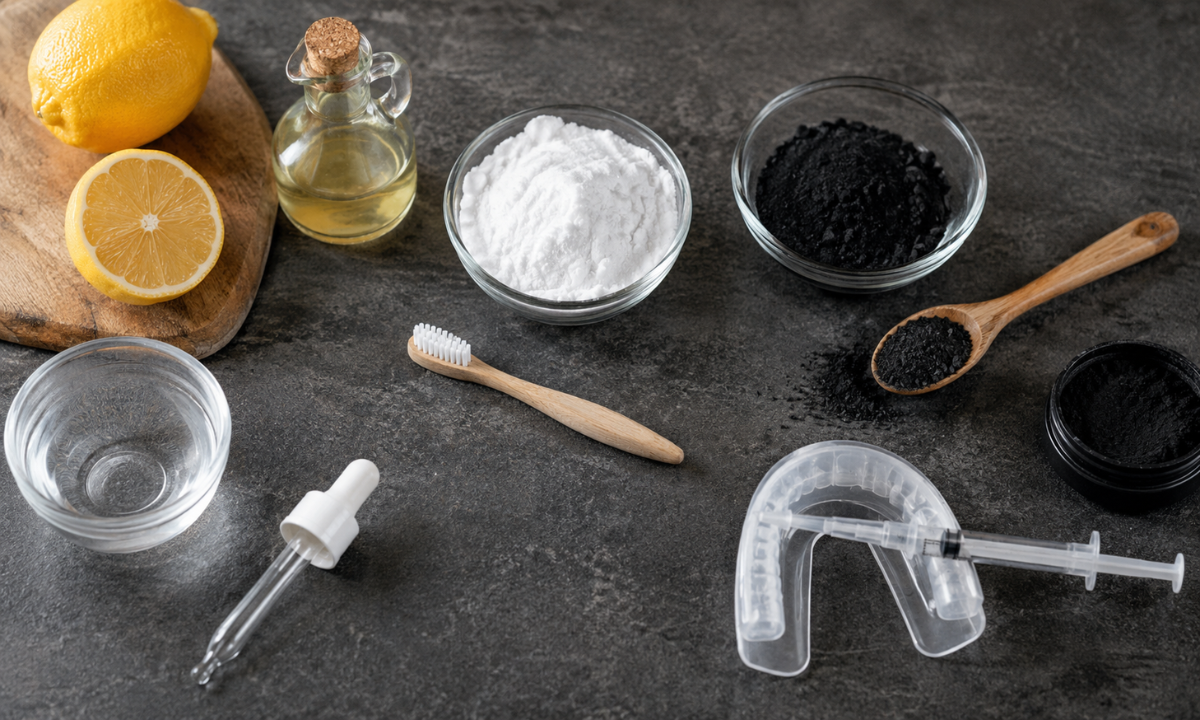
Not every popular tip online is safe. Some of the most shared “natural” fixes are acidic or abrasive, and they quietly make sensitivity worse instead of better. Steer clear of these:
- Lemon juice and vinegar. Often shared as natural whitening tricks, both are highly acidic and strip away more enamel, leaving the dentine even more exposed.
- Baking soda scrubs. Abrasive enough to wear down already thin enamel, which only sharpens the sensitivity.
- Charcoal whitening powders. They feel like they are working because they are gritty, but that grit is rough on weakened surfaces and damages them over time.
- Hydrogen peroxide and DIY whitening kits. These can trigger or worsen sensitivity, especially on thin enamel, so avoid them until a dentist has checked your teeth.
Most importantly, do not ignore lasting pain. Home care manages mild, occasional sensitivity, but it does not fix the underlying problem. Persistent or sharp pain can point to decay, a crack, or an infection, none of which settle with toothpaste or rinses alone. If the discomfort keeps returning despite weeks of careful home care, that is your cue to get it properly checked.
How to Stop Sensitive Teeth Pain When It Will Not Settle
Home remedies are excellent for mild, occasional sensitivity, but some cases need professional attention. It is worth booking a dental visit if the sensitivity lasts more than a few weeks despite home care, if there is sharp pain in one specific tooth that could signal a cavity or crack, if the pain lingers long after the trigger is gone, or if you notice swelling, bleeding, or visible gum recession.
Persistent sensitivity in a single tooth sometimes points to deeper decay that may need root canal treatment to save the tooth, and a quick check now usually means a simpler fix later. A dentist can pinpoint whether the cause is worn enamel, gum recession, grinding, or early decay and recommend the right sensitive teeth treatment at home alongside any in clinic care.
When to See a Dentist for Sensitive Teeth
Home remedies handle mild, occasional sensitivity well, but lasting or worsening pain needs a professional look. If the sensitivity sticks around for more than a few weeks, centres on one tooth, or comes with swelling, bleeding, or visible gum recession, it is worth getting it checked rather than masking it.
A dental clinic in Vasanth Nagar, Bangalore, like Beyond Dental, can pinpoint whether the cause is worn enamel, gum recession, grinding, or early decay, and offer in clinic options such as fluoride application, desensitising treatments, or restorative work that home care cannot match. Treating the underlying cause early usually means a simpler fix later.
Frequently Asked Questions
How can I stop sensitive teeth pain at home?
The fastest at home relief comes from a desensitising toothpaste used twice daily, a warm saltwater rinse, and switching to a soft-bristled brush. Avoid acidic foods while your enamel recovers.
Where can I get treatment for sensitive teeth?
If home remedies are not enough, a consultation helps identify the exact cause. Beyond Dental offers diagnosis and treatments such as fluoride application, desensitising therapy, and restorative care for lasting relief from tooth sensitivity.
Do home remedies for sensitive teeth actually work?
Yes, for mild sensitivity. Desensitising toothpaste, saltwater rinses, clove oil, and dietary changes are all effective. They manage symptoms but will not cure underlying decay or cracks, which need professional care.
Can sensitive teeth heal on their own?
Mild sensitivity caused by temporary irritation can settle with good home care. However, sensitivity from worn enamel, receding gums, or decay will not reverse on its own and needs a dentist.
Why are my teeth suddenly sensitive?
Sudden sensitivity is often caused by enamel erosion, aggressive brushing, teeth grinding, gum recession, or recent dental work. If it appears without an obvious reason, a dental check is wise.
Is salt water good for sensitive teeth?
Yes. A warm saltwater rinse reduces inflammation and soothes irritated gums, making it one of the safest and simplest natural remedies for tooth sensitivity. It also helps balance the mouth’s pH and keeps the area clean, which supports healing. For best results, rinse twice a day and avoid swallowing the solution.