
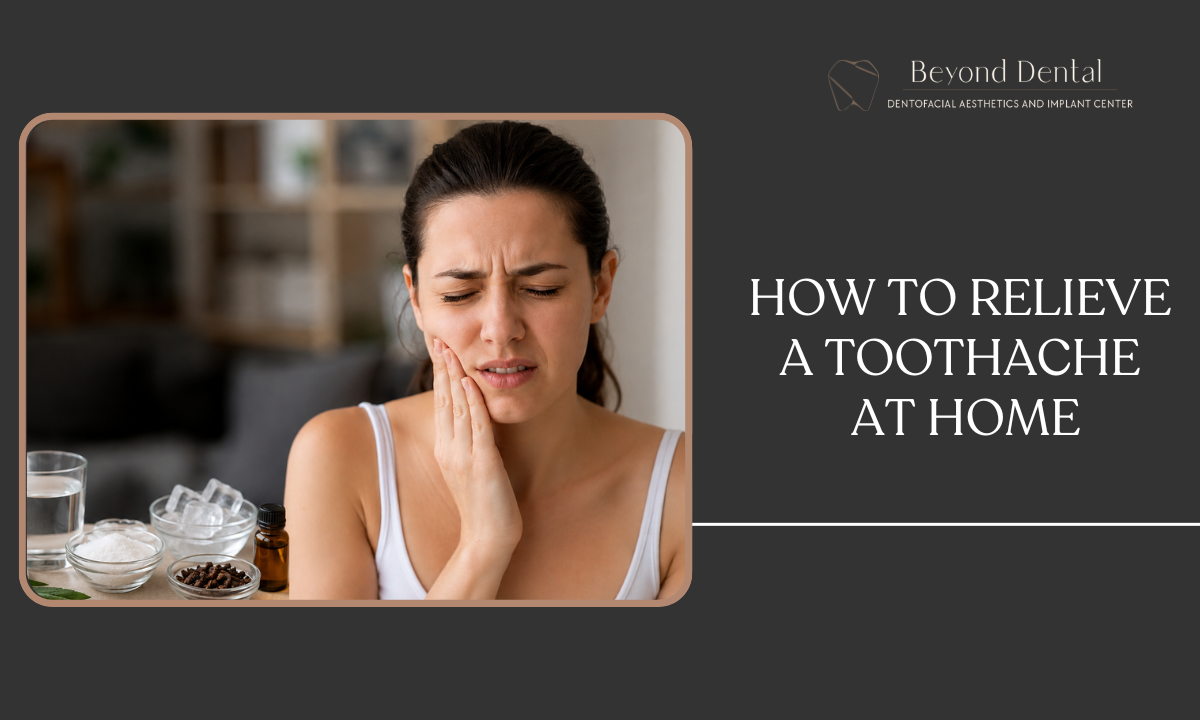
A toothache does not wait for a good time.
It shows up in the middle of a workday, on a holiday, or at midnight when every clinic is closed. The pain builds fast, and before you know it, eating, talking, and even thinking straight feels difficult.
Most people in this situation do one of two things. They either ignore it and hope it passes, or they panic and have no idea where to start.
This guide gives you a third option.
Below you will find safe, proven ways to manage tooth pain at home, clear signs that tell you when it has gone beyond home care, and exactly what a dentist will do to fix it for good.
First, Understand What You Are Actually Dealing With
Not all toothaches are the same, and knowing the difference helps you manage them better and understand how urgent the situation is.
Sensitivity pain – a sharp, quick sting when you eat something hot, cold, or sweet. Usually points to enamel erosion, a small cavity, or exposed roots. Uncomfortable but manageable.
Throbbing or constant pain – a steady, pulsing ache that doesn’t go away. This usually means the nerve is involved. Could be deep decay, an infection, or an abscess. This is more serious.
Swelling with pain – if the pain comes with a swollen cheek, jaw, or gum, there is likely an infection present. This needs professional treatment as soon as possible, not just home remedies.
Sharp pain on biting – often points to a cracked tooth, a broken filling, or an issue with a previous restoration.
Identifying which one you have helps you pick the right remedy and tells you how long you can reasonably wait before seeing the best dentist in Vasanth Nagar, Bangalore.
6 Home Remedies That Actually Work

These will not fix the underlying problem. But they are clinically safe, genuinely effective at reducing pain, and will help you function until you can get proper treatment.
1. Warm Salt Water Rinse
This is the first thing any dentist will tell you to do, and for good reason. Dissolve half a teaspoon of salt into a glass of warm water. Rinse gently for 30 seconds and repeat 2 to 3 times. Salt water reduces inflammation, flushes out bacteria around the affected area, and soothes irritated gum tissue. Simple, free, and it works faster than most people expect.
2. Clove Oil
Clove oil contains eugenol, a natural compound with proven anaesthetic and antibacterial properties. Dab a small amount on a cotton ball and hold it against the painful tooth for 1 to 2 minutes. Do not apply too much as it can irritate the gum. This is one of the most effective short-term nerve pain relievers you will find at home, and it is available at most pharmacies and grocery stores.
3. Paracetamol or a Painkiller
A painkiller is the most effective over-the-counter option for dental pain. It targets both the pain and the inflammation at the same time, which is why dentists recommend it first. Take it with food at the standard dosage. If you are unsure which one to pick, just walk into any pharmacy and ask, and they will guide you.
One thing to never do: place the tablet directly on the tooth. This is a widespread myth and will only chemically burn the surrounding gum tissue
4. Cold Compress
Wrap ice cubes in a clean cloth or use a cold pack and apply it to the outside of your cheek on the affected side. 15 minutes on, 15 minutes off. This numbs the area, reduces swelling, and slows down inflammation. It works especially well if there is any visible puffiness on the face. Never apply ice directly to the skin.
5. Garlic Paste
Crush a fresh clove of garlic into a paste and apply it gently to the affected tooth and gum. Garlic contains allicin, a natural antibacterial compound that can help fight the infection causing the pain. It is not the most pleasant remedy, but it is genuinely effective, especially when an infection is involved.
6. Elevate Your Head
If the pain is worse when you lie down, that is because lying flat increases blood pressure around the inflamed area. Keep your head propped up with an extra pillow, whether you are resting during the day or trying to sleep at night. It reduces that throbbing intensity significantly.
What to Avoid When You Have a Toothache

What you do not do matters just as much as what you do. These are the things that seem harmless but will make the pain significantly worse.
- Hot food and drinks – heat causes inflamed tissue to expand, which puts more pressure on an already aggravated nerve. Even a warm cup of tea can spike the pain instantly. Stick to room temperature food and drinks until you have been treated.
- Very cold drinks – if you have an exposed nerve or a cracked tooth, sudden cold is like a jolt of electricity straight to the tooth. Avoid cold water, ice cream, or anything straight from the fridge.
- Sugary foods and drinks – sugar feeds the bacteria sitting in a cavity or around an infected tooth. Every time you consume sugar, you are essentially making the infection worse. Avoid it completely until the tooth is treated.
- Pressing or tapping the tooth – it feels instinctive to keep checking if it still hurts. It does. Every time you press or tap, you are aggravating the inflammation further. Leave it alone.
- Alcohol as a painkiller – this is one of the most common home remedies people try, and it genuinely does not work. Alcohol does not numb dental nerve pain effectively; it dehydrates you, and it can interact with any medication you are taking.
Home Remedies at a Glance
| Remedy | What It Does | How Long Does It Help |
|---|---|---|
| Warm Salt Water Rinse | Reduces inflammation, flushes bacteria | 20 to 40 minutes |
| Clove Oil | Natural nerve anaesthetic | 1 to 2 hours |
| Paracetamol or a Painkiller | Targets pain and inflammation | 4 to 6 hours |
| Cold Compress | Numb area, reduces swelling | 15 to 30 minutes |
| Garlic Paste | Antibacterial, fights infection | 30 to 60 minutes |
| Elevated Head | Reduces blood pressure around the tooth | Ongoing while resting |
Signs You Cannot Afford to Wait Any Longer

Home remedies buy you time. They do not treat the problem. If you notice any of the following, stop managing it at home and see a dentist the same day or go to the nearest hospital:
- Swelling in your cheek, jaw, or neck – this is a sign of a spreading abscess
- Fever above 38°C alongside the toothache – your body is fighting a systemic infection
- Pus or a foul taste in your mouth – an active abscess that needs to be drained professionally
- Difficulty swallowing or opening your mouth – this is a medical emergency
- Pain so severe that none of these remedies is touching it – the nerve may be acutely infected
A dental abscess is not something to delay. Infections in the mouth can spread to the jaw and neck if ignored. It is rare for it to get that far, but it does happen, and it happens faster than most people expect.
What the Dentist Will Actually Do to Fix It
Once you can visit a dental clinic in Vasanth Nagar or anywhere in Bangalore, here is what treatment typically looks like based on the cause:
- Root Canal Treatment – if the nerve is infected or decay has gone deep into the tooth. Modern root canals are comfortable, usually completed in one to two sittings, and completely save the tooth from extraction.
- Dental Filling or Crown – if a cracked tooth, worn enamel, or a broken filling is the cause, a filling or ceramic crown seals the tooth and stops further damage.
- Tooth Extraction – only if the tooth is beyond saving. The dentist will also walk you through replacement options.
- Antibiotic Course – prescribed if there is an active infection alongside the pain.
The earlier you go in, the simpler the treatment. A cavity caught early is a one-visit filling. The same cavity left untreated becomes a root canal. Left even longer, it becomes an extraction.
Conclusion
A toothache that you cannot address right away is stressful, but you are not helpless. Salt water, clove oil, ibuprofen, a cold compress, and keeping your head elevated will get you through the next several hours safely and with significantly less pain.
But here is what matters most: home remedies manage symptoms. They do not heal a tooth. The moment you can get to a dentist, go. Do not wait for the pain to pass on its own, because in most cases it will not, and the underlying problem will only get worse.
If you are looking for a trusted dentist in Vasanth Nagar that handles everything from emergency tooth pain to complete dental care, Beyond Dental is where you need to be.
Frequently Asked Questions
1. Can a toothache go away on its own?
Sometimes, a mild toothache from food stuck between teeth or minor gum irritation can settle on its own. But if the pain is throbbing, constant, or has lasted more than 2 days, it will not go away without treatment. Ignoring it only allows the underlying problem to get worse.
2. How long can I manage a toothache at home before seeing a dentist?
Home remedies are safe for 24 to 48 hours maximum. If the pain has not reduced after that, or if you notice swelling, fever, or pus, you need to see a dentist in Bangalore the same day. Do not stretch it beyond 2 days.
3. Is clove oil safe to use directly on the tooth?
Yes, when used correctly. Apply a small amount on a cotton ball and hold it against the tooth for 1 to 2 minutes. Avoid applying it directly to the gum tissue in large amounts as it can irritate. A little goes a long way.
4. What is the fastest way to stop a toothache at home?
The most effective combination is ibuprofen (400mg) taken with food and clove oil applied directly to the tooth. Together, they tackle both the nerve pain and the inflammation, giving you the fastest short-term relief possible.
5. Can a toothache be a sign of something serious?
Yes. A toothache accompanied by swelling, fever, or pus is a sign of a dental abscess, an active infection that requires immediate professional treatment. If left untreated, it can spread beyond the tooth and become a medical emergency.
6. How much does a root canal cost in Bangalore?
Root canal treatment costs in Bangalore typically range from ₹3,000 to ₹8,000 per tooth, depending on the tooth’s location and the severity of the infection. At Beyond Dental, the team will give you a clear cost breakdown before starting any treatment so there are no surprises.