
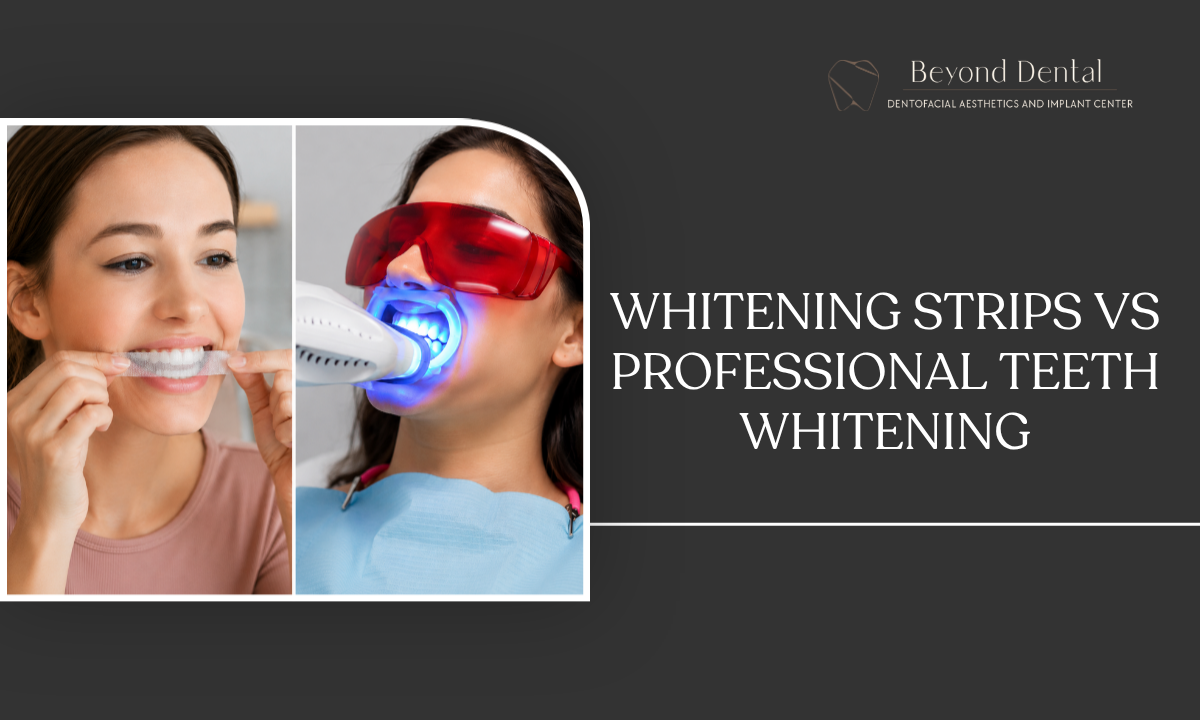
A brighter smile is one of the easiest ways to look fresher and feel more confident, so it is no surprise that teeth whitening is one of the most searched dental topics. When it comes to whitening strips vs professional teeth whitening, most people want the same thing: a noticeably whiter smile without wasting money or damaging their teeth.
The two options work quite differently though, and what looks cheaper upfront is not always better value, which is why many people consider professional teeth whitening in Vasanth Nagar before reaching for a box of strips. This guide breaks down how each one works, what results to expect, the safety side, and which is genuinely worth it for you.
Why Teeth Get Stained in the First Place
Before comparing the two, it helps to understand what you are actually trying to remove. Tooth discolouration usually falls into two types.
- Surface stains (extrinsic). These sit on the enamel and come from everyday culprits like coffee, tea, red wine, tobacco, and deeply coloured foods. They respond well to whitening.
- Deeper stains (intrinsic). These sit within the tooth structure and can be caused by ageing, certain medications, fluorosis, or past injury. These are far harder to shift and sometimes do not respond to whitening at all.
This matters because no whitening method works equally on every kind of stain. A product that brightens coffee stains beautifully may do almost nothing for discoloration caused by ageing or medication, which is one reason results vary so much from person to person.
What Are Teeth Whitening Strips?
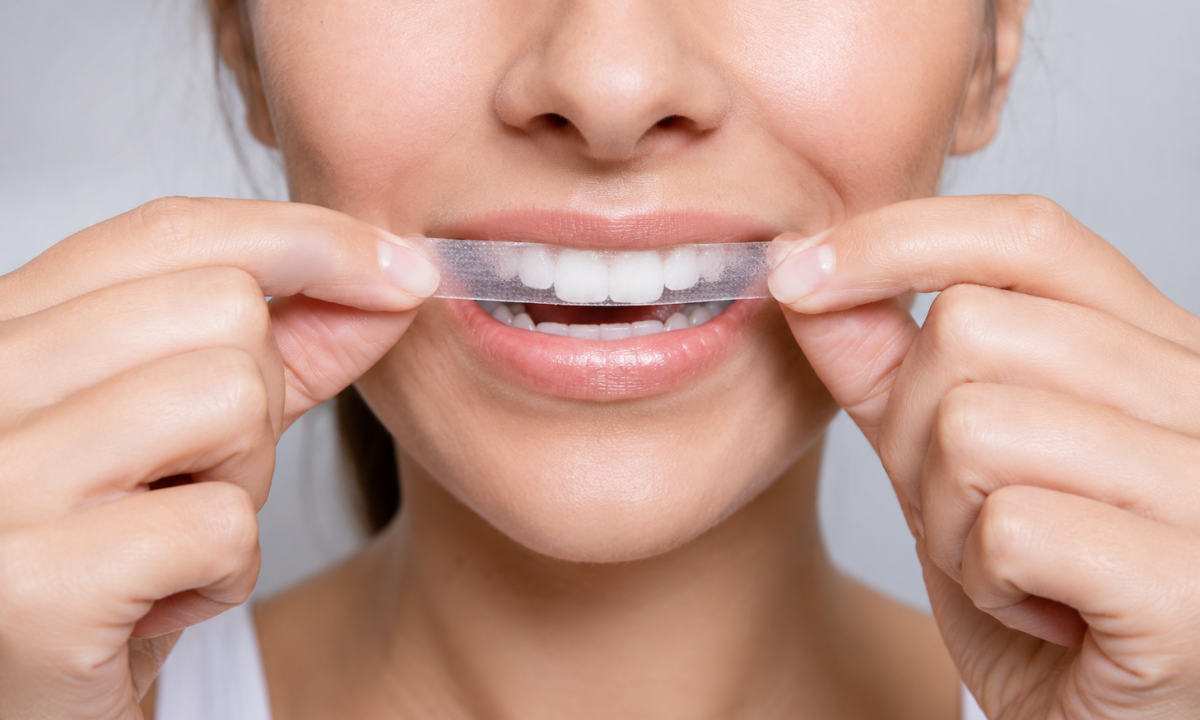
Whitening strips are thin, flexible plastic strips coated with a peroxide-based whitening gel. You press them onto your teeth and leave them on for a set time, usually around thirty minutes a day over one to two weeks. They are sold over the counter and are popular because they are cheap, easy to use at home, and need no appointment.
The active ingredient is typically hydrogen peroxide or carbamide peroxide, but at a much lower concentration than what a dentist uses. That lower strength is the trade-off. Strips are gentle and convenient, but they are also slower and more limited in how much they can brighten.
Where strips work well:
- Mild surface staining from food and drink
- People on a tight budget who want a small, gradual improvement
- Maintaining results between professional treatments
Where strips fall short:
- They cannot reach the gaps between teeth, so whitening can look patchy or uneven
- The one-size shape does not fit every mouth, which can irritate gums
- They do little for deeper or stubborn stains
- Results are modest and fade faster
One more point worth knowing for readers in India: Whitening strips are far less commonly sold here than in the US, and quality varies a lot between brands. Many products bought online are not regulated to the same standard, so it is easy to end up with something weak, expired, or harsh on the enamel.
What Is Professional Teeth Whitening?
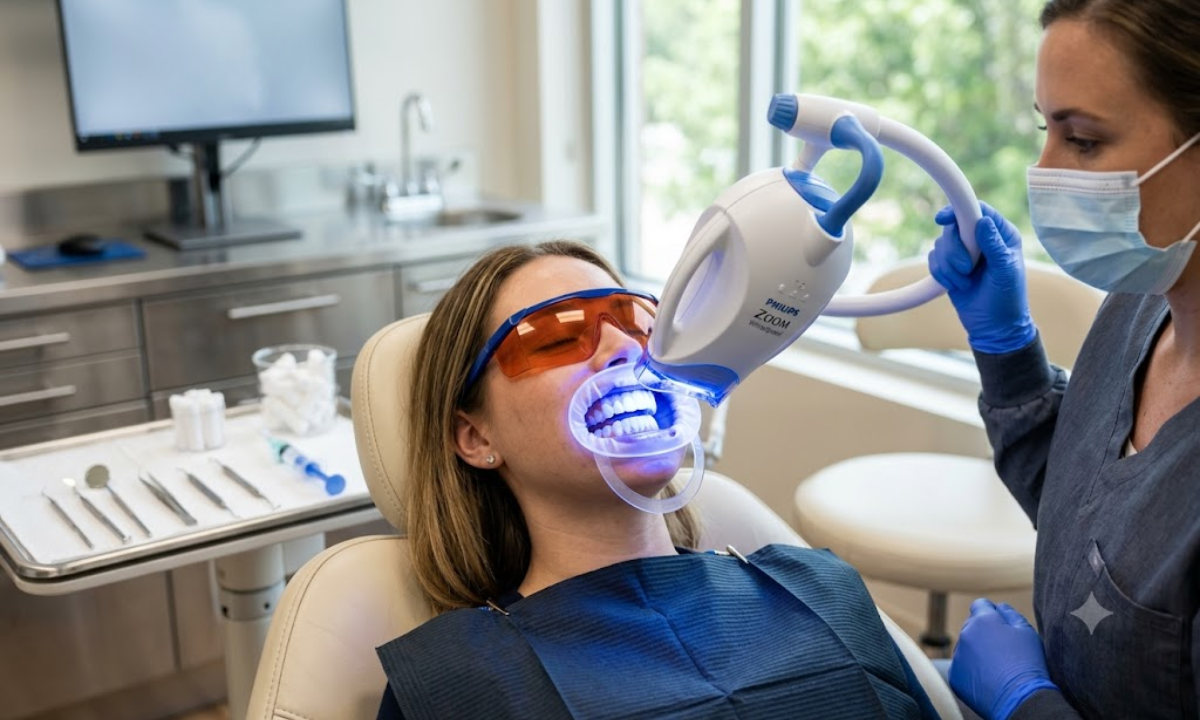
Professional teeth whitening is carried out by a trained dentist, either in the clinic or through a custom take-home kit they prepare for you. Because it is supervised, it can safely use a much stronger whitening agent and target your teeth far more precisely.
In an in clinic session, the dentist protects your gums, applies a high-strength whitening gel, and often activates it with a special light to speed up the process. The whole thing usually takes under an hour, and the change is visible the same day. A custom take-home kit works differently. The dentist takes impressions and makes trays moulded to your exact teeth, so the gel sits evenly and does not leak onto the gums the way a generic strip can.
Why professional whitening tends to win on results:
- Much higher whitening strength, so bigger and faster change
- Even coverage across all teeth, including the edges and gaps
- Gums are protected, lowering the risk of irritation
- A dentist checks your teeth first, so problems like decay or sensitivity are caught before whitening
- Results last longer with proper aftercare
The catch is cost and access. Professional whitening costs more than a box of strips and needs a visit to a clinic. For many people, though, the stronger and longer-lasting result makes it a better value over time, since you are not repeatedly buying strips that only do a little.
Whitening Strips vs Professional Teeth Whitening: Side by Side
Here is a clear comparison so you can weigh the two at a glance.
| Factor | Whitening Strips | Professional Teeth Whitening |
|---|---|---|
| Whitening strength | Low concentration peroxide | High concentration, dentist-supervised |
| Speed of results | 1 to 2 weeks of daily use | Visible same day (in clinic) |
| Evenness of result | Can be patchy, misses gaps | Even across all teeth |
| Effect on deep stains | Limited | More effective |
| Gum safety | Can irritate if it slips | Gums protected during treatment |
| Supervision | None | The dentist checks teeth first |
| Upfront cost | Low | Higher |
| Longevity | Fades sooner | Lasts longer with aftercare |
| Best for | Mild stains, maintenance | Noticeable, lasting whitening |
Are Whitening Strips Safe?
Used correctly and occasionally, good quality strips are generally safe for most people. The problems usually come from overuse or misuse. Leaving strips on longer than directed, using them too often, or using harsh products can wear down enamel and cause lasting sensitivity. Because strips are unsupervised, there is also no one to spot an existing issue. Whitening over a cavity, a crack, or gum disease can cause real pain and can make the underlying problem worse.
It also helps to have realistic expectations. Whitening does not work on every kind of discoloration, and bleaching agents like peroxide do little for stains caused by medication or injury, which is one more reason a quick check beforehand is useful. A consultation with a dentist in Vasanth Nagar, Bangalore, can confirm whether your enamel and gums are healthy enough for whitening and which method suits your teeth best.
Mistakes to Avoid With At-Home Whitening
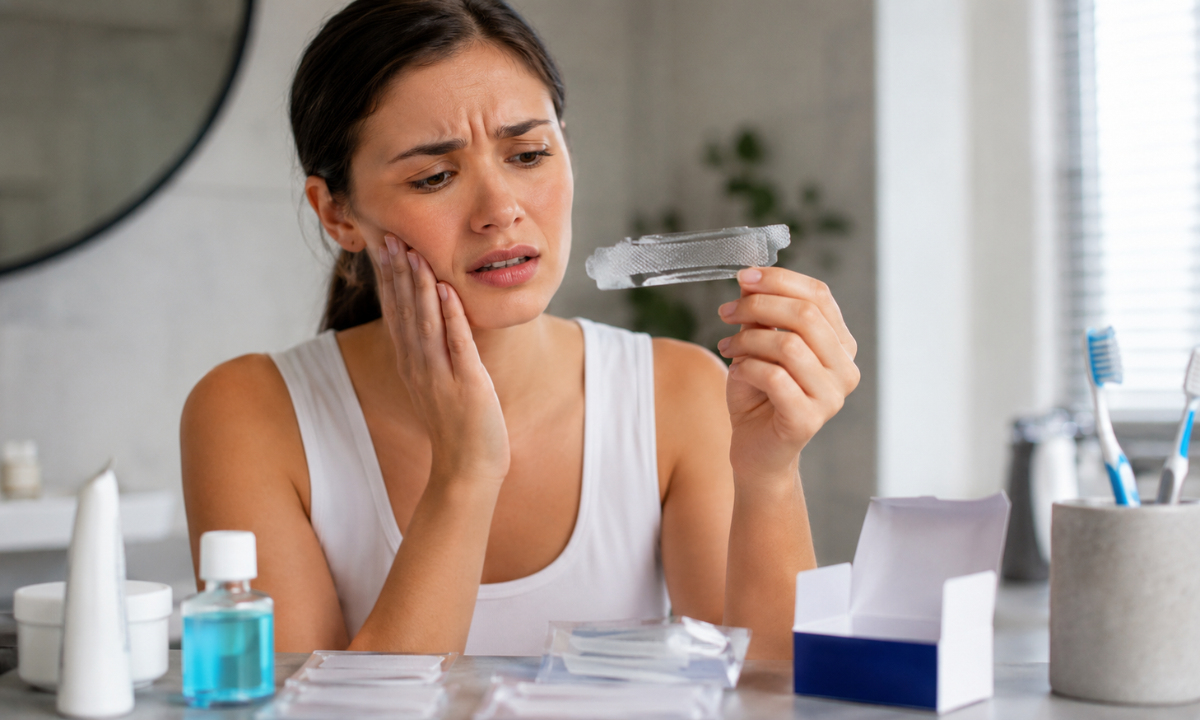
If you do choose a home option, steer clear of these common errors that damage teeth rather than brighten them.
- Leaving strips on too long. More time does not mean whiter teeth; it means more irritation.
- Using them too frequently. Back-to-back rounds strip enamel and trigger sensitivity.
- Trusting unverified online kits. Concentration and quality are unpredictable, and some are simply unsafe.
- Whitening over dental problems. Pain during whitening is a warning sign, not something to push through.
- Expecting strips to fix deep stains. They will not, and chasing that result leads to overuse.
For lasting brightness, what you eat and drink afterwards matters just as much as the whitening itself. It helps to know which everyday foods are secretly damaging your teeth and staining your enamel, so your results last longer, whichever method you choose.
Which One Is Actually Worth It?
The honest answer depends on your goal, your budget, and the state of your teeth.
Whitening strips may be worth it if:
- Your staining is mild and mostly from food or drink
- You want a small, gradual lift rather than a dramatic change
- You are on a tight budget and happy to top up regularly
- Your teeth and gums are healthy with no sensitivity
Professional teeth whitening is worth it if:
- You want a clear, noticeable result
- You want it done quickly and safely
- You have deeper staining that strips cannot shift
- You have sensitivity or dental work and want it handled properly
- You want the result to last rather than fade in weeks
For most people who want a real, even, and lasting change, professional whitening offers better value despite the higher upfront cost, simply because you are not repeatedly spending on a product that only does a little. Strips have their place for mild touch-ups and maintenance, but they are not a true substitute for a supervised treatment.
For most people who want a real, even, and lasting change, professional whitening offers better value despite the higher upfront cost, simply because you are not repeatedly spending on a product that only does a little. Strips have their place for mild touch-ups and maintenance, but they are not a true substitute for a supervised treatment. If you are weighing up your options, a good dental clinic in Vasanth Nagar, Bangalore, can talk you through what is realistic for your teeth.
How to Keep Your Smile White After Whitening
Whichever route you take, the result is not permanent, and habits decide how long it lasts. A few simple steps help.
- Cut back on coffee, tea, red wine, and tobacco, or rinse with water after.
- Use a straw for staining drinks to limit contact with your teeth.
- Brush and floss consistently to stop new stains settling in.
- Keep up regular dental checkups so your dentist can monitor and lightly maintain the result.
Results vary from person to person, so it helps to understand how long teeth whitening lasts and what affects it. Staying on top of routine care also catches small issues early, and it is worth knowing how often you should really visit the dentist, since regular visits keep both your whitening and your overall oral health on track.
In Summary
Both options can brighten your smile, but they suit different needs, budgets, and starting points. Whitening strips are a low-cost, convenient choice for mild surface staining and the occasional touch-up, and they work reasonably well if your teeth and gums are already healthy. The trade-off is that they are slower, can whiten unevenly, and tend to fade sooner, so you often find yourself buying another box before long. They are best thought of as a light maintenance tool rather than a real fix for noticeable discolouration.
Professional teeth whitening asks for more upfront, but it usually earns that cost back in results. The stronger, dentist-supervised gel lifts stains faster and more evenly; the gums are protected during treatment, and any underlying issue is caught before whitening begins. With good aftercare, the brightness also holds for far longer, which is why it tends to be better value over time. When in doubt, a short consultation will quickly tell you which route genuinely fits your teeth and the result you are after.
Frequently Asked Questions
Do whitening strips work as well as professional whitening?
No. Strips use a lower-strength gel and can only lighten mild surface stains, usually by a shade or two over a couple of weeks. Professional whitening uses a stronger, dentist-supervised gel that whitens more, more evenly, and faster, with longer-lasting results.
Where can I get professional teeth whitening done?
If you want a safe, noticeable result, a supervised treatment is the way to go. Beyond Dental offers professional teeth whitening with both in clinic and custom take-home options, matched to your stains and sensitivity, so you get an even, lasting result rather than a patchy one.
Are whitening strips bad for your teeth?
Used occasionally and as directed, good-quality strips are generally safe. The risk comes from overuse, leaving them on too long, or whitening over an existing problem like a cavity or sensitive teeth, which can damage enamel and cause pain.
How long does professional teeth whitening last?
With good aftercare, professional whitening can last from several months up to a couple of years. Longevity depends on your diet, smoking, and oral hygiene. Cutting back on staining foods and keeping up regular checkups helps the result last.
Is professional teeth whitening worth the extra cost?
For most people who want a clear, even, and lasting result, yes. While strips are cheaper upfront, you often need to keep buying them. Professional whitening gives a bigger, safer, longer-lasting change, which usually makes it better value over time.
Can I whiten my teeth if they are sensitive?
You should get them checked first. Some whitening products worsen sensitivity, but a dentist can use a gentler approach or treat the sensitivity beforehand, so whitening stays comfortable. Avoid unsupervised strips if you already have sensitive teeth.