
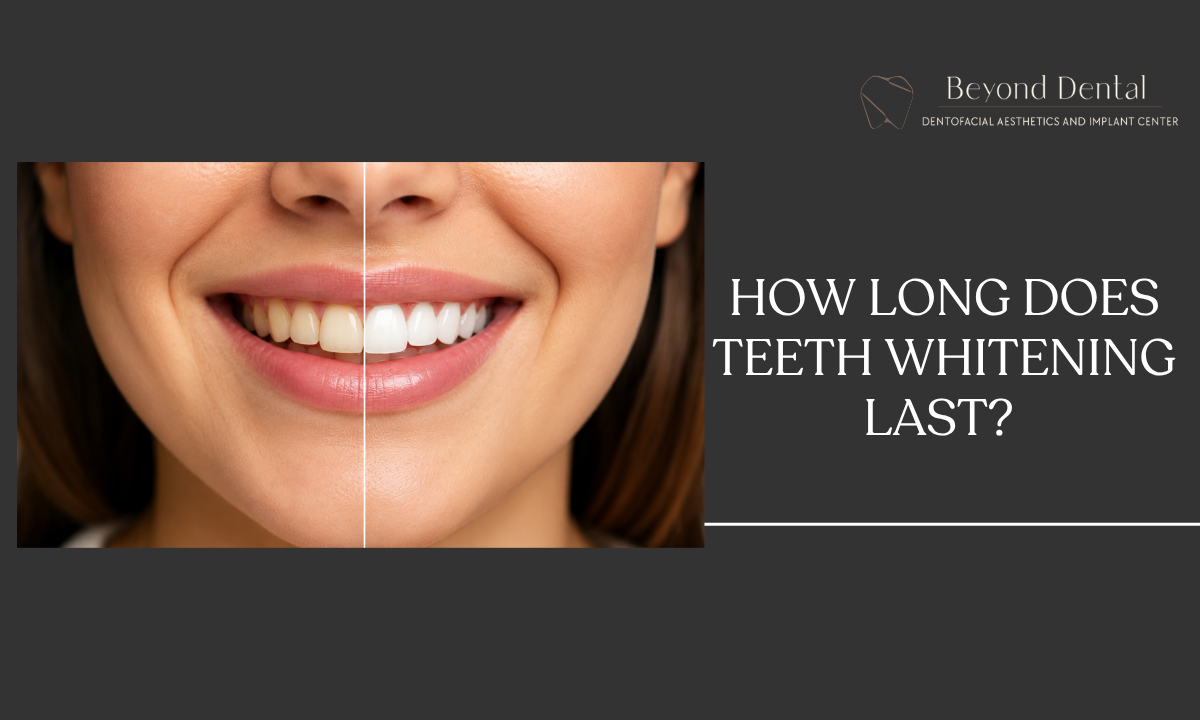
A brighter smile is one of the most noticeable improvements a person can make to their appearance. It changes how you look in photographs, how confident you feel walking into a room, and how others perceive you within seconds of meeting you. Which is exactly why teeth whitening is one of the most requested cosmetic dental procedures in India today.
But the question almost everyone asks before booking, and rightly so, is this: how long does it actually last?
It is a fair question. Teeth whitening is an investment of both time and money, and understanding what to realistically expect from your results is more useful than any before-and-after photograph. This blog gives you an honest, clinically accurate answer to what the research says, what affects how long your results last, and what you can do to extend them.
How Long Does Teeth Whitening Last?
Professional teeth whitening results typically last anywhere from six months to three years, depending on the method used, lifestyle habits, diet, and oral hygiene.
That is a wide range and intentionally so. There is no single answer that applies to every person, because the duration of your whitening results depends on a combination of factors that are unique to you. What matters is understanding which of those factors you can control and which you cannot.
Here is a practical breakdown by treatment type:
| Whitening Method | How Long Results Typically Last |
|---|---|
| Professional in-clinic whitening | 1 to 3 years with proper care |
| Dentist-prescribed take-home trays | 6 months to 1 year |
| Over-the-counter whitening strips | 3 to 6 months |
| Whitening toothpaste | Surface stain removal only, no structural whitening |
The most important distinction in this table is between professional and over-the-counter treatments. Over-the-counter products like whitening strips or toothpaste provide mild results that typically last a few weeks to a couple of months, and they do not penetrate deeply into the enamel the way professional treatments do.
Professional in-clinic whitening uses higher concentrations of bleaching agents applied under clinical supervision, which is why the results are more dramatic, faster, and significantly longer lasting.
What Affects How Long Your Teeth Whitening Results Last
Understanding this is where most people find the most value because several of the factors that determine how long your results last are entirely within your control.
Your Diet and Drinking Habits
This is the single biggest lifestyle factor affecting how long whitening results last. Coffee, tea, and wine are among the most common culprits due to the chromogenic compounds they contain, and acidic foods can wear down enamel, increasing the chance of future tooth staining.
For most urban professionals in Bangalore, daily chai or coffee is non-negotiable. The key is not elimination but awareness. Here is what directly affects your results:
- Coffee, tea, and red wine, consumed daily, accelerate staining faster than almost anything else
- Acidic foods and drinks like citrus juices and sodas weaken enamel over time, making teeth more porous and stain-prone
- Dark-colored sauces, berries, and beetroot leave surface stains that build up gradually
- Drinking staining beverages through a straw significantly reduces direct contact with teeth
Your Oral Hygiene Routine
A consistent oral hygiene routine is one of the most effective and underestimated ways to extend whitening results. What makes the most difference:
- Brushing twice daily with a fluoride toothpaste removes surface staining before it sets
- Flossing daily prevents plaque buildup between teeth, where discoloration starts
- Using a whitening toothpaste two to three times a week helps maintain brightness between sessions
- Professional cleaning every six months removes tartar and surface staining that brushing alone cannot reach
Smoking and Tobacco Use
Smoking is one of the leading causes of tooth staining and can rapidly reverse whitening results regardless of the quality of treatment received. Nicotine and tar penetrate enamel over time, making tobacco staining one of the most persistent and difficult to reverse causes of discoloration.
Your Natural Enamel and Tooth Color
Not all teeth respond to whitening the same way. Key points to understand:
- Yellowish staining from food and drinks responds best to whitening and holds results longest
- Greyish tones from medication or developmental factors respond less predictably
- Thinner enamel absorbs staining faster and may require more frequent touch-ups
- More severely discolored teeth may require multiple whitening sessions to achieve and maintain the desired result
Your Age
As enamel naturally thins with age, it becomes more porous and susceptible to staining. Younger patients with denser enamel typically hold results longer, though genetics and oral care history play an equally significant role.
Professional Whitening vs At-Home Kits
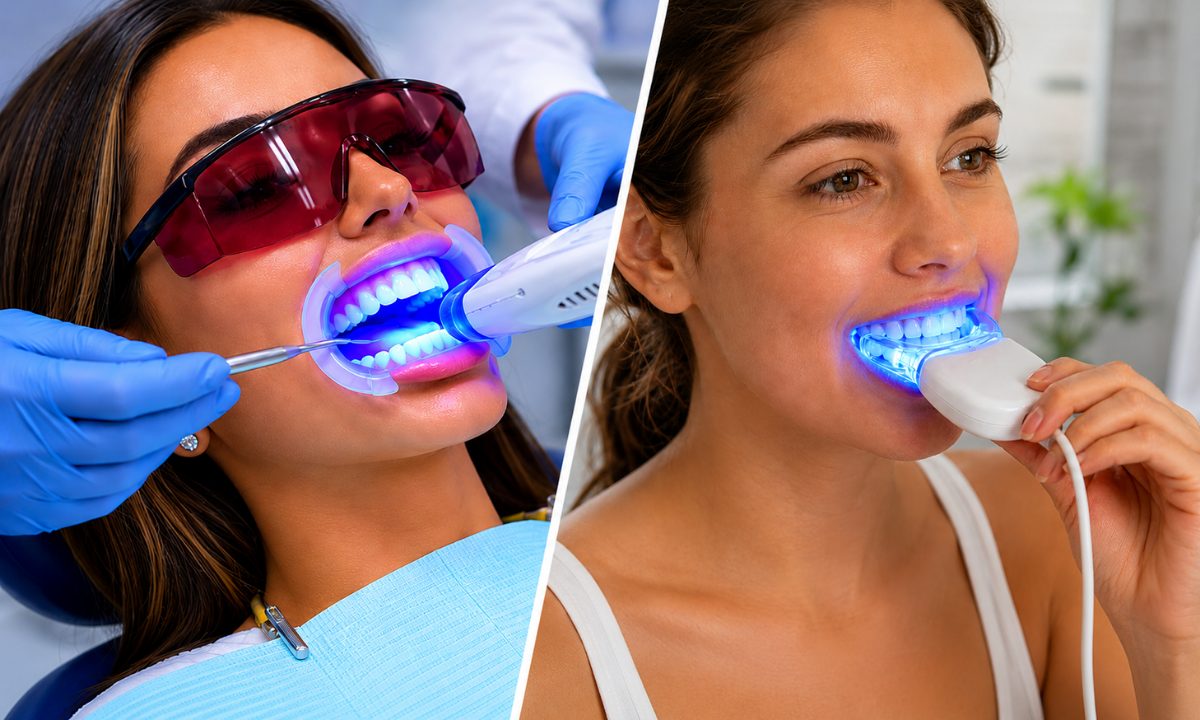
This is the comparison most people want a clear answer on before making a decision.
At-home whitening kits available over the counter are accessible and affordable. They work for mild surface staining and can brighten teeth by one to two shades with consistent use. However, they do not penetrate deeply into the enamel, results typically last a few weeks to a couple of months, and they require frequent touch-ups to maintain any visible brightness.
Professional in-clinic whitening delivers a fundamentally different outcome. The bleaching agent concentration is significantly higher, the application is controlled and precise, and the results, both in terms of the number of shades achieved and how long they last, are measurably superior. For someone investing in their smile for a specific event, a professional occasion, or long-term confidence, professional whitening is the clinically supported choice.
Dentist-prescribed take-home trays offer a middle ground, custom-fitted to your teeth, using professional-grade gel, and supervised by your dentist. Take-home systems allow for gradual whitening with dentist-supervised precision, with results that can last up to two years with good oral hygiene and regular dental visits.
The difference in outcome between a properly administered professional whitening session and a low-cost alternative is significant and visible. If you are considering whitening and want results that are worth the investment, visiting a qualified dental clinic in Vasanth Nagar ensures you receive the right treatment for your specific teeth, not a generic solution that fades in weeks.
How to Make Your Teeth Whitening Results Last Longer
The actions you take in the days, weeks, and months after whitening have a direct impact on how long your results stay visible. Here is what makes a measurable difference:
Avoid staining foods and drinks for the first 48 hours – this is the most critical window. Immediately after whitening, the enamel is temporarily more porous and significantly more susceptible to staining. Tea, coffee, red wine, colored sauces, and berries should be avoided during this period.
Rinse with water after consuming staining beverages where complete avoidance is not practical; rinsing immediately after consumption significantly reduces stain absorption.
Maintain a consistent oral hygiene routine: brush twice daily with a fluoride toothpaste, floss daily, and use a mouthwash that supports enamel health. Consider using a whitening toothpaste two to three times per week for maintenance.
Schedule regular professional cleaning, plaque and tartar buildup accelerate discoloration. A professional cleaning every six months removes surface staining before it penetrates deeper into enamel.
Consider periodic touch-up treatments; dentist-recommended touch-up whitening every six to twelve months can help maintain brightness without requiring a complete in-office treatment session each time. Many clinics provide custom take-home trays specifically for this purpose after an initial in-clinic treatment.
If you are ever unsure about which maintenance approach suits your specific teeth and lifestyle, a quick consultation with a dentist in Vasanth Nagar, Bangalore, can help you build a personalised aftercare routine that keeps your smile bright for as long as possible.
Is Teeth Whitening Safe? What You Should Know
A common concern among patients considering whitening for the first time is whether repeated treatment affects enamel health. When performed correctly and at appropriate intervals, professional teeth whitening is clinically safe and does not damage enamel.
It is important to wait six months or longer between whitening sessions to avoid overexposure to bleaching agents. A qualified dentist will assess your enamel health, existing restorations, and degree of staining before recommending a treatment plan, ensuring both the safety and effectiveness of your whitening results.
Sensitivity is the most commonly reported side effect, typically mild and resolving within 24 to 48 hours of treatment. Patients with pre-existing sensitivity should discuss this with their dentist before proceeding, as there are formulations specifically designed for sensitive teeth.
Teeth whitening is not suitable for everyone; it is not recommended during pregnancy, for children under 18, or for teeth with significant decay or gum disease that has not been treated. A clinical assessment before treatment identifies any contraindications and ensures the right approach for your specific situation.
When to See a Dentist for Teeth Whitening in Bangalore
If you have been considering teeth whitening and want results that are clinically reliable, visibly impactful, and designed to last, the starting point is a consultation with a qualified cosmetic dentist rather than an over-the-counter product.
A professional dentist will assess your enamel health, existing staining, and lifestyle factors before recommending the most appropriate whitening protocol for your specific needs and goals. This personalised approach ensures that the treatment suits your dental condition rather than following a generic method.
The result is a brighter smile that looks natural, lasts longer, and is supported by proper aftercare guidance so you can maintain it effectively.
Conclusion
Teeth whitening is one of the most effective and accessible ways to improve your smile, but how long your results last depends on far more than the treatment itself. Your daily habits, diet, oral hygiene routine, and the quality of the treatment you receive all play a direct role in determining whether your results last six months or three years.
The most reliable path to whitening results that are both impactful and long-lasting is professional treatment performed by a qualified dentist, combined with a clear aftercare plan tailored to your lifestyle. When both are in place, a noticeably brighter smile is not a temporary outcome but something you can maintain consistently over time.
If you are looking for professional teeth whitening in Bangalore, Beyond Dental offers personalised cosmetic dental care with a focus on lasting, natural-looking results. You can learn more or book a consultation for teeth whitening treatment in Bangalore through their website.
Frequently Asked Questions
How many shades whiter can I expect from professional teeth whitening?
Most patients achieve between four and eight shades of whitening with a professional in-clinic treatment, depending on their starting tooth color and the degree of existing staining. Your dentist will give you a realistic expectation based on a clinical assessment before treatment begins.
Does teeth whitening work on crowns, veneers or fillings?
Whitening agents only work on natural tooth enamel. Crowns, veneers, bridges, and composite fillings will not change color during whitening treatment. If you have visible restorations on front teeth, your dentist will factor this into the treatment plan to ensure a consistent, natural-looking result.
How soon can I eat and drink normally after whitening?
For the first 48 hours after professional whitening, it is advisable to avoid staining foods and drinks, including coffee, tea, red wine, tomato-based foods, and colored beverages. After this window, normal eating and drinking can resume with the usual maintenance habits in place.
How often should I get teeth whitening done?
For professional in-clinic whitening, most dentists recommend waiting at least six months between full treatment sessions. Touch-up treatments using custom take-home trays can be done more frequently and help maintain results between full sessions.
Can I whiten my teeth if I have sensitive teeth?
Yes, in many cases. There are whitening formulations specifically designed for sensitive teeth that use lower peroxide concentrations or include desensitising agents. Your dentist will assess your sensitivity level and recommend the appropriate protocol before proceeding.