
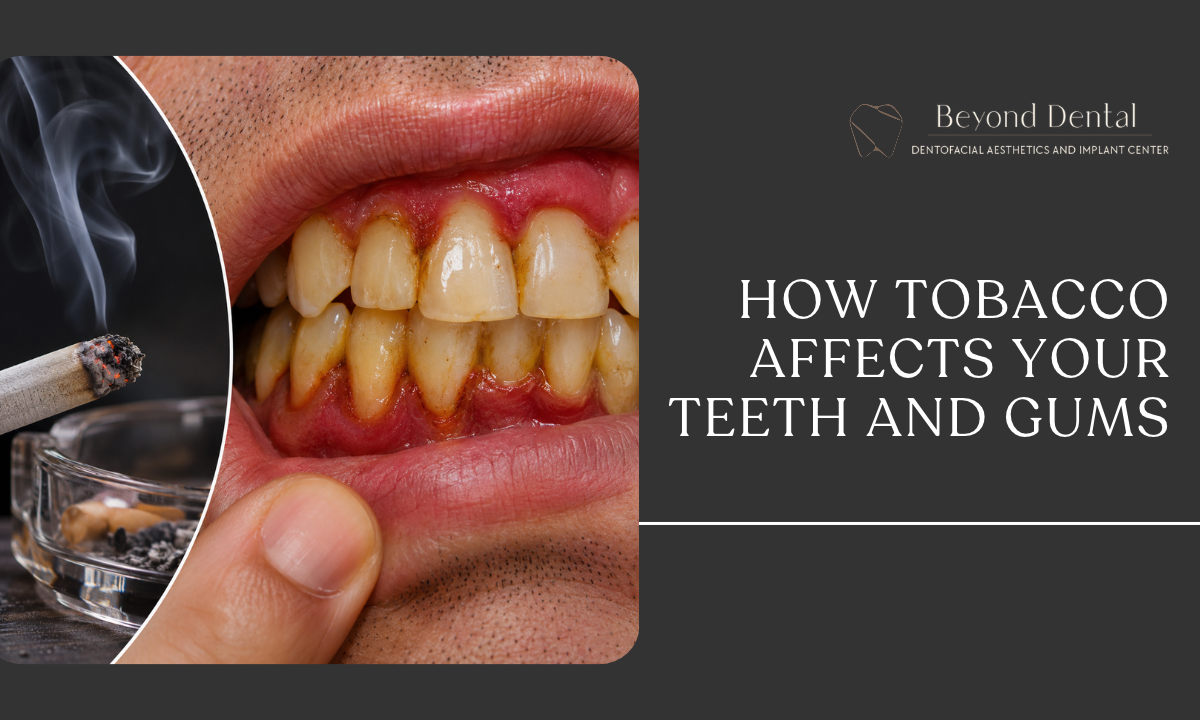
Tobacco affects far more than the colour of your teeth. Whether it is smoked or chewed, it can damage your gums, irritate the soft tissues of your mouth and raise the risk of serious conditions, including oral cancer. In India, this includes cigarettes and bidis as well as gutka, khaini, zarda and paan with tobacco.
This guide explains how each type of tobacco can affect your teeth and gums, which warning signs deserve attention, and what you can do to protect your oral health. It also covers how to get help to quit and when to book a dental examination.
Oral health problems linked to tobacco often develop slowly and quietly. Many people only visit a dentist once a tooth hurts or a stain becomes impossible to ignore, by which point gum damage or tissue changes may already be well established. Knowing what to look for early makes a real difference, whether you use tobacco yourself or are worried about a family member who does.
How Does Tobacco Affect Your Oral Health?
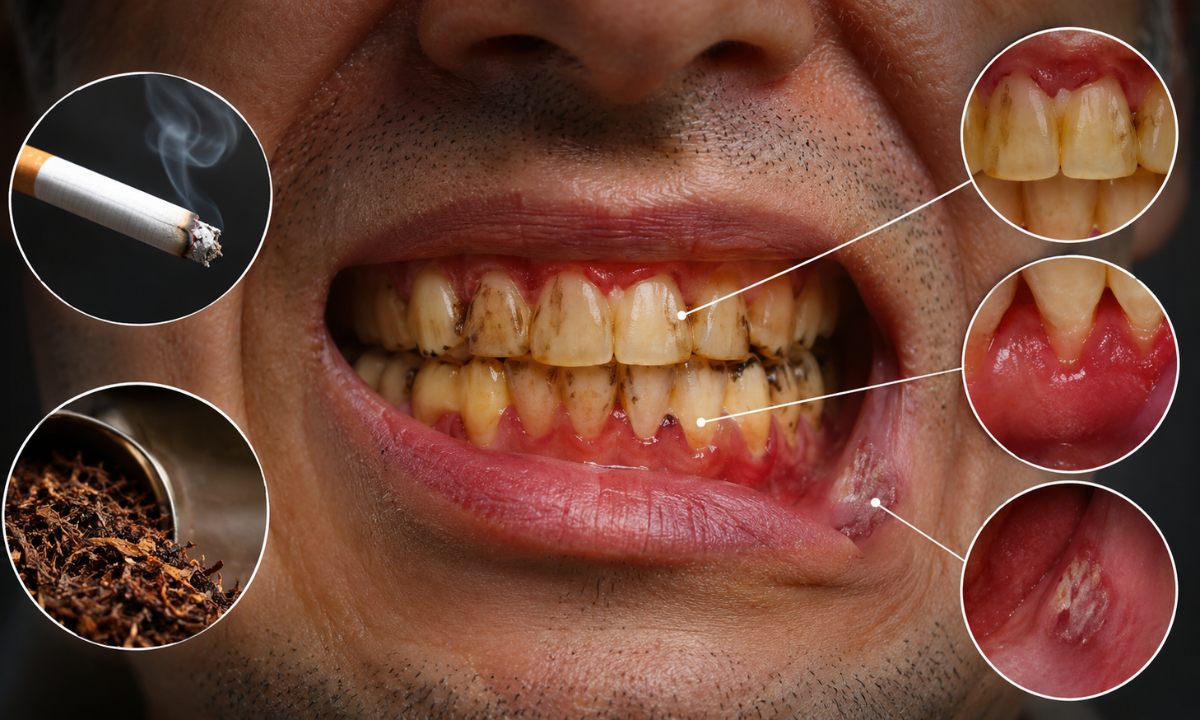
Tobacco exposes the tissues of your mouth to harmful chemicals every time you smoke or chew. Over time, this can irritate and damage the gums, reduce the mouth’s ability to heal and increase the risk of gum disease and oral cancer.
Smoked and smokeless tobacco do not harm the mouth in exactly the same way. Smoke affects the whole mouth, the teeth and the throat. Smokeless products sit against the gums and cheeks for long periods, so damage tends to concentrate where the product is held. Neither is a safe option.
Nicotine is also addictive, which is why quitting is often harder than people expect. Many users try several times before they succeed.
Finally, brushing and professional cleaning are important, but they cannot remove every risk that comes with tobacco use. Good hygiene helps your teeth and gums; it does not cancel out the effect of tobacco on your mouth.
The effects also add up. The longer you use tobacco, and the more often, the greater the cumulative exposure for your gums and oral tissues. Using tobacco alongside other risk factors, such as areca nut or alcohol, can raise the risk further. Dry mouth, poor oral hygiene and delayed dental visits can make the picture worse. This is why a dentist will always ask about tobacco use during an examination: it changes how your mouth should be assessed and how your treatment should be planned.
Effects of Smoking on Teeth and Gums
Yellow or Brown Teeth Stains
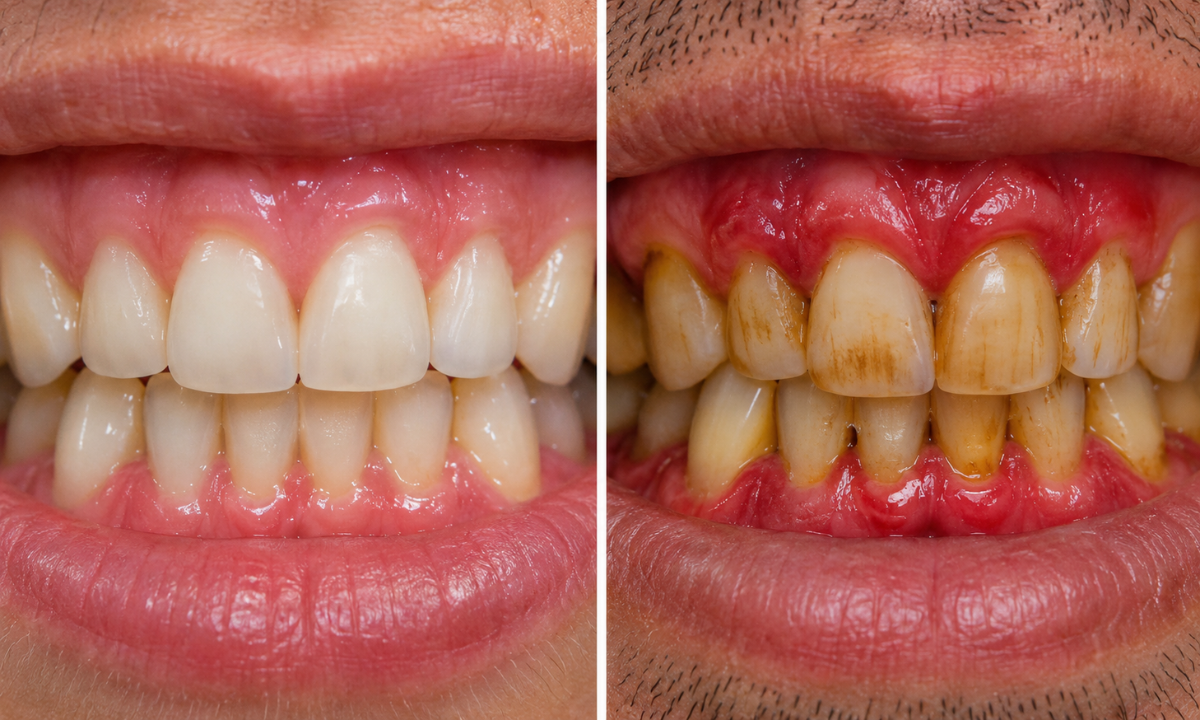
Tar and nicotine in tobacco smoke settle on enamel and slip into its tiny pores, leaving yellow, brown or even blackish stains that build up over the years. Regular brushing often cannot remove them. For a fuller look at why teeth discolour, read our guide on the causes of yellow teeth.
These stains are often stubborn because they sit within the surface layers of the enamel, not just on top of it. A professional scale and polish can remove many surface stains, but heavy staining may need further cosmetic treatment, and the stains will return if smoking continues.
Bad Breath
Smoking leaves odour in the mouth and throat, and it can dry the mouth by reducing saliva. A dry mouth lets odour-causing bacteria thrive, so bad breath can persist even after brushing or using mouthwash.
Smoking can also dull your sense of taste and smell, so you may not notice how strong the odour is. If bad breath continues despite good brushing, it can be a sign of gum problems, so it is worth having your mouth checked instead of relying on mints or mouthwash.
Gum Disease and Tooth Loss
Smoking raises the risk of periodontal disease and can slow the gums’ ability to heal. It can also mask early warning signs: smokers may notice less bleeding even when the gums are inflamed, so the absence of bleeding does not mean the gums are healthy. Learn more about gum disease symptoms and treatment.
Over time, untreated gum disease can destroy the bone and tissue that hold teeth in place, leading to loose teeth and eventually tooth loss. Because the early stages may be less noticeable in smokers, regular dental examinations are especially important.
Delayed Healing After Dental Treatment
Tobacco use can slow recovery after tooth extraction, gum treatment and implant surgery. Always tell your dentist if you smoke or use any form of tobacco, so they can plan treatment and aftercare accordingly.
This also applies to dental implants. Tobacco use is linked to a higher risk of implant complications, so your dentist may talk to you about reducing or stopping tobacco before and after surgery to give the treatment the best chance of success.
How Chewing Tobacco, Gutka and Khaini Affect the Mouth
Smokeless tobacco is often seen as a milder habit, but it exposes the mouth to harmful chemicals for as long as it is held in place. That is often for hours at a time.
Common effects include:
- Gum recession and irritation where the product is held, which can expose tooth roots and increase sensitivity
- Staining of the teeth, which tends to build up over time
- Damage to the soft tissues of the cheek, lip and gums
Gutka and other products containing areca nut are linked to oral submucous fibrosis. This serious condition makes the tissues of the mouth stiff and can gradually restrict how wide you can open your mouth.
Tobacco-containing chewing products are also associated with a higher risk of oral cancer. Paan containing tobacco, and products containing areca nut, are not harmless alternatives to smoking.
Because smokeless products are held in the mouth, the damage is often visible at the spot where you usually keep them. Many people notice a patch of thickened, roughened or whitish tissue there. Such patches should never be ignored, as some can become cancerous over time and need to be examined by a dentist.
Oral submucous fibrosis often begins with a burning sensation, particularly when eating spicy food, and stiffness in the cheeks. As it progresses, opening the mouth fully, eating and even routine dental care can become difficult. The changes are generally not fully reversible, so early recognition and stopping the habit matter a great deal.
Tobacco Use and Oral Cancer: Warning Signs You Should Not Ignore
Tobacco is one of the main risk factors for cancers of the mouth, including the tongue, cheeks, gums, lips and floor of the mouth. Early changes are often painless, which is why waiting for pain is not a safe approach.
Oral cancer can affect people of any age, and a person who feels perfectly well can still have early changes in the mouth. The risk is higher in people who combine tobacco with areca nut or alcohol, but it can also occur in people with no obvious risk factors, so persistent changes always deserve attention.
Common Warning Signs
- A mouth ulcer that does not heal within two weeks
- A persistent red or white patch
- A lump, thickened area or unexplained bleeding
- Difficulty opening the mouth, chewing or swallowing
- Persistent pain, numbness or a change in sensation
When Should You See a Dentist?
Book an assessment if any of these changes last more than two weeks. Not every ulcer or patch is cancer, and most have other causes, but only an examination can tell the difference.
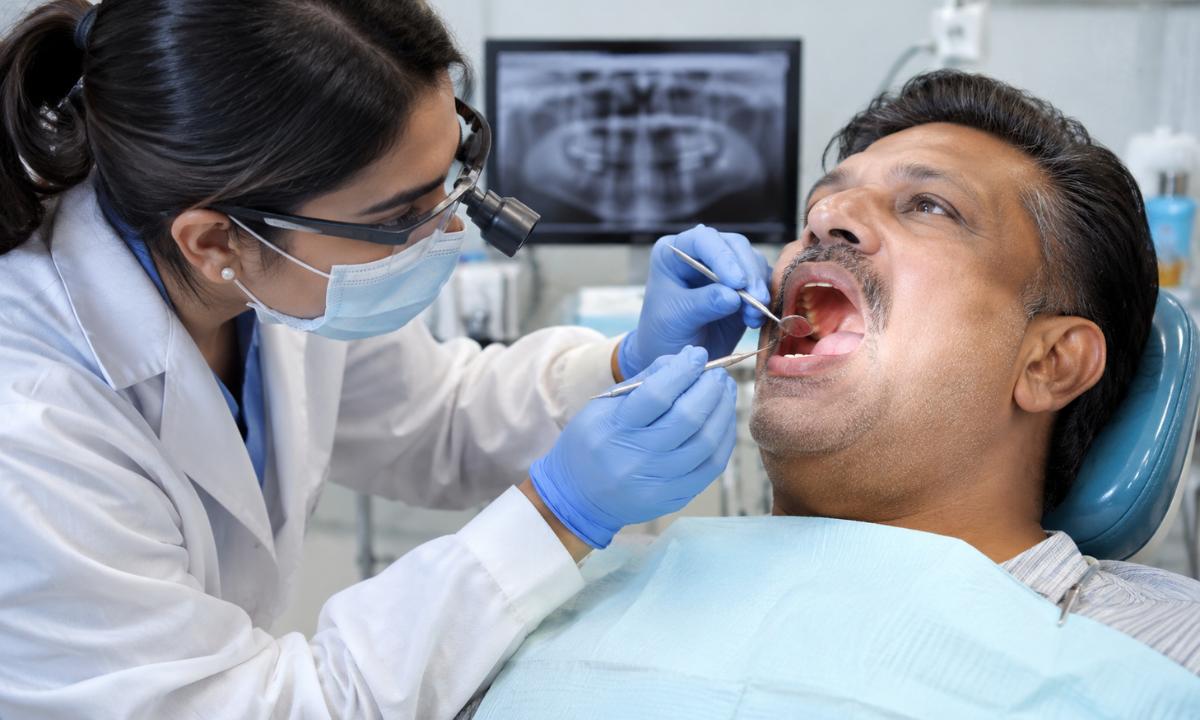
A dentist can examine suspicious changes and arrange referral or further investigation where needed. A dental check-up cannot guarantee that cancer is absent, so keep seeking advice if a change persists or worsens.
When you visit, mention how long you have used tobacco, what type you use and how often. This helps your dentist decide what to look for and whether to refer you to a specialist. If you notice a change between visits, do not wait for your next scheduled check-up. Book an appointment as soon as the change has lasted two weeks.
Can Tobacco Damage to Teeth and Gums Be Reversed?
Some of it can be improved, but not all of it. Professional cleaning can lift many surface stains, and quitting stops further exposure.
Quitting does not instantly undo existing gum damage or remove the risk of oral cancer, although the risk becomes lower over time. Established gum disease usually needs professional treatment, not just better brushing.
A suspicious ulcer or patch needs to be examined; it should never be treated as a cosmetic problem. Whitening can brighten teeth, but it does nothing to reduce the health risks of tobacco.
In practice, recovery looks different for each person. Someone who has used tobacco for a few years and has only mild gum inflammation may see clear improvement after cleaning and quitting. Someone with long-standing periodontitis may need deeper cleaning and ongoing maintenance, and lost bone or gum tissue usually does not grow back on its own. Your dentist can explain what improvement is realistic in your case after examining your mouth. The important message is that quitting at any stage is better than continuing.
How to Protect Your Oral Health if You Use Tobacco
The best protection is to stop using tobacco. Until then, these steps can reduce the damage:
- Brush twice a day with fluoride toothpaste and clean between your teeth daily.
- Attend dental check-ups at the intervals your dentist recommends for your individual risk. Our guide explains how often to visit a dentist.
- Tell your dentist honestly about smoking, chewing tobacco and areca nut use.
- Do not ignore sores, patches or changes in how widely you can open your mouth.
- Seek support to quit. Professional cessation help works better than relying on oral hygiene alone.
Mouthwash, whitening products and routine cleaning improve how your mouth looks and feels, but they do not protect against tobacco-related cancer.
Pay attention to small changes in your own mouth. Once a month, look at your gums, tongue, cheeks and the roof of your mouth in a well-lit mirror, and note any ulcer, patch or lump that was not there before. Drinking plenty of water helps with dry mouth, and a soft-bristled brush is gentler on irritated or receding gums. Brushing harder does not remove stains and can wear the gums.
How to Quit Tobacco and Get Help
Quitting is easier with a plan and support.
- Choose a quit date and note your triggers, such as stress, tea breaks or social situations.
- Speak to a doctor or qualified tobacco-cessation professional about counselling and evidence-based support.
- Expect cravings and withdrawal. A slip does not mean the attempt has failed; most people need more than one try.
- Involve family and friends, and arrange follow-up so you are not doing this alone.
Your dentist can point out tobacco-related changes in your mouth and encourage you to quit, but this does not replace specialised cessation care.
It also helps to prepare for difficult moments. Cravings often pass within a few minutes, so having a plan, such as drinking water, chewing sugar-free gum, going for a short walk or calling someone, can help you get through them. Avoid replacing tobacco with areca nut or paan, as these carry their own risks. Tell your dentist and doctor that you are trying to quit so that they can support you at each visit.
In India, you can call the National Tobacco Quitline on 1800-112-356 (toll-free) for free advice and support, or give a missed call on 011-22901701.
Protect Your Smile with a Dental Check-Up at Beyond Dental
If you notice bleeding gums, tobacco stains or a mouth change that has lasted more than two weeks, do not wait for it to hurt. Book an examination at our dental clinic in Vasanth Nagar, Bangalore, where our team can assess your teeth, gums and oral tissues and advise on the next steps.
At your visit, our dentist will examine your teeth, gums and the soft tissues of your mouth, discuss your tobacco habits without judgement and explain what care you may need. Early assessment is simpler and gives you more options.
Book your appointment today. Call +91 8105524004, email smilewithus@beyondental.in, or use the appointment form on beyondental.in.
Frequently Asked Questions About Tobacco and Oral Health
Does smoking cause yellow teeth?
Yes. Tar and nicotine stain enamel, and the discolouration deepens with the number of years and the amount smoked. Professional cleaning can remove many surface stains, but they return if smoking continues.
Can chewing tobacco cause gum disease?
Yes. It irritates the gums where it is held, can cause recession and raises the risk of gum problems in that area. Over time, this can expose tooth roots and cause sensitivity, and you may notice sore or discoloured patches of gum.
Does tobacco increase the risk of oral cancer?
Yes. Both smoked and chewed tobacco are major risk factors, and the risk is higher when tobacco is combined with areca nut or alcohol. If you use tobacco in any form, regular oral examinations are an important way to catch changes early.
Can quitting tobacco improve gum health?
It can. Quitting stops further damage and supports healing, though existing gum disease may still need professional treatment. Your dentist can review your progress at follow-up visits.
Can a dentist detect early signs of oral cancer?
A dentist can spot suspicious changes during an examination and refer you for further tests. Telling your dentist about your tobacco use helps them know what to look for. A check-up cannot guarantee that cancer is absent.
How often should tobacco users visit a dentist?
There is no single answer. The right interval depends on your gum health and risk, and any persistent symptom should be checked promptly. Many people with gum disease or heavy staining benefit from visits every three to six months, but your dentist will advise what suits you.