
If you brush twice a day, floss regularly, and still notice your teeth aren’t as white as you’d like, you are not doing anything wrong. You’ve simply reached the limits of what at-home care can address.
Tooth colour is determined by factors that sit well beneath the surface: the thickness of your enamel, your genetic baseline, cumulative dietary exposure, and the natural changes that come with age. This is precisely why patients who explore teeth whitening are often surprised to find that the cause of their yellowing wasn’t surface staining at all.
This guide explains the clinical reasons behind persistent yellowing clearly, without oversimplification, so you can have a more informed conversation with your dentist about what treatment is actually right for you.
Understanding Tooth Color
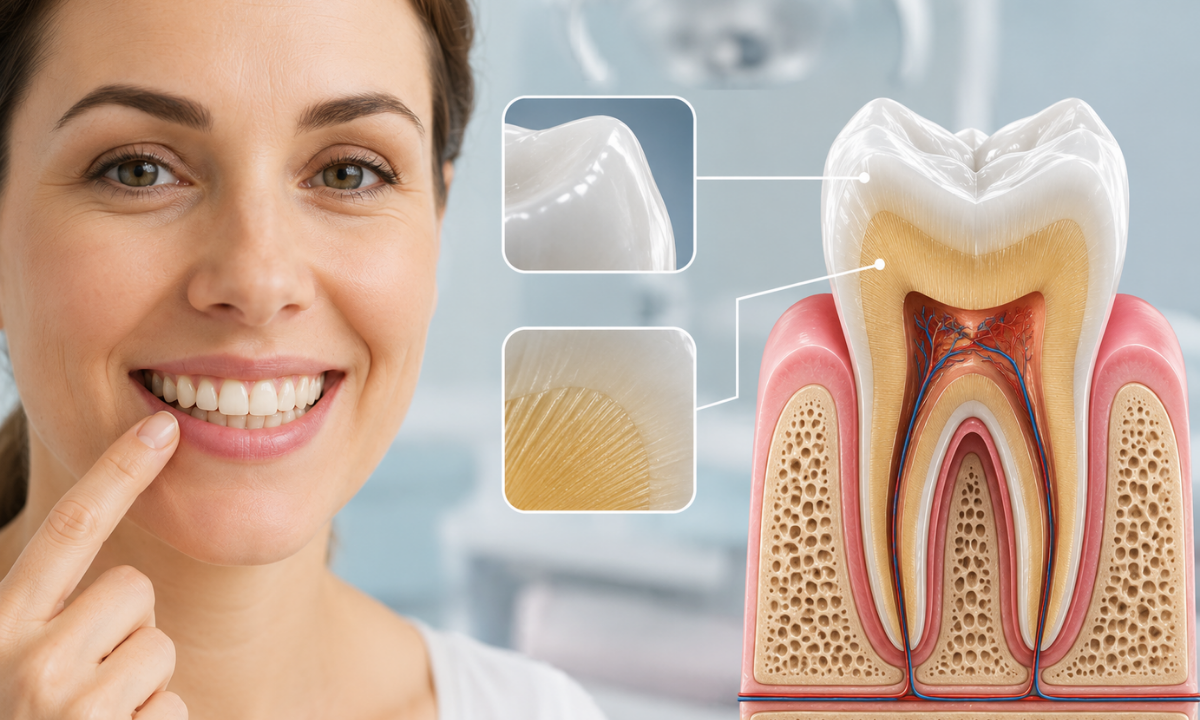
Your tooth has two structural layers: the outer enamel and the inner dentin. Enamel is semi-translucent. Dentin – the layer beneath it is naturally yellow in tone. How white your teeth appear is largely a function of how thick and opaque that enamel is.
This is why surface-level cleaning, however thorough, has a ceiling. It removes plaque and light staining. It cannot alter the optical properties of your enamel or the shade of the dentin beneath it.
7 Real Reasons Your Teeth Are Still Yellow After Brushing
1. Enamel Erosion – The Most Common Culprit
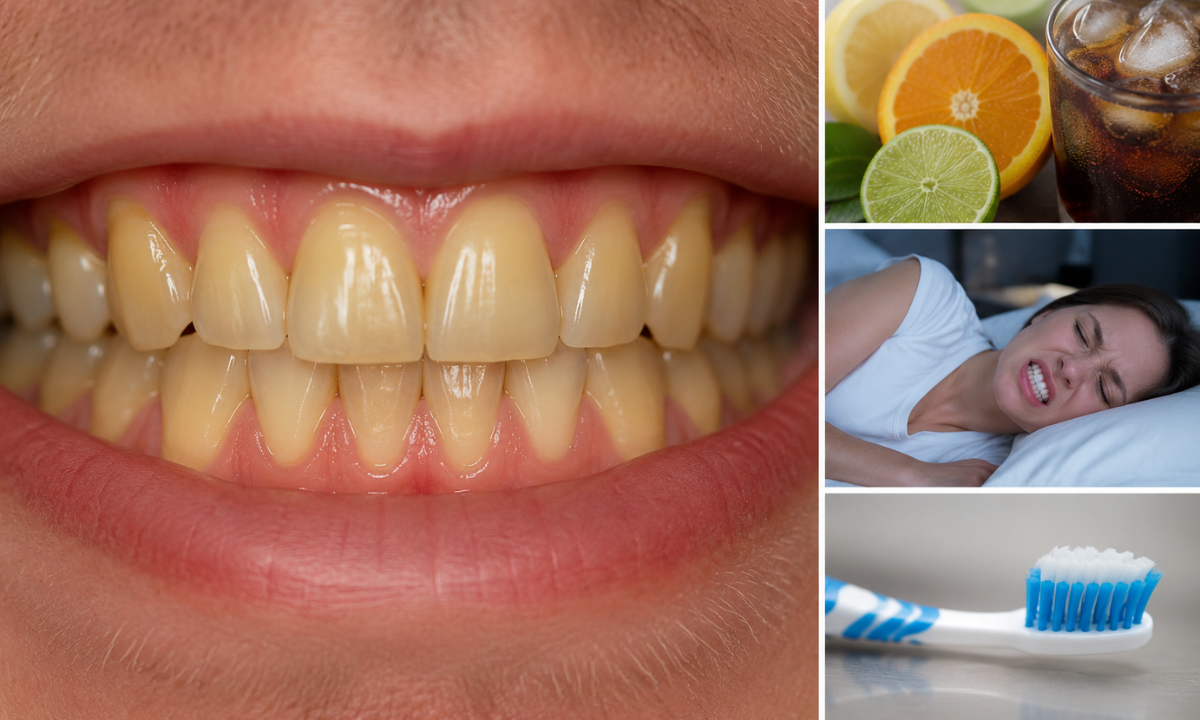
Enamel erosion is the most clinically significant cause of yellowing in otherwise healthy mouths. As the enamel layer gradually wears through acid exposure, bruxism, or simply years of use, the dentin beneath becomes more visible. The result is a yellowing that deepens over time regardless of brushing habits.
Common contributors to enamel erosion:
- Frequent consumption of citrus, carbonated drinks, or vinegar-based foods
- Teeth grinding (bruxism), particularly at night
- Prolonged use of hard-bristle toothbrushes with heavy pressure
Once enamel is lost, it cannot regenerate. What you are seeing is structural, not superficial.
2. Staining from Food and Drinks
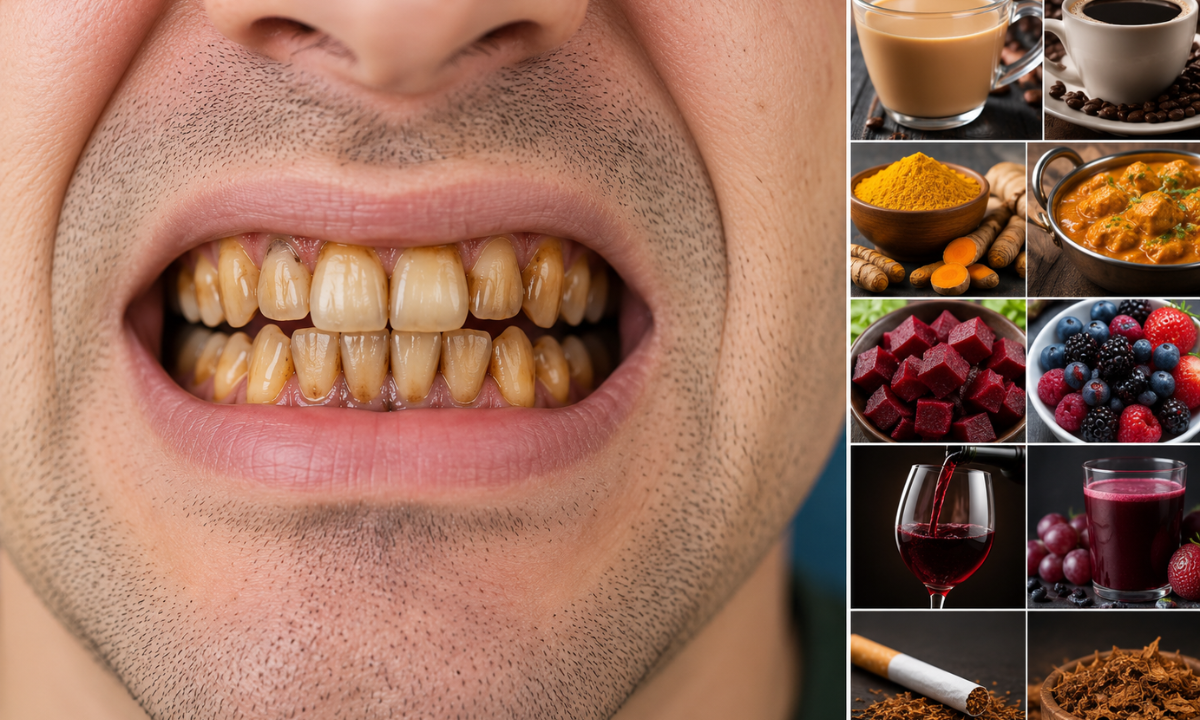
Certain foods and beverages contain compounds called chromogens, pigment-producing molecules that bond strongly to tooth enamel. These pigments attach to enamel proteins and accumulate gradually, and many of the foods that stain and damage your teeth are ones you consume every single day without realising it. Brushing removes plaque but often cannot eliminate embedded chromogens.
The biggest staining offenders in the Indian diet:
- Tea and coffee – consumed multiple times daily by most people
- Turmeric and curry-based foods are deeply pigmented
- Beetroot and dark berries
- Red wine and dark fruit juices
- Tobacco in any form
The longer these stay in contact with your teeth, the deeper the stain sets.
3. Tartar Buildup – What Brushing Cannot Remove
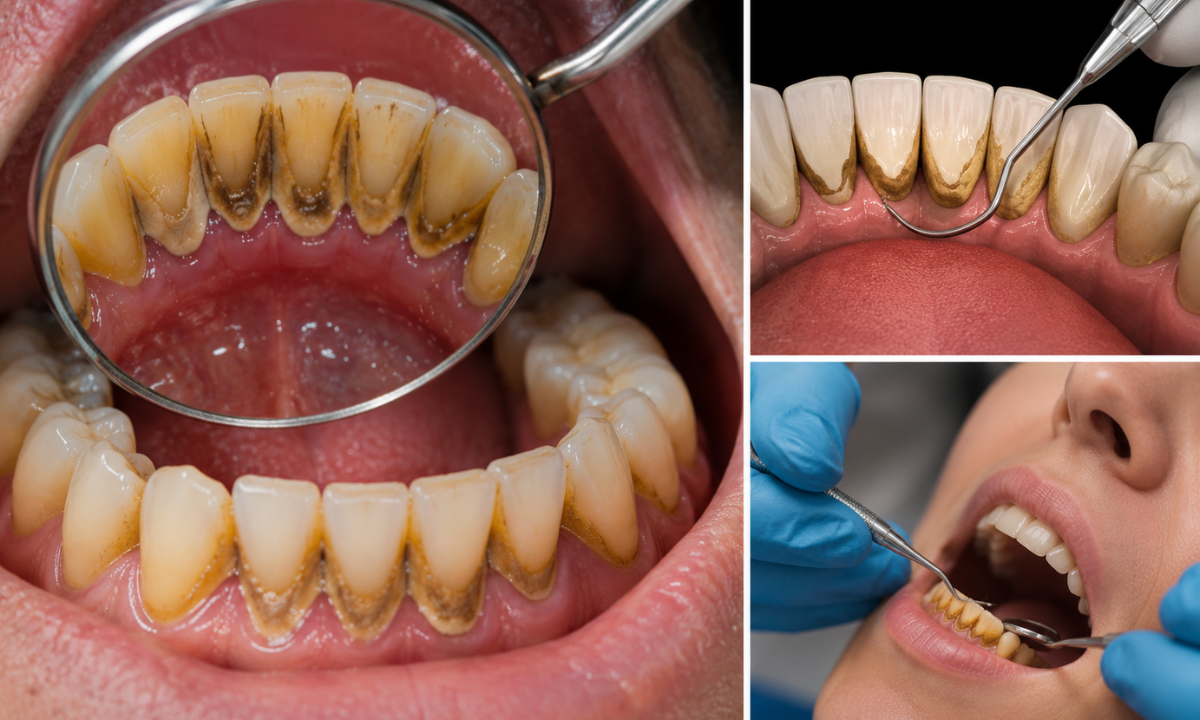
When plaque hardens into tartar, it forms a yellow or brown layer that cannot be removed with a toothbrush. Only professional scaling can eliminate it.
Tartar forms when plaque, a soft bacterial film, is not completely removed and mineralises over time. Once hardened, it sits at the gumline and between teeth, giving a visibly yellow or brownish tint that brushing cannot touch. A professional cleaning at the best dental clinic in Vasanth Nagar, Bangalore, is the only way to remove tartar safely.
4. Genetics and Natural Tooth Shade
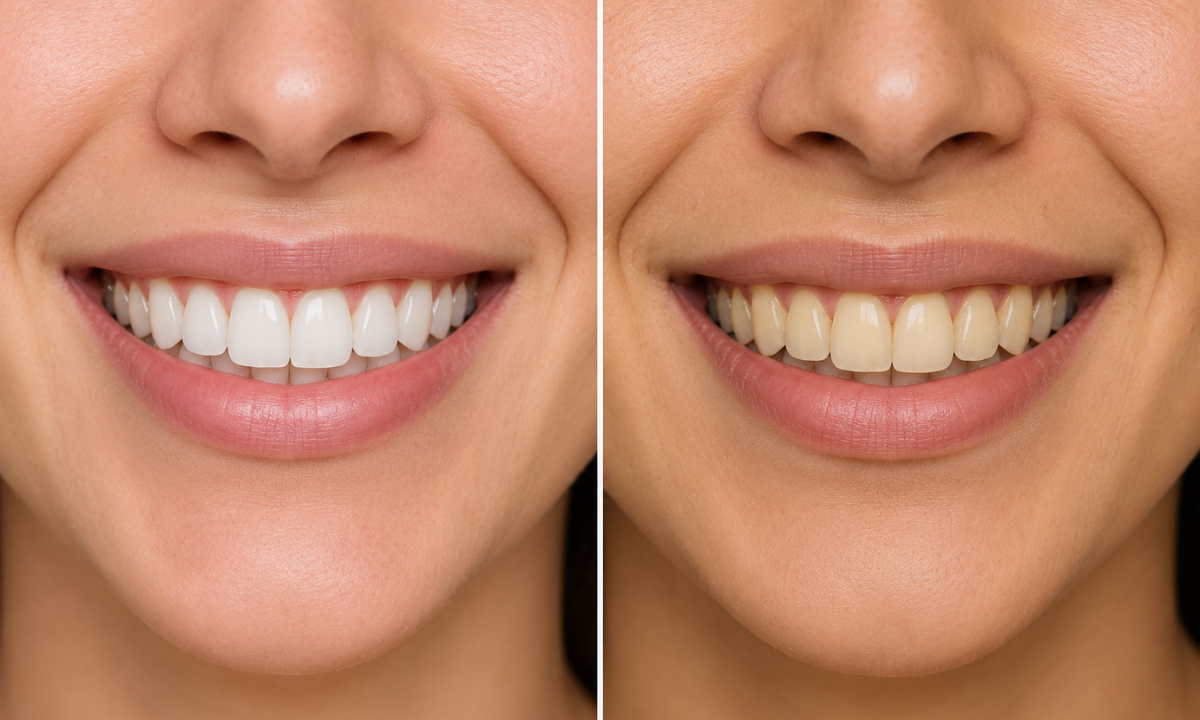
Patients with naturally thinner enamel exhibit significantly higher dentin visibility. Your genetics and background also affect how white or yellow your teeth naturally appear.
Some people are simply born with naturally thicker, whiter enamel. Others have genetically thinner enamel and will always have a slightly more yellow baseline, regardless of how well they brush. This is not a hygiene problem. It is biology.
5. Ageing – A Factor Nobody Can Avoid
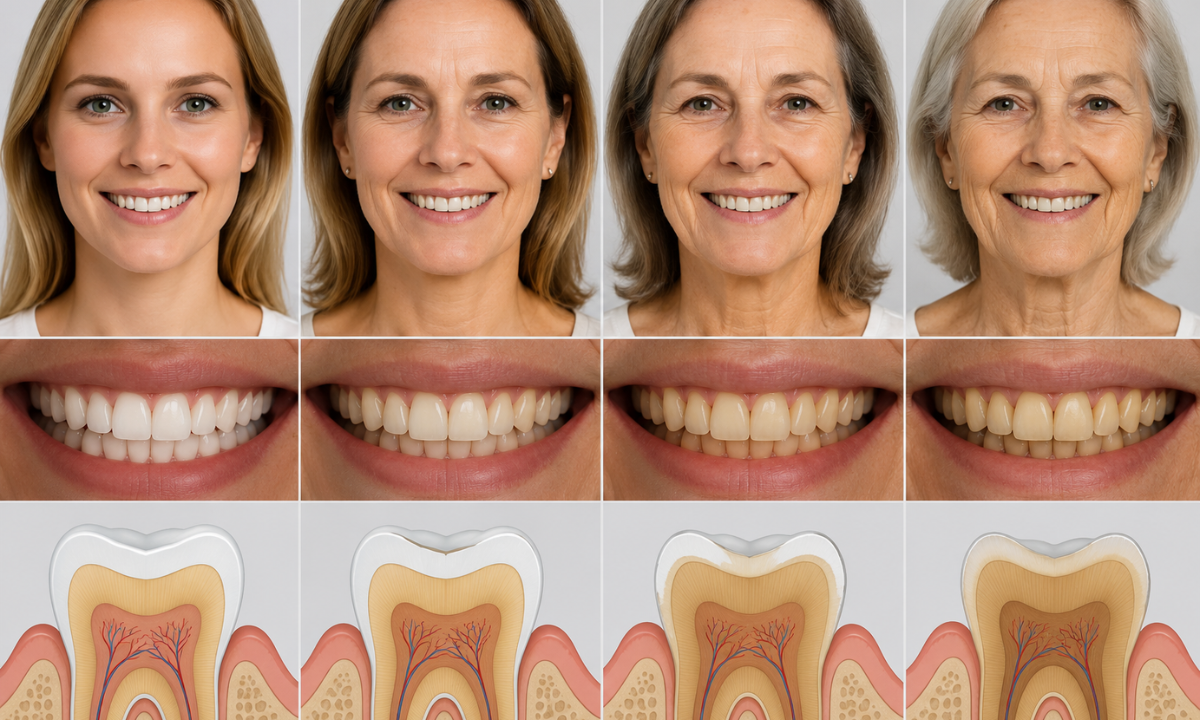
A 2020 study in the Journal of Clinical and Experimental Dentistry found that tooth luminosity steadily decreases with age while yellow tones increase.
As you age, enamel gradually wears down through years of chewing, acidic exposure, and normal use. The dentin underneath also thickens and darkens with time. This means teeth naturally get more yellow as you get older. It is a normal biological process, not a sign of poor dental health.
6. Medication-Related Intrinsic Staining
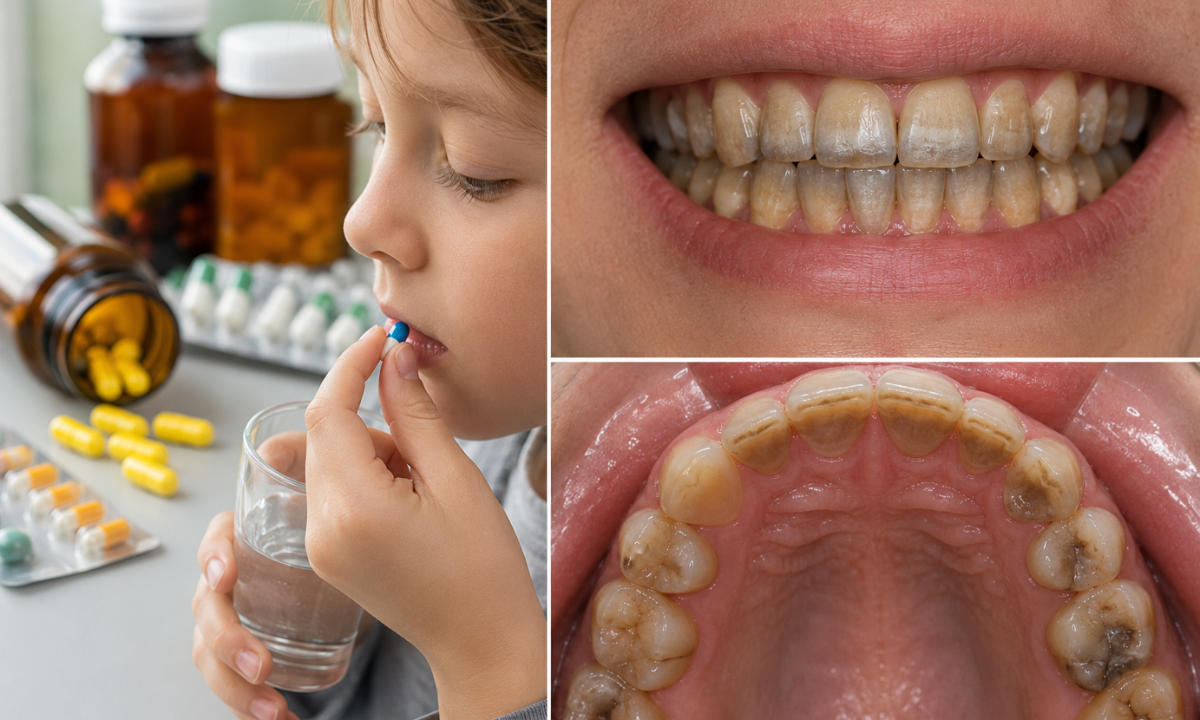
Certain medications, such as tetracycline antibiotics or antihistamines, lead to yellowing and discoloration.
Tetracycline antibiotics taken during childhood, when teeth are still developing, can cause intrinsic staining that is embedded deep within the tooth structure. This type of yellowing does not respond to whitening toothpastes and requires professional intervention. Antihistamines, antipsychotics, and some blood pressure medications can also cause surface discolouration over time.
7. Brushing Technique
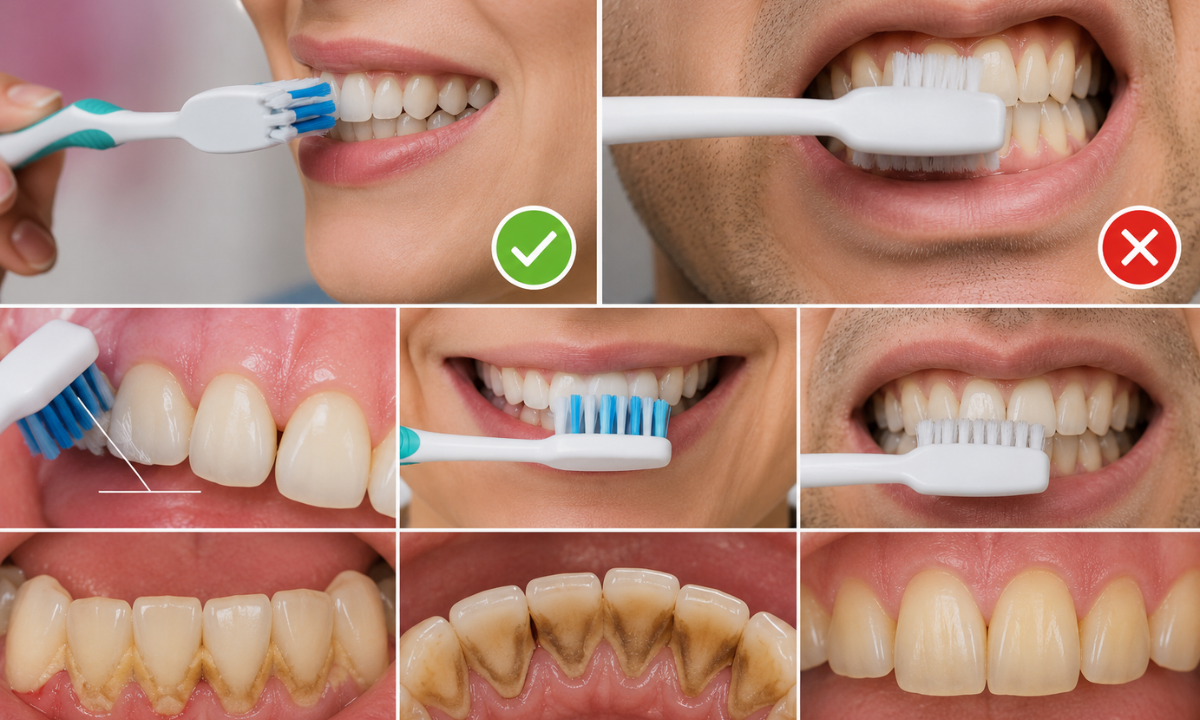
Most people brush, but not necessarily correctly. If you do not follow the correct way of brushing teeth, you may deposit plaque, which will eventually make your teeth appear yellow. Over-brushing can also damage the enamel, making teeth appear yellow because of the appearance of dentin from within.
Brushing too hard, using the wrong angle, or brushing for less than two minutes leaves plaque on the teeth, which gradually hardens into tartar.
Extrinsic vs Intrinsic Staining – Why This Distinction Matters
| Type | What It Means | Can Brushing Fix It? |
|---|---|---|
| Extrinsic staining | Surface stains from food, drinks, and tobacco | Partially professional cleaning works better |
| Intrinsic staining | Stains inside the tooth enamel erosion, medication, and genetics | No requires professional treatment |
| Age-related | A combination of both | No professional whitening recommended |
Understanding which type of discolouration you have is the first step toward choosing a treatment that will actually produce results.
What Professional Treatment Can Achieve
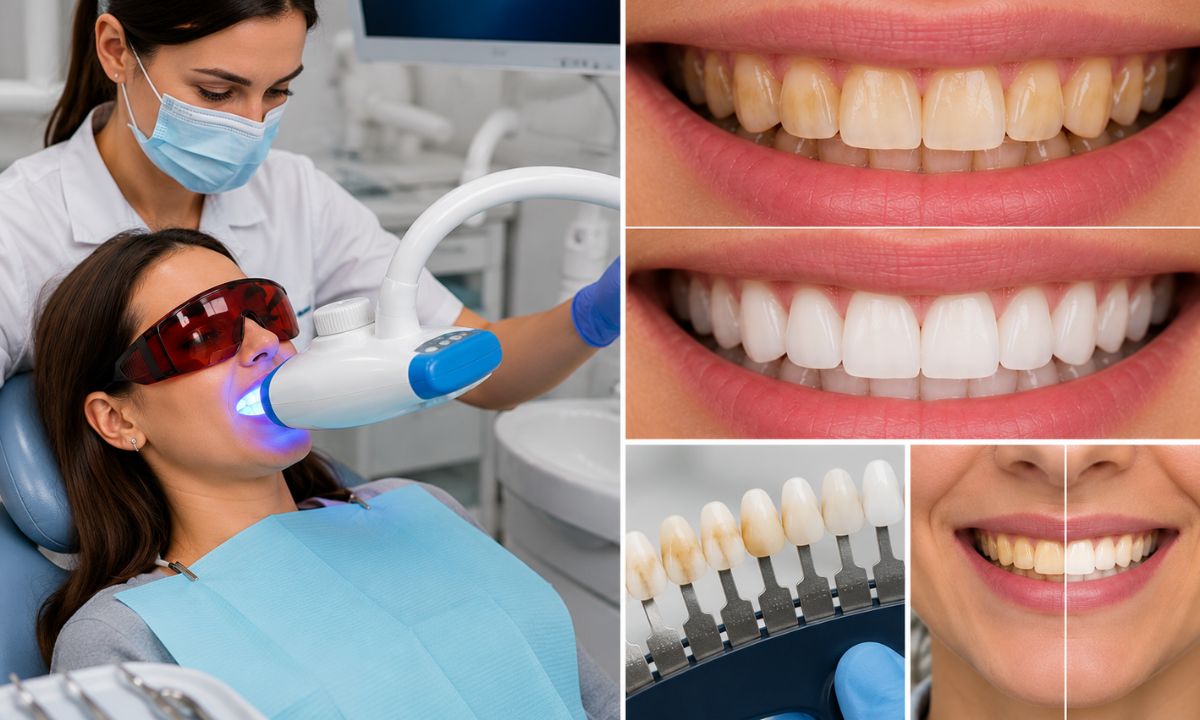
In-Clinic Teeth Whitening
The most effective and safest solution for extrinsic and mild intrinsic staining. One professional whitening session can whiten teeth by 4 to 8 shades. At-home kits and whitening toothpastes work only on surface stains and deliver significantly slower, less dramatic results. If you are considering teeth whitening in Vasanth Nagar, professional in-clinic treatment gives you results that are both faster and longer-lasting.
Professional Scaling and Cleaning
Where tartar accumulation is the primary cause, a professional scaling session removes mineralised deposits that brushing cannot reach. Many patients see a noticeable improvement in tooth brightness and gum health from this alone.
Porcelain Veneers and Cosmetic Dentistry
For deep intrinsic staining, particularly medication-related or severe genetic yellowing, cosmetic dentistry options like porcelain veneers can cover discoloration completely and give a uniform, natural-looking white smile.
Dietary and Lifestyle Changes
- Rinse with water immediately after tea, coffee, or pigmented foods
- Use a soft-bristled toothbrush at a 45-degree angle to the gumline
- Schedule a professional cleaning every six months
- Use a straw for cold-staining beverages when practical
- Visit your dentist every 6 months for a professional cleaning
Conclusion
Yellow teeth after brushing is not a failure of hygiene; it is a sign that something deeper is going on, whether that is enamel erosion, tartar buildup, genetics, or dietary staining. Brushing is essential, but it has clear limits.
Most causes of tooth discolouration are highly treatable once correctly identified. A proper clinical assessment tells you exactly what you are dealing with and eliminates guesswork, so your treatment actually works.
If your teeth are still yellow despite a solid oral care routine, the team at Beyond Dental, the best dental clinic in Vasanth Nagar, Bangalore, can identify the cause and recommend the right treatment for your specific case. Book your consultation today.
FAQs
Q1. Can whitening toothpaste fix yellow teeth?
Whitening toothpastes work only on light surface stains. They contain mild abrasives that polish the enamel surface but cannot change internal tooth colour or remove tartar. For visible results, professional whitening is far more effective.
Q2. Does yellow mean unhealthy?
Not always. Yellow teeth do not necessarily mean unhealthy teeth; several factors beyond brushing influence tooth colour, and variations in natural tooth colour are perfectly normal. However, yellowing caused by tartar buildup or enamel erosion should be addressed by a dentist.
Q3. At what age do teeth start yellowing naturally?
Enamel begins to thin gradually from the late twenties. Most people notice a visible shift through their thirties and forties as enamel wear, cumulative staining, and dentin changes compound over time.
Q4. How long does professional teeth whitening last?
Results typically last 12 to 24 months, depending on diet and lifestyle habits. Avoiding tea, coffee, and tobacco after whitening significantly extends the results.
Q5. Is professional whitening safe for sensitive teeth?
Yes, when done correctly. A dentist will assess your enamel health before recommending whitening and can use lower-concentration agents if sensitivity is a concern. Self-administered kits without professional supervision carry a higher risk of sensitivity and uneven results.