
When a baby is drooling more or chewing on everything, parents often wonder whether teething has started. Baby teething symptoms can include tender gums, drooling, chewing and mild fussiness, but every baby is different and some show very few signs. Knowing how to soothe sore gums safely and recognising symptoms that should not be blamed on teething can make this stage easier to manage. If your baby develops unusual gum swelling or another dental concern, Advanced Gum Treatment may be a relevant service to explore with a dental professional.
This guide covers when teething usually begins, the common signs, safe ways to soothe sore gums, when to call a doctor, and how to start caring for those first teeth. With the right guidance and early attention to oral health, parents can build healthy dental habits for their little ones. Beyond Dental supports families in understanding the importance of preventive dental care and creating a strong foundation for lifelong oral health.
Key Takeaways
- Teething timing varies; the first teeth often appear during the first year.
- Drooling, chewing and mildly sore gums can occur as teeth emerge.
- Use gentle gum pressure or a clean, chilled solid teether for comfort.
- Fever, diarrhoea, or a baby who seems very unwell needs medical advice, not a teething explanation.
When Does Teething Usually Begin?
Many babies get their first tooth at around six months, but timing varies. Some teeth emerge earlier or later, and for some babies the process happens with little discomfort. A tooth may even appear before you notice any clear signs, so symptoms alone cannot confirm that teething is the cause of your baby’s distress.
What Are the Common Baby Teething Symptoms?
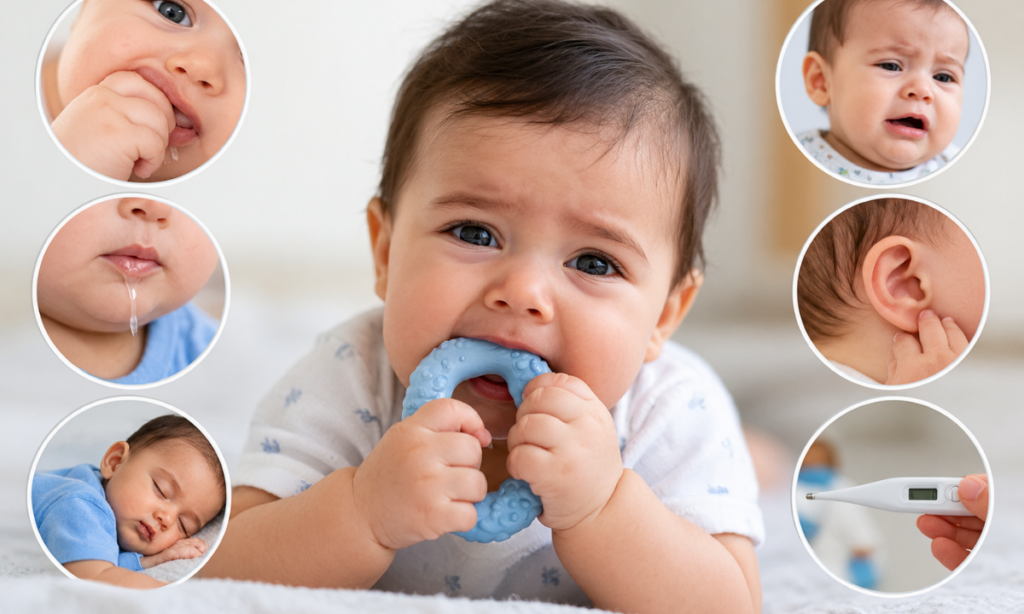
Possible signs include:
- Drooling more than usual
- Chewing or gnawing on safe objects
- Mildly tender or swollen gums
- Temporary fussiness or irritability
- A small rash around the mouth or chin, caused by drool irritating the skin
These signs are not unique to teething. Look at your baby’s overall condition, and seek advice if you are unsure. Gently wiping drool and applying a thin layer of a baby-safe moisturiser, if your doctor agrees, can help protect the skin.
Teething or Something Else?
| Sign | Can be part of teething | Needs medical advice |
| Drooling and chewing | Yes | Only if with other symptoms below |
| Sore, mildly swollen gums | Yes | If swelling is marked or spreading |
| Mild fussiness | Yes | If your baby cannot be comforted |
| Fever | Should not simply be blamed on teething | Yes, contact your paediatrician |
| Diarrhoea or persistent vomiting | Should not simply be blamed on teething | Yes |
| Unusual sleepiness or poor feeding | Should not simply be blamed on teething | Yes |
If your baby seems seriously unwell, do not wait. Contact your child’s doctor.
How Can You Soothe Sore Gums Safely?
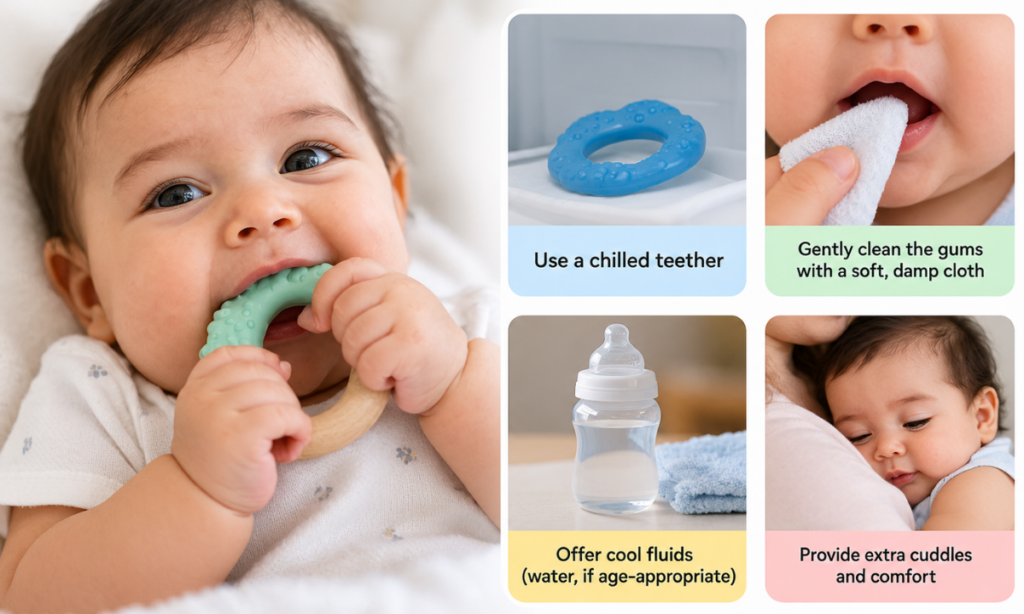
Wash your hands first, then try one of these while supervising your baby:
- Gentle gum massage: Rub the sore gum softly with a clean finger.
- A clean, chilled teether: Choose one made of solid material. Chill it in the fridge rather than the freezer.
- A cool, damp cloth: Let your baby chew on a clean, cool, damp washcloth.
What to avoid
- Teethers frozen solid, which can bruise sensitive gums
- Liquid-filled teething rings, which can break or leak
- Teething necklaces, bracelets or anklets, which are a choking and strangulation risk
- Teething gels and numbing products, unless a clinician specifically advises them
Ask your child’s doctor before giving any pain medicine.
When Should You Seek Medical Advice?

A true fever, diarrhoea, persistent vomiting, unusual sleepiness, poor feeding, or a baby who seems seriously unwell should not automatically be put down to teething. Contact your child’s paediatrician for guidance, especially for fever or any symptom that worries you.
See a dentist for an oral health assessment if you notice:
- An injury to a tooth or the gums
- Swelling inside the mouth
- A concern about how a tooth is coming through
Caring for the First Teeth as They Appear
Once a tooth emerges, start brushing it gently twice a day with a small, soft toothbrush and a smear of fluoride toothpaste, about the size of a grain of rice. Before teeth appear, you can wipe your baby’s gums with a clean, damp cloth if your child’s dentist advises it.
A dentist can show you how to brush, how much toothpaste to use, and how to protect new teeth from decay. Tooth decay can begin early, so it helps to understand how it develops. Our guide to the 5 stages of tooth decay explains what to watch for.
When should the first dental visit be?
A common recommendation is a first visit by your child’s first birthday, followed by regular check-ups. Your dentist will advise the right schedule for your child. For more on visit timing, read our guide on how often you should visit the dentist.
Frequently Asked Questions
Does teething cause a fever?
A fever should not simply be put down to teething. Contact your child’s paediatrician for advice, particularly if the temperature is raised or your baby seems unwell.
Can I use teething gel?
Do not use numbing gels or medicines without professional advice. Some products can be unsafe for infants.
Should a teething ring be frozen?
Use a clean, chilled teether as directed by its manufacturer, but avoid freezing it hard, as that may injure sensitive gums.
My baby has no teeth yet. Should I be worried?
Timing varies widely between babies. If your child has no teeth by their first birthday, mention it to your dentist or paediatrician at the next visit.