
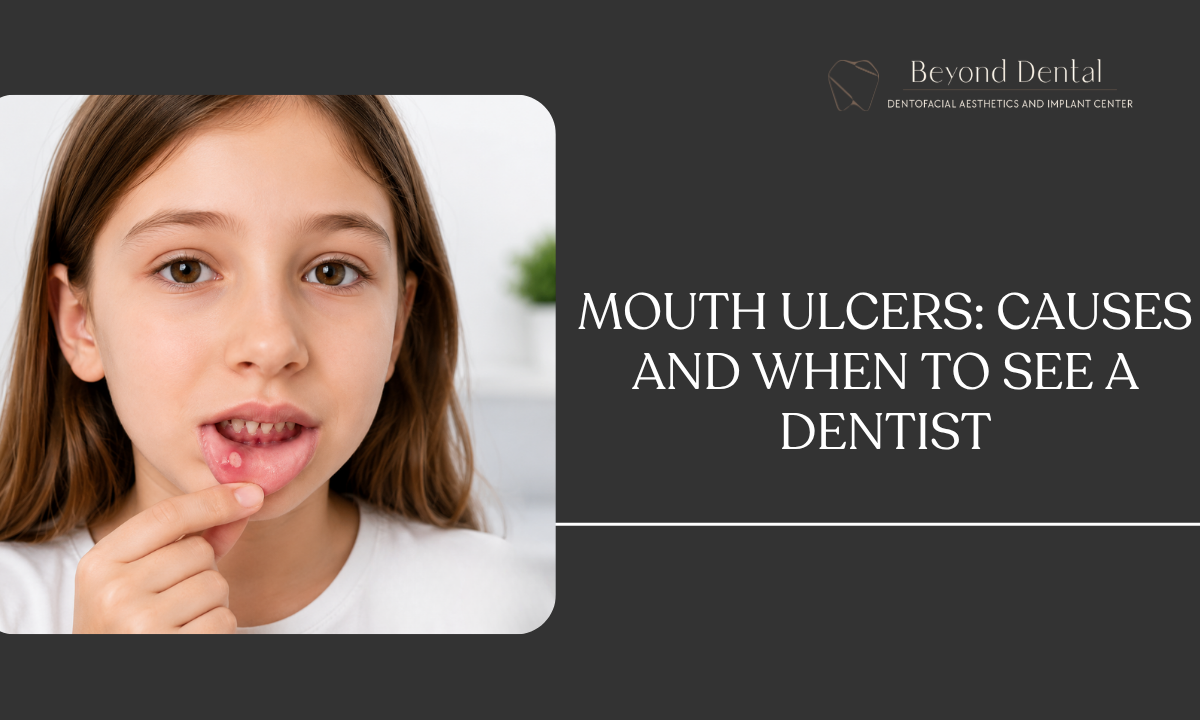
Almost everyone has dealt with a mouth ulcer at some point, that small, stinging sore that makes eating, talking, or even sipping tea uncomfortable. Most clear up on their own within a week or two, but understanding the causes of mouth ulcers helps you avoid the triggers and recognise when a sore needs a closer look.
The reasons range from a simple cheek bite to nutritional gaps and certain health conditions. If your ulcers keep returning or refuse to heal, a dentist in Vasanth Nagar, Bangalore can examine the sore, identify the underlying cause, and rule out anything serious before it becomes a bigger concern.
What Is a Mouth Ulcer?
A mouth ulcer is a small break in the soft lining of your mouth, usually round or oval in shape, with a white, grey, or yellowish centre surrounded by a red, inflamed border. They can appear on the inside of your cheeks and lips, on or under the tongue, on the gums, or on the floor of the mouth. The most common type is the canker sore, also called an aphthous ulcer.
Mouth ulcers are not contagious, and the large majority are harmless, healing naturally as the mouth’s lining repairs itself. In some cases, ulcers near the gumline can be linked to gum problems that may need dedicated gum treatment.
While a single ulcer is often easy to ignore, frequent or painful ulcers can interfere with daily life, making it harder to eat properly, speak comfortably, or maintain good oral hygiene. That is why it helps to understand not just what they are, but why they form in the first place.
The Different Types of Mouth Ulcers
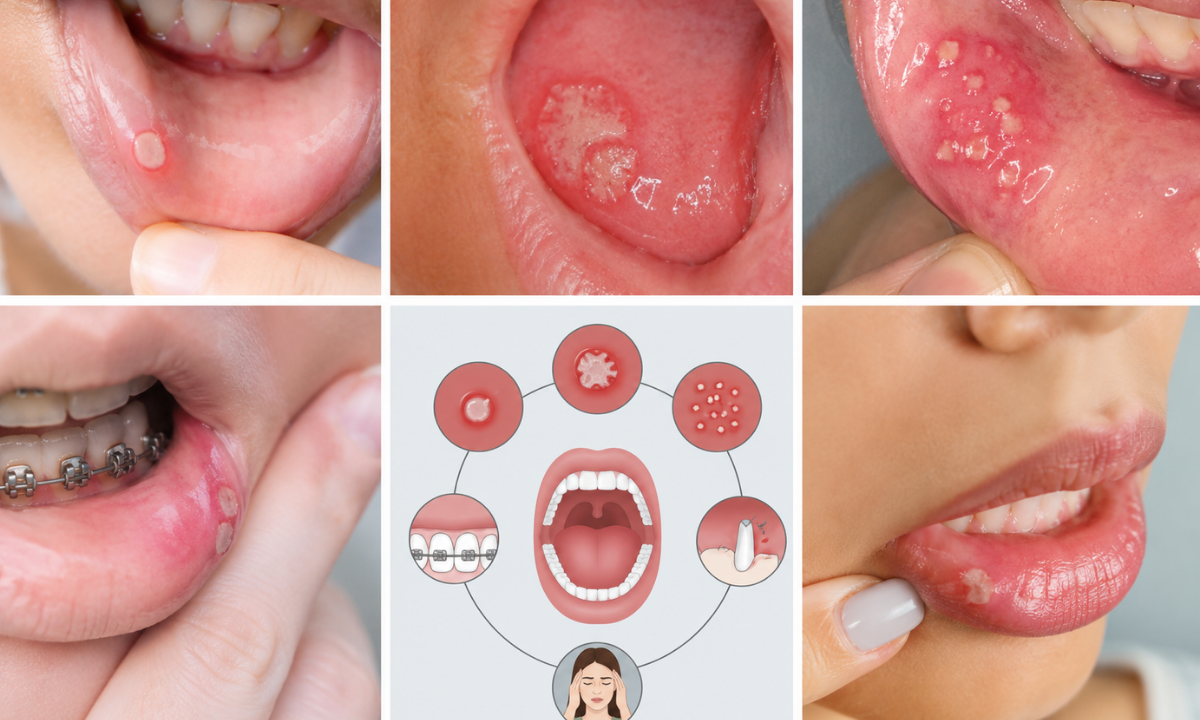
Not all mouth ulcers are the same. Knowing which type you have can give a clue about the likely cause and how long it may take to heal.
Minor ulcers are the most common. They are small, usually less than a centimetre across, and tend to heal within one to two weeks without leaving any scar. Most people who get occasional ulcers are dealing with this type.
Major ulcers are larger and deeper, often with a raised or irregular edge. They can be very painful, may take several weeks or even months to heal, and sometimes leave a small scar behind.
Herpetiform ulcers are less common. Despite the name, they are not linked to the herpes virus. They appear as clusters of tiny pinpoint sores that can merge into larger patches, and they usually heal within a couple of weeks.
The two most common reasons for oral ulceration are local trauma, such as rubbing from a sharp tooth or braces, and aphthous stomatitis, the recurring form whose exact cause is still not fully understood.
Common Causes of Mouth Ulcers

Mouth ulcers rarely have a single cause. They usually result from a combination of triggers, and what sets one person off may not affect another. Here are the most common reasons they develop.
Minor Injuries to the Mouth
Physical damage to the delicate lining of the mouth is the most frequent cause of a single ulcer. This can happen when you accidentally bite the inside of your cheek or your tongue, when a sharp or broken tooth rubs against soft tissue, or when hard and crunchy foods scrape the gums. Dental appliances such as braces, aligners, or a poorly fitting denture can also cause friction. Even brushing too hard with a stiff toothbrush can leave a sore behind. The good news is that injury-related ulcers usually heal quickly once the source of irritation is removed or corrected.
Spicy and Acidic Foods
Diet is a well-known trigger for many people. Spicy dishes, citrus fruits, tomatoes, pineapple, coffee, chocolate, and salty snacks can all irritate the mouth’s lining or set off a fresh ulcer in those who are prone to them. According to the NHS, foods such as coffee, chocolate, strawberries, cheese, and certain nuts are among the dietary triggers commonly reported by people who get recurring ulcers. Keeping a simple food diary can help you spot which items tend to precede an outbreak.
Stress, Tiredness, and Hormonal Changes
Periods of high stress, anxiety, poor sleep, or general fatigue are closely linked to mouth ulcers. Many people notice them flaring up during exam season, busy work stretches, or times of emotional strain. Hormonal shifts can also play a part, which is why some people find their ulcers follow a roughly cyclical pattern. Managing stress and getting enough rest will not guarantee an ulcer-free mouth, but it often reduces how frequently they appear.
Nutritional Deficiencies
A shortfall of certain nutrients can make ulcers more frequent and slower to heal. Low levels of vitamin B12, iron, folate, and zinc are commonly associated with recurring mouth ulcers. If you find yourself getting them often, it is worth discussing a blood test with your doctor or dentist, because correcting a deficiency can noticeably cut down how often ulcers return. A balanced diet that includes leafy greens, whole grains, dairy or fortified alternatives, and lean protein supports a healthy mouth.
Underlying Medical Conditions
Sometimes, mouth ulcers are a symptom of a wider health issue rather than a standalone problem. Viral infections such as hand, foot and mouth disease can cause them, particularly in children. Longer-term conditions, including Crohn’s disease, coeliac disease, and other disorders that affect the digestive system, are also associated with repeated ulcers, as is a weakened immune system.
If your ulcers come with other symptoms, such as digestive trouble, fatigue, or skin changes, it is worth mentioning this to a healthcare professional so the bigger picture can be assessed.
Certain Medications
Some medications list mouth ulcers as a possible side effect. These include some anti-inflammatory painkillers, certain medicines used for heart conditions and blood pressure, and treatments such as chemotherapy and radiotherapy, which can inflame the lining of the mouth. If you suspect a particular medication is behind your ulcers, do not stop taking it on your own. Speak to the doctor who prescribed it first, as they can suggest alternatives or ways to manage the side effect.
Recurring Mouth Ulcers
If you experience the same sores again and again, you may have recurrent aphthous ulcers. The precise cause is not fully understood, but the immune system is thought to play a central role, and a tendency towards them often runs in families.
For people in this group, the most effective approach is usually detective work: identifying personal triggers, whether that is a specific food, ongoing stress, or an underlying deficiency, and then managing them consistently. Because the cause varies so much from person to person, what brings relief for one individual may do little for another, which is why a tailored assessment is so useful.
Who Is More Likely to Get Mouth Ulcers?
Mouth ulcers can affect anyone, but they are more common in some groups than others. They often begin in childhood or the teenage years and can continue into adulthood. People who are under sustained stress, those with certain nutritional deficiencies, and those with a family history of recurring ulcers tend to be more prone to them.
Hormonal factors mean some people notice a pattern linked to their menstrual cycle. Understanding where you fall can help you stay ahead of triggers rather than simply reacting to each outbreak.
How to Ease and Prevent Mouth Ulcers
Most mouth ulcers settle without any treatment, but a few simple habits can speed up healing and lower the chances of new ones forming:
- Rinse with warm salt water a few times a day to soothe the area and keep it clean
- Avoid spicy, acidic, salty, and hot foods while a sore is healing
- Switch to a soft-bristle toothbrush and brush gently along the gumline
- Stay well hydrated and eat a balanced diet rich in iron, B12, and folate
- Manage stress through rest, regular exercise, or relaxation techniques
- Address dental irritants early, such as a sharp tooth edge or a rough filling
Over-the-counter gels, protective pastes, and antiseptic mouth rinses can also reduce pain and shield the ulcer while it heals. If these do not help and ulcers persist, a dental assessment is the sensible next step.
When to See a Dentist
The majority of mouth ulcers are nothing to worry about and clear up on their own within a week or two. Some, however, do warrant professional attention. You should book an appointment if an ulcer lasts longer than three weeks, keeps coming back in the same spot, is unusually large or severe, or appears alongside other unexplained symptoms such as fever, difficulty swallowing, or sores elsewhere on the body.
A sore that simply will not heal should always be checked. In rare cases, it can be an early sign of something more serious, and conditions like this are far easier to treat when they are caught early, which is exactly why a timely check matters.
It also helps to remember that a dentist does more than treat the ulcer in front of them. They can look at the bigger picture, spotting patterns you might miss on your own, identifying whether a deficiency, a habit, or a dental issue is the real driver, and helping you stop the cycle rather than just managing each flare-up as it comes.
If you are dealing with frequent or stubborn ulcers, the team at this dental clinic in Vasanth Nagar can examine the underlying cause, treat any dental triggers such as a sharp tooth, a rough filling, or an ill-fitting appliance, and advise you on long-term prevention suited to your situation. A short visit now can save you a lot of discomfort later and give you clear answers about why the ulcers keep appearing in the first place.
Frequently Asked Questions
How long does a mouth ulcer take to heal?
Most mouth ulcers heal on their own within one to two weeks. If an ulcer lasts longer than three weeks or keeps coming back in the same spot, it is best to have it examined by a dentist or doctor.
Are mouth ulcers a sign of a vitamin deficiency?
They can be. Low levels of vitamin B12, iron, and folate are linked to recurring mouth ulcers. If you get them frequently, a simple blood test can help identify whether a deficiency is contributing, so it can be corrected.
What is the difference between a mouth ulcer and a cold sore?
A mouth ulcer forms inside the mouth, is not contagious, and is usually triggered by injury, stress, or diet. A cold sore tends to appear on or around the lips, is caused by a virus, and is contagious through close contact.
Can stress really cause mouth ulcers?
Yes. Stress, anxiety, and fatigue are among the most common triggers, which is why many people notice ulcers appearing during exams, deadlines, or other demanding periods.
Why do I keep getting mouth ulcers in the same place?
Recurring ulcers in one spot are often linked to a constant irritant, such as a sharp tooth, a rough filling, or a dental appliance rubbing against the tissue. A dentist can identify and fix the source so the area gets a chance to heal properly.
When should I be worried about a mouth ulcer?
See a dentist if an ulcer does not heal within three weeks, keeps returning, grows in size, or comes with other unusual symptoms. Early assessment is always the safest approach and provides peace of mind.
Can a dentist help with recurring mouth ulcers?
Yes. If ulcers keep returning, a dentist in Vasanth Nagar, Bangalore, can find the underlying cause, whether it is a sharp tooth, a deficiency, or a habit, and help you break the cycle instead of treating each one as it appears.