
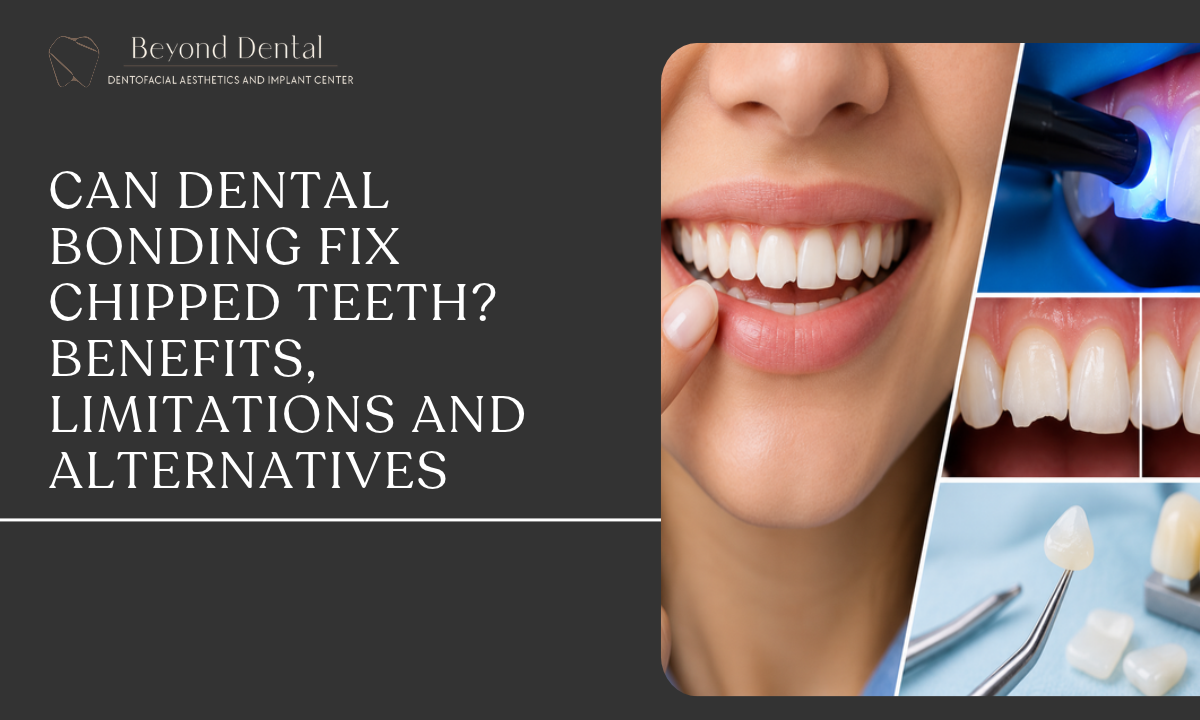
A chipped front tooth can knock your confidence, even when it does not hurt. The good news is that dental bonding for chipped teeth can often repair small chips, rough edges and minor defects in a single visit, using a tooth-coloured material that blends in with your natural smile.
Bonding is not the right answer for every chip, though. The best treatment depends on how large the damage is, where it sits and what caused it. In this guide, we explain what composite bonding can and cannot fix, how the procedure works, its limitations and when veneers or crowns may be a better choice.
What Is Dental Bonding for Chipped Teeth?
Dental bonding, also called composite bonding, uses a tooth-coloured composite resin to rebuild a damaged tooth. The dentist applies the resin in thin layers, sculpts it to match the natural shape of your tooth and hardens it with a special curing light. Once polished, the repair blends in with the surrounding teeth.
Because the resin bonds directly to enamel, the dentist usually needs to remove little or no healthy tooth structure. That makes bonding one of the most conservative cosmetic treatments available. However, composite resin is not as strong as natural enamel or porcelain, so it works best for small cosmetic repairs rather than large fractures. For prices and what affects them, see our guide to dental bonding cost in India.
What Types of Chipped Teeth Can Composite Bonding Repair?
Small Chips on Front Teeth
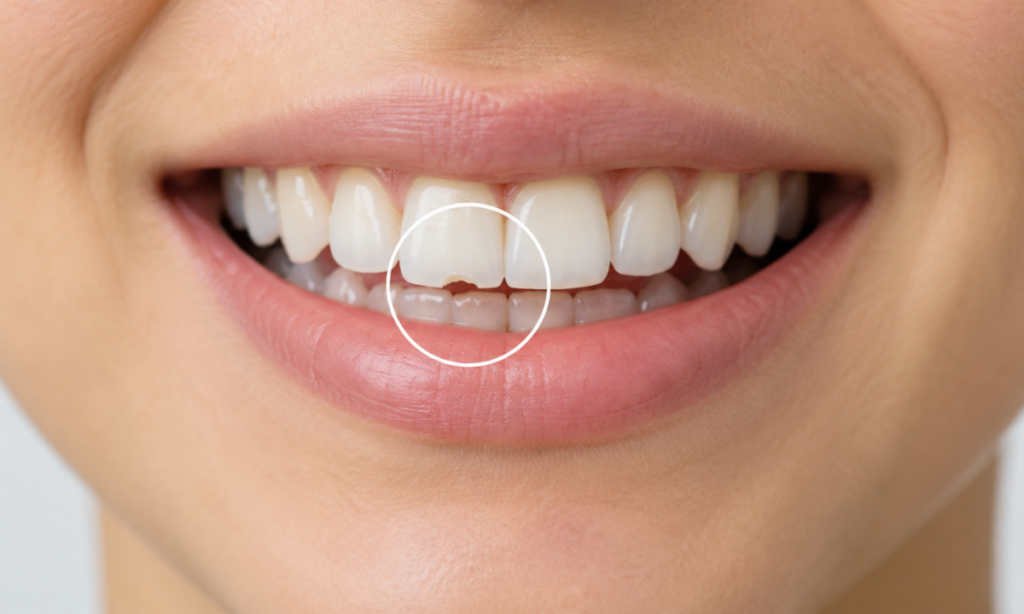
Composite bonding for chipped teeth works especially well when a small corner or edge of a front tooth has broken off. The dentist rebuilds the missing section with resin, restoring the tooth’s outline so the chip is no longer visible when you smile or speak.
Uneven or Rough Tooth Edges
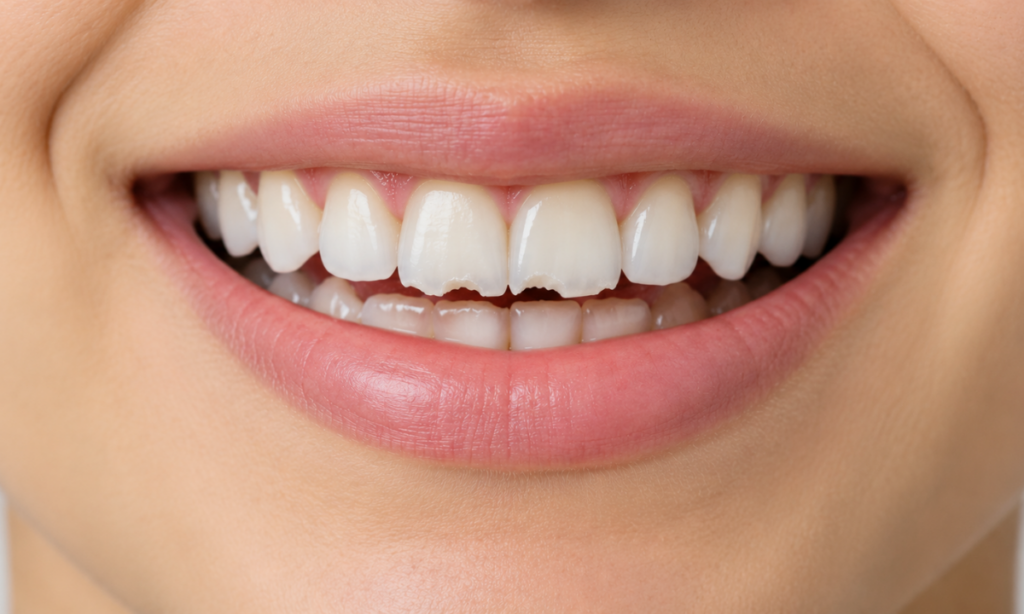
Minor irregularities along the biting edge can make a smile look uneven. Bonding can smooth and even out these edges, often alongside gentle polishing of the natural tooth, while preserving as much enamel as possible.
Minor Cracks and Surface Defects
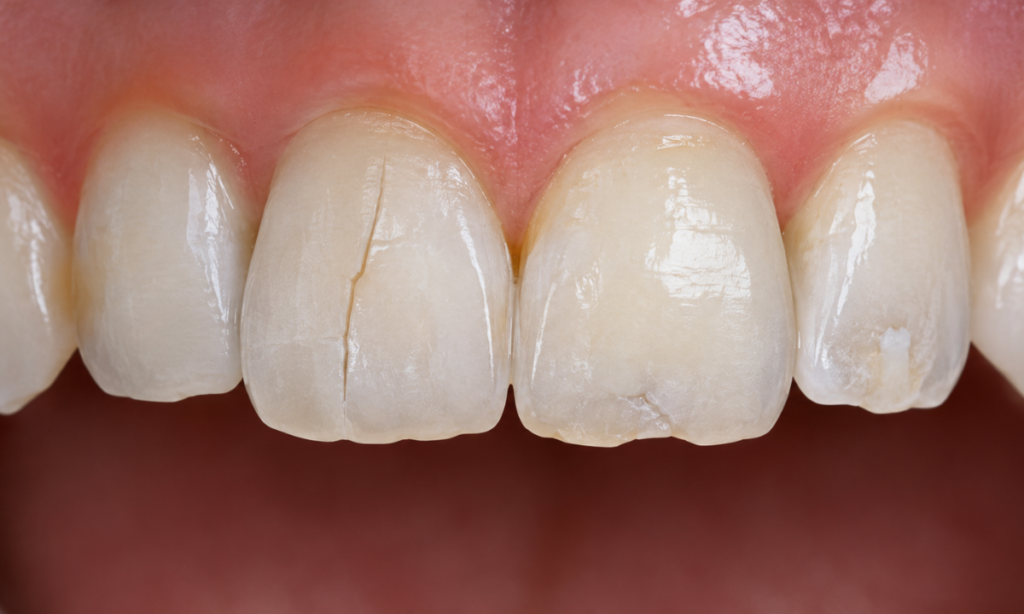
Fine surface defects can often be masked with bonding. A deeper crack is different. It may extend below the surface, so it needs a proper examination, sometimes with an X-ray, before any cosmetic repair is considered. If a cracked tooth also reacts to cold drinks, our guide on teeth sensitive to cold explains the likely causes.
Worn or Slightly Shortened Teeth
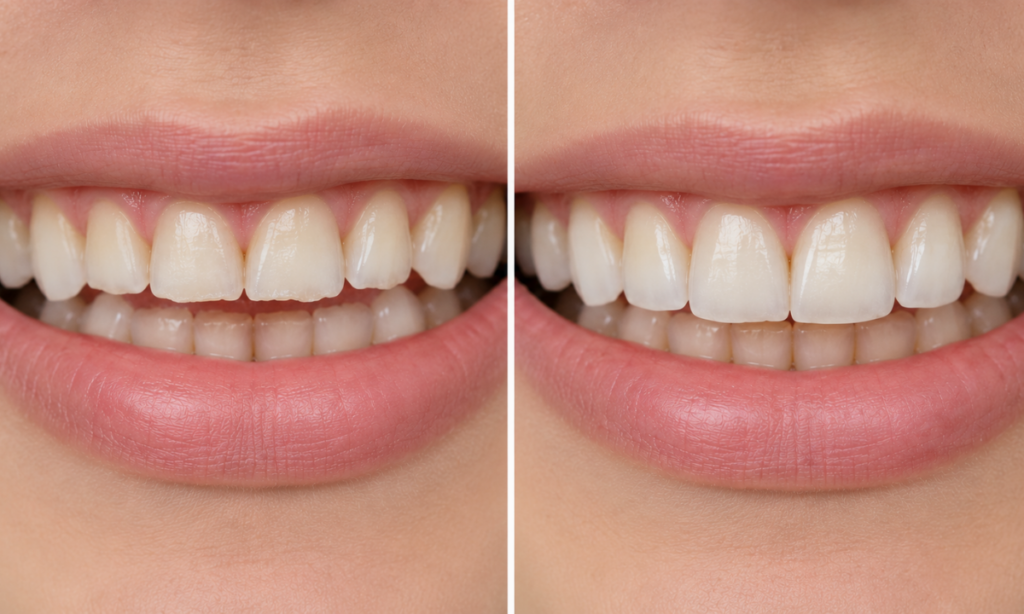
Composite resin can restore length to teeth that have worn down slightly. Your dentist will first look for the cause of the wear, such as teeth grinding, because bonding placed over an untreated problem is likely to chip again.
When Is Dental Bonding Not the Best Option?
Bonding is a repair for minor damage. It is usually not the best choice when:
• A large part of the tooth has broken away
• The fracture reaches the nerve or weakens the tooth’s structure
• The tooth hurts when you bite or is sensitive to hot and cold
• There is severe wear, extensive decay or a bite problem that places heavy force on the tooth
• You want to change the colour or shape of several teeth at once
If the nerve is affected, you may need root canal treatment before any cosmetic repair. In other cases, a veneer or crown may give a stronger, longer-lasting result. A dental examination is the only reliable way to decide.
How Does Dental Bonding for Chipped Teeth Work?
Step 1: Dental examination
Your dentist checks the chip, the surrounding enamel and your bite, and may take an X-ray to rule out hidden damage.
Step 2: Shade selection and preparation
A composite shade is chosen to match your natural tooth. The surface is lightly roughened and a conditioning gel is applied to help the resin bond securely.
Step 3: Composite resin application
The resin is applied in layers and sculpted to rebuild the missing part of the tooth.
Step 4: Hardening and polishing
Each layer is hardened with a curing light. The dentist then refines the shape and polishes the surface to a natural sheen.
Step 5: Bite and appearance check
Finally, your bite is checked for comfort and the result is reviewed in natural light. A single-tooth repair usually takes 30 to 60 minutes, and anaesthetic is often not needed.
Why Choose Composite Bonding for Chipped Teeth?
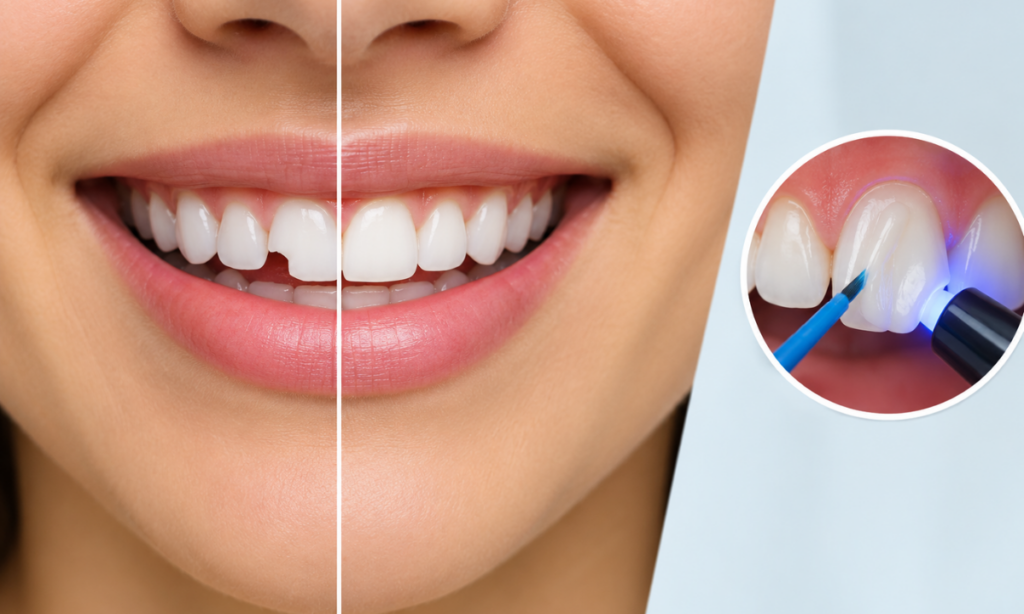
Composite bonding is popular because it fixes small chips quickly and conservatively. Its main benefits include:
• It can often be completed in a single appointment
• Little or no healthy enamel needs to be removed
• The resin is colour-matched to your natural teeth
• It is usually less extensive, and less costly, than veneers or crowns
• Bonding can be repaired or added to if it chips later
For many patients with a single small chip, this makes bonding the simplest way to restore a natural-looking smile. Results still depend on your teeth, so your dentist will explain what is realistic before treatment begins.
What Are the Limitations of Dental Bonding?
Bonding is a practical repair, but it has limits worth understanding before you decide:
• Composite resin can stain over time, especially with tea, coffee and tobacco
• It is less durable than porcelain and can chip or wear
• Large repairs may not be strong enough on teeth that take heavy biting forces
• The colour match may look slightly different under some lighting
• Resin does not lighten with whitening gel
If you are considering whitening, it is best done before bonding, so the resin can be matched to your brighter shade. Our guide to teeth whitening cost in Bangalore explains the options.
Dental Bonding vs Veneers vs Dental Crowns
| Factor | Dental bonding | Veneers | Dental crowns |
| Best for | Small chips, rough edges, minor wear | Changing the shape or colour of visible front teeth | Large fractures, weakened or root-treated teeth |
| Tooth structure removed | Little or none | Usually a thin layer of enamel | More, as the crown covers the whole tooth |
| Material | Composite resin | Porcelain or composite | Porcelain, zirconia or metal-ceramic |
| Typical visits | Usually one | Usually two or more | Usually two |
| Stain resistance | Moderate | High with porcelain | High |
| If damaged | Easy to repair or add to | Usually replaced | Usually replaced |
Dental veneers in Vasanth Nagar suit people who want to change the shape or colour of several front teeth, including chipped ones. Dental crowns are recommended when a tooth needs full coverage for strength. Your dentist will recommend the option that suits your tooth, not simply the cheapest one.
How Long Does Dental Bonding Last on Chipped Teeth?
With good care, bonding on a chipped tooth often lasts several years, and many restorations last between five and ten years. Longevity depends on the size and position of the repair, the forces on that tooth and your daily habits.
Biting nails, chewing pens and grinding your teeth at night all place extra strain on the resin. Small chips in bonding can usually be polished or repaired without replacing the whole restoration. Regular check-ups allow your dentist to spot wear early and polish away surface staining. If you grind your teeth, a custom night guard can protect both your bonding and your natural enamel.
How to Care for Bonded Teeth
Bonded teeth need the same daily care as natural teeth, plus a little extra caution:
• Brush twice daily with a fluoride toothpaste
• Clean between your teeth every day
• Avoid biting ice, pens, fingernails or other hard objects
• Never use your front teeth to open packaging
• Rinse with water after tea, coffee or red wine
• Tell your dentist if you grind or clench your teeth
• Keep up routine dental reviews
What Should You Do If You Chip a Front Tooth?
If you chip a front tooth, try to stay calm and follow these steps:
• Keep any broken fragment in a small container of milk or water and bring it to your appointment
• Rinse your mouth gently with warm water
• Avoid chewing on the damaged tooth
• Use a cold compress on your cheek if there is swelling
• Arrange a dental examination as soon as you can
Seek urgent care if you have severe pain, bleeding that will not stop or a large piece of tooth missing. The NHS guidance on chipped, broken or cracked teeth also advises seeing a dentist promptly, as damage that looks minor can affect the nerve. After an injury, your dentist will check the tooth’s health before any cosmetic repair.
Where to Get Dental Bonding for Chipped Teeth in Bangalore
Dental bonding should be carried out by a qualified dentist who can assess the whole tooth, not just the visible chip. Skilled shade matching and sculpting make the difference between a repair that blends in and one that stands out.
When choosing a clinic, ask whether an examination and X-ray are included, how the shade will be matched and what follow-up care is offered. At our dental clinic in Vasanth Nagar, Bangalore, Dr. Chinmaya Bhandary and the team assess every chipped tooth before recommending bonding, veneers or a crown.
Conclusion: Is Dental Bonding Right for Your Smile?
For small chips, rough edges and minor wear, composite bonding is often a quick, conservative and natural-looking repair. It is less suitable for large fractures, painful cracks or teeth under heavy biting force, where a veneer or crown may last longer.
If several teeth need attention, a smile makeover may give a more balanced result. The right choice depends on your tooth’s condition, your bite and your goals.
Book a dental consultation at Beyond Dental to find out whether bonding is right for your chipped tooth, and explore our full range of cosmetic dentistry in Vasanth Nagar.
Frequently Asked Questions About Dental Bonding for Chipped Teeth
Can dental bonding fix a chipped front tooth in one visit?
Yes, in most cases. A small chip can usually be repaired in a single appointment of 30 to 60 minutes, provided the tooth is otherwise healthy.
Does composite bonding look natural?
When the shade is matched carefully and the resin is well polished, bonding blends in closely with natural teeth. It may look slightly different under some lighting.
Is dental bonding permanent?
No. Bonding is long-lasting but not permanent. It may need polishing, repair or replacement after several years.
Can bonded teeth chip again?
Yes. Composite resin is not as strong as enamel, so biting hard objects or grinding can chip it. Small chips can usually be repaired easily.
Is bonding better than veneers for chipped teeth?
For a single small chip, bonding is often the simpler choice. Veneers may suit people who want to change several teeth at once or need better stain resistance.
Can dental bonding repair a cracked tooth?
Bonding can mask minor surface cracks. A deeper or painful crack usually needs a crown, often called a tooth cap. Our guide to tooth cap cost in Bangalore explains the options.
Does dental bonding damage natural teeth?
No. Bonding usually needs little or no removal of healthy enamel, and the resin can often be removed or replaced later without harming the tooth.