
Quick Answer
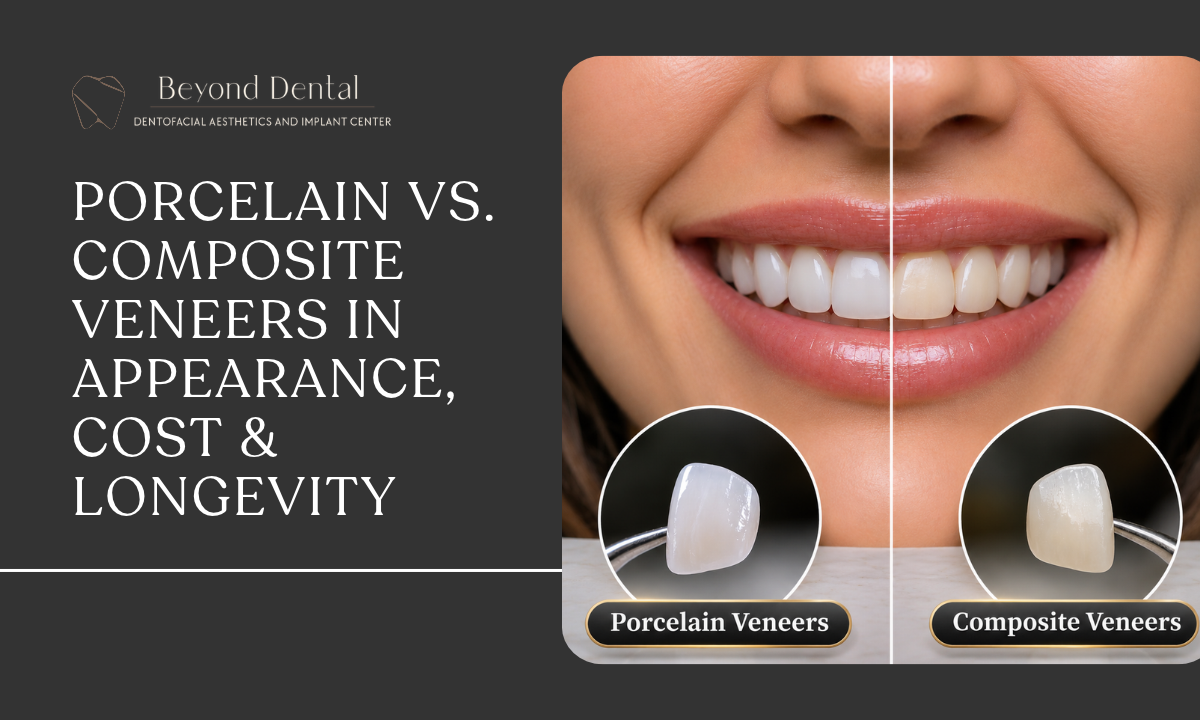
Porcelain veneers offer superior stain resistance, natural-looking translucency and longer durability, typically lasting 10-15 years or more. Composite veneers are more affordable, require less tooth preparation and can often be completed in one visit, but may stain and wear sooner. The right choice depends on dental health, budget and aesthetic goals.
Introduction
A person’s smile plays an important role in their appearance and confidence. However, concerns such as stained teeth, small gaps, chipped edges, uneven shapes and minor imperfections can affect how someone feels about their smile. Dental veneers offer a cosmetic solution to address these concerns by improving the appearance of the front surface of the teeth.
Porcelain and composite veneers are two commonly used options in cosmetic dentistry. Both can improve tooth colour, shape and symmetry, but they differ in their materials, application procedures, durability, maintenance requirements and overall cost.
Choosing between porcelain and composite veneers involves more than comparing their appearance or price. The condition of the natural teeth, gum health, bite alignment and long-term expectations also matter. Understanding these differences can help patients make informed decisions with their dentist.
What Are Dental Veneers?
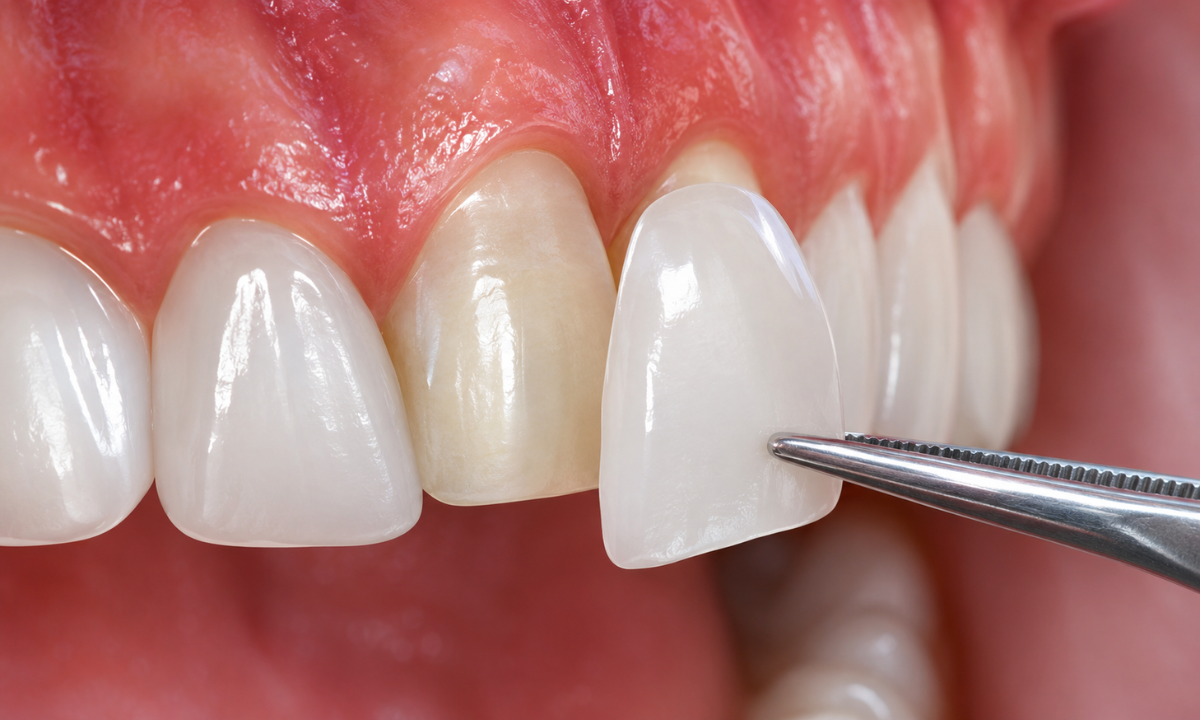
Dental veneers are thin, custom-made coverings placed on the front surface of teeth to improve their appearance. They are commonly used to address cosmetic concerns such as:
- Stained or discoloured teeth that do not respond well to teeth whitening.
- Chipped or slightly worn teeth.
- Small gaps between teeth.
- Uneven tooth shapes or sizes.
- Minor alignment irregularities.
- Teeth with visible surface imperfections.
Veneers are designed to blend with the surrounding natural teeth and create a balanced smile. They can be made from different materials, with porcelain and composite resin being two common choices.
Unlike dental crowns, which cover the entire visible portion of a tooth, veneers generally cover only its front surface. The amount of tooth preparation required depends on the material, the existing tooth structure and the treatment plan.
For patients considering cosmetic improvements, smile designing and makeover at Beyond Dental can involve veneers, teeth whitening, dental bonding and other procedures based on individual requirements.
What Are Porcelain Veneers?
Porcelain veneers are thin ceramic shells designed to fit over the front surfaces of natural teeth. They are custom-made to match the required tooth shape, size and colour.
Porcelain has properties that make it suitable for cosmetic dental restorations. Its translucency allows light to pass through in a way that resembles natural tooth enamel. It also has good resistance to surface staining.
The dentist prepares the teeth, takes digital scans or impressions and sends the information to a dental laboratory. Once the veneers are ready, they are checked for fit and appearance before being permanently bonded to the teeth.
Key characteristics of porcelain veneers:
- Natural-looking appearance with enamel-like translucency.
- High resistance to staining.
- Good durability when properly placed and maintained.
- Customised shape, size and shade.
- Usually requires some enamel preparation.
- Higher initial cost compared with composite veneers.
Porcelain veneers are often considered when patients want long-term aesthetic improvements and have sufficient healthy tooth structure to support the restoration.
What Are Composite Veneers?
Composite veneers are made using tooth-coloured composite resin. The material is applied to the front surface of the tooth and carefully shaped by the dentist to achieve the desired appearance.
Unlike porcelain veneers, which are generally manufactured in a dental laboratory, direct composite veneers can often be completed during a single appointment.
The dentist selects a suitable shade, prepares the tooth surface if required, applies the composite resin and shapes it to match the surrounding teeth. A special curing light hardens the material, after which the dentist smooths and polishes the restoration.
Key characteristics of composite veneers:
- Made using tooth-coloured composite resin.
- Often completed in one dental appointment.
- Generally more affordable than porcelain veneers.
- May require minimal tooth preparation.
- Can be repaired or modified more easily.
- More susceptible to staining and surface wear over time.
Composite veneers can be suitable for patients who want to improve minor cosmetic imperfections without immediately committing to a more extensive restorative procedure.
Porcelain vs. Composite Veneers – Key Differences
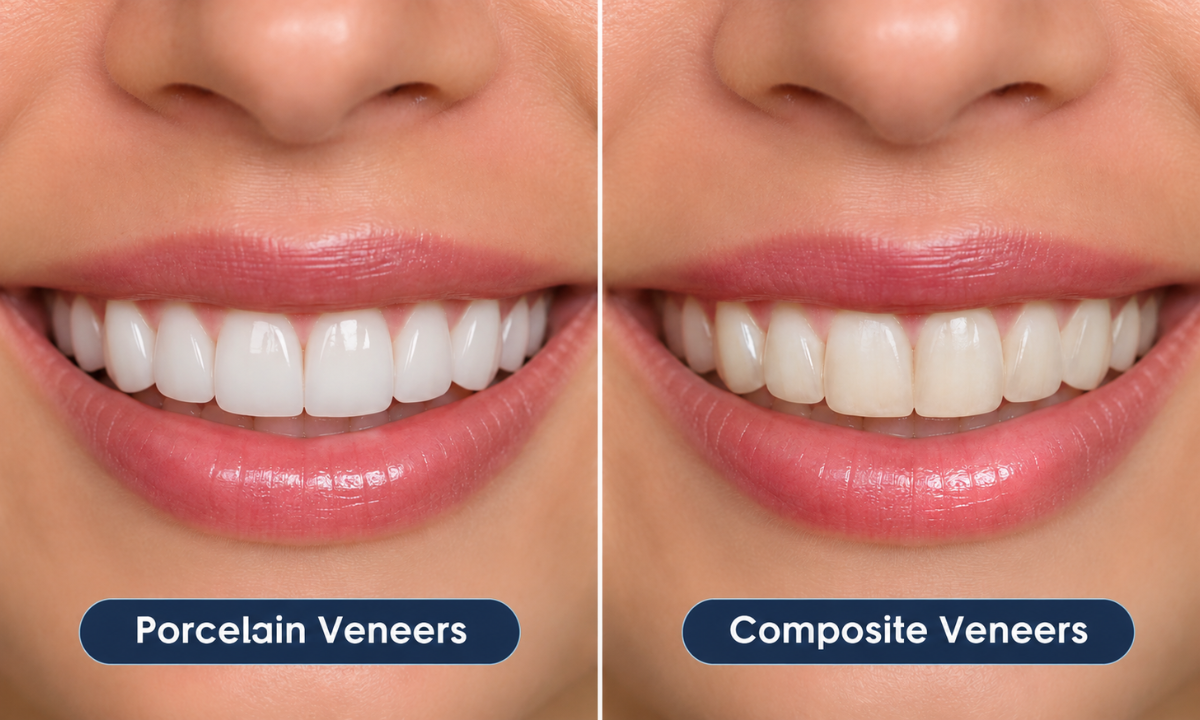
Both porcelain and composite veneers improve the appearance of natural teeth. However, their differences in material, appearance, durability and application can influence the final treatment decision.
| Comparison factor | Porcelain veneers | Composite veneers |
|---|---|---|
| Material | Dental-grade ceramic | Tooth-coloured composite resin |
| Appearance | Highly natural with enamel-like translucency | Natural-looking, depending on shade selection and polishing |
| Stain resistance | High | More prone to staining |
| Durability | Generally 10-15 years or longer | Often around 5-7 years |
| Application | Usually requires multiple visits | Direct application can often be completed in one visit |
| Tooth preparation | Usually requires some enamel removal | Often requires less preparation |
| Repair | Chipping or damage may require replacement | Can often be repaired or reshaped |
| Initial cost | Higher | Lower |
| Maintenance | Regular oral hygiene and dental check-ups | Regular oral hygiene, polishing and occasional repairs |
These are general estimates rather than guaranteed outcomes. Actual longevity depends on the quality of treatment, bite forces, oral hygiene and individual dental conditions.
1. Difference in Appearance
Appearance is one of the most important considerations when choosing between porcelain and composite veneers.
Both materials can improve the colour, shape and symmetry of teeth. However, they differ in how they reflect light and maintain their appearance over time.
Porcelain Veneers
Porcelain veneers are known for their natural-looking finish. Their translucency allows them to resemble natural tooth enamel, creating a realistic appearance.
They are also available in different shades and can be customised to match the surrounding teeth. Their smooth surface helps resist staining from common foods and beverages.
Porcelain veneers may be suitable for patients who want:
- A natural-looking smile with improved tooth symmetry.
- Long-lasting colour stability.
- A uniform appearance across multiple teeth.
- Better resistance to staining from coffee, tea and other foods.
Composite Veneers
Composite veneers can also produce natural-looking results when the dentist carefully selects the shade and shapes the material.
However, composite resin does not always reproduce the same translucency as porcelain. Its surface may also lose some of its polish over time, making it more susceptible to staining.
Composite veneers may be suitable for patients who want to correct minor imperfections, improve tooth shape or address small gaps without choosing a higher-cost ceramic restoration.
2. Difference in Application Procedures
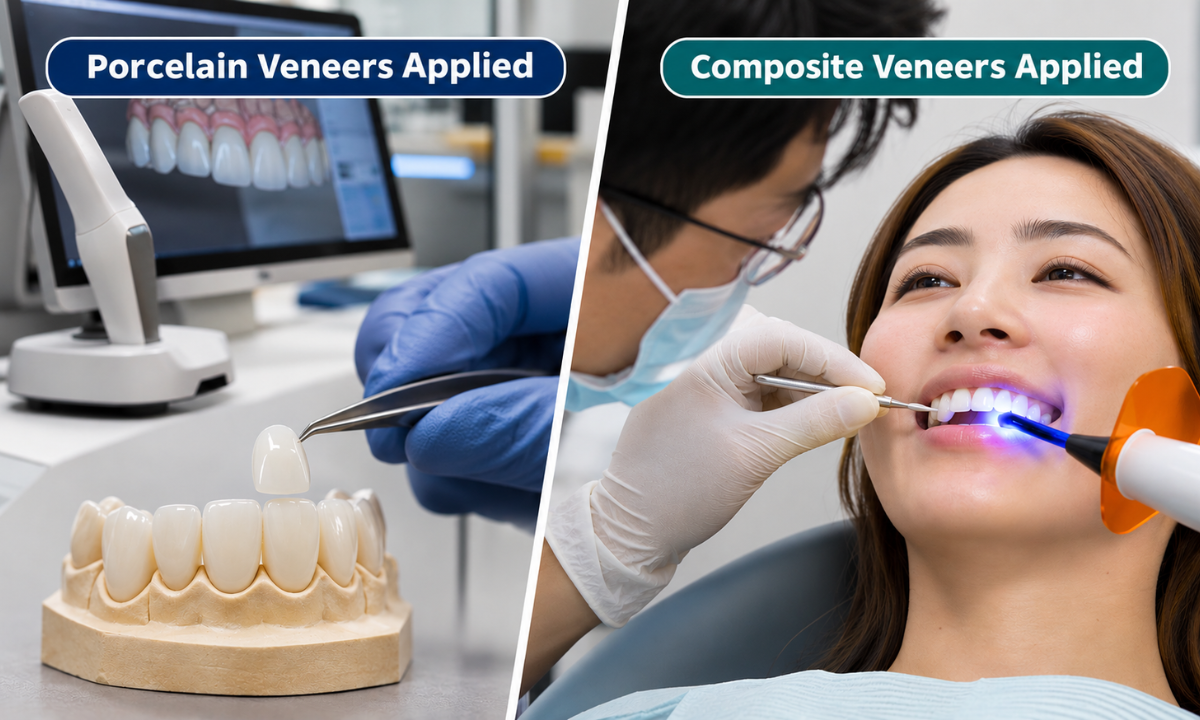
The application procedure is another important difference between porcelain and composite veneers.
How Are Porcelain Veneers Applied?
Porcelain veneers generally require more than one appointment because they are custom-made outside the dental clinic.
The procedure usually involves the following steps:
Step 1 – Dental Examination
The dentist examines the teeth and gums to identify existing dental problems and assess whether veneers are suitable.
Step 2 – Tooth Preparation
A small amount of enamel may be removed from the front surface of the teeth to create space for the veneers. The amount depends on the required thickness and existing tooth position.
Step 3 – Digital Scanning or Impressions
The dentist takes digital scans or dental impressions to record the shape and position of the teeth. These records are used to create customised veneers.
Step 4 – Veneer Fabrication
The information is sent to a dental laboratory, where technicians prepare the porcelain veneers according to the approved design.
Temporary veneers may be provided when necessary.
Step 5 – Bonding and Final Placement
Once the porcelain veneers are ready, the dentist checks their fit, shape and shade. After making any necessary adjustments, the veneers are bonded to the teeth using dental adhesive.
The dentist also checks the patient’s bite to ensure proper contact between the upper and lower teeth.
How Are Composite Veneers Applied?
Direct composite veneers can often be completed in a single appointment.
The procedure generally involves:
Step 1 – Dental Examination
The dentist examines the teeth, gums and bite to determine whether composite veneers are appropriate.
Step 2 – Tooth Preparation
The tooth surface is cleaned and prepared for bonding. Depending on the condition of the tooth, little or no enamel removal may be required.
Step 3 – Composite Resin Application
The dentist applies tooth-coloured composite resin to the front surface of the tooth.
Step 4 – Shaping and Curing
The resin is carefully shaped to achieve the desired tooth size and appearance. A special curing light is used to harden the material.
Step 5 – Polishing and Final Adjustments
The dentist smooths and polishes the composite material to create a natural-looking finish. The bite is also checked before completing the procedure.
The main difference is that porcelain veneers require laboratory fabrication, while direct composite veneers are shaped directly on the teeth.
3. Difference in Durability and Longevity
The lifespan of dental veneers depends on the material, placement technique, oral hygiene and everyday habits.
Porcelain veneers generally last longer than composite veneers because ceramic materials offer better resistance to staining and surface wear.
How Long Do Porcelain Veneers Last?
Porcelain veneers typically last around 10-15 years or longer with proper care. Their durability makes them a common choice for patients looking for long-term cosmetic improvements.
However, porcelain veneers can still chip, crack or become detached when exposed to excessive pressure. Habits such as teeth grinding, nail biting and chewing hard objects can increase the risk of damage.
How Long Do Composite Veneers Last?
Composite veneers generally last around 5-7 years, although their lifespan can vary depending on the material and the patient’s oral habits.
Composite resin is more susceptible to surface wear, staining and chipping. However, minor damage can often be repaired without replacing the entire restoration.
Patients may also require periodic polishing to maintain the appearance of composite veneers.
Which option lasts longer?
Porcelain veneers generally offer better long-term durability. A 10-year clinical practice-based study comparing ceramic and direct composite veneers also found higher survival and success rates for ceramic restorations. Composite veneers nevertheless remained a useful alternative, with acceptable longevity.
4. Porcelain vs. Composite Veneers Cost
Cost is another important factor when deciding between porcelain and composite veneers.
The overall expense depends on the material, number of teeth being treated, complexity of the case, laboratory charges and additional dental procedures.
Porcelain veneers generally cost more because they require custom fabrication and laboratory work. Composite veneers are usually more affordable because the dentist can apply and shape the material directly.
What Is the Cost of Porcelain Veneers?
Porcelain veneers involve additional fabrication costs and require a customised approach for each tooth.
Beyond Dental’s published smile makeover cost guide lists the following indicative prices:
– Porcelain veneers: ₹8,000-₹20,000 per tooth.
The final cost may vary depending on the ceramic material, treatment complexity and number of veneers required.
What Is the Cost of Composite Veneers?
Composite veneers generally have a lower initial cost because they do not always require laboratory fabrication.
The same published cost guide lists:
– Composite veneers: ₹3,000-₹8,000 per tooth.
However, patients should also consider future polishing, repairs and possible replacement when comparing long-term expenses.
Which Veneer Option Is More Cost-Effective?
Composite veneers may be more affordable initially, making them suitable for patients with budget limitations.
Porcelain veneers have a higher initial cost but generally offer a longer service life and better stain resistance.
The most cost-effective option depends on the patient’s treatment goals, dental condition and willingness to maintain or replace the restoration over time.
Note: These figures are indicative prices published in Beyond Dental’s smile makeover cost guide. They are not a personalised quotation or a guarantee of current treatment charges.
5. Maintenance Requirements for Porcelain and Composite Veneers
Both types of veneers require consistent oral hygiene and regular dental check-ups. Although they cover the front surfaces of teeth, they do not protect the underlying natural tooth from decay or gum disease.
Maintaining Porcelain Veneers
Porcelain veneers are relatively easy to maintain because their surfaces resist staining.
Patients should follow these practices:
- Brush twice daily using a soft-bristled toothbrush and fluoride toothpaste.
- Floss or clean between the teeth every day.
- Avoid biting hard objects such as ice, pens and fingernails.
- Avoid using the front teeth to open packaging.
- Wear a dentist-recommended night guard if teeth grinding is present.
- Visit the dentist regularly to check the veneers and surrounding gums.
Although porcelain is stain-resistant, the natural teeth surrounding the veneers can still become discoloured.
Maintaining Composite Veneers
Composite veneers require similar oral hygiene practices but may need additional attention to maintain their appearance.
Patients should:
- Brush twice daily with a soft-bristled toothbrush.
- Floss every day to maintain gum health.
- Limit frequent exposure to staining foods and beverages.
- Avoid biting hard foods directly with the veneered teeth.
- Attend regular dental visits for examination and polishing when required.
- Seek dental attention if the material chips, cracks or becomes rough.
Composite veneers may require occasional polishing or repairs to maintain their original appearance.
For both options, good oral hygiene and routine dental care are important for protecting the natural teeth underneath and around the restorations.
6. Advantages and Limitations of Porcelain and Composite Veneers
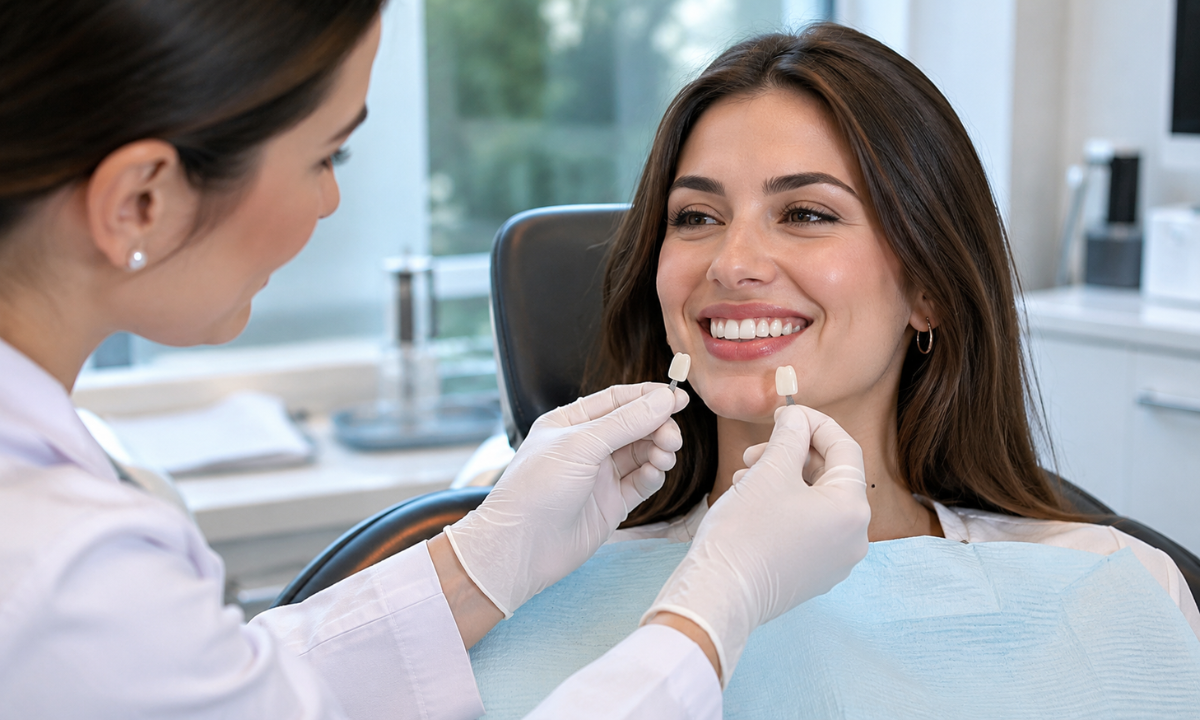
Understanding the benefits and limitations of each material helps patients make a more informed decision.
Advantages and Limitations of Porcelain Veneers
Advantages
- Provide a natural-looking appearance.
- Offer excellent resistance to staining.
- Generally last longer than composite veneers.
- Maintain their surface finish with proper care.
- Can improve the shape, size and colour of multiple teeth.
Limitations
- Have a higher initial treatment cost.
- Usually requires some enamel removal.
- May require multiple dental appointments.
- Can chip or crack under excessive pressure.
- Damaged veneers may need replacement rather than simple repair.
Advantages and Limitations of Composite Veneers
Advantages
- Generally more affordable than porcelain veneers.
- Often completed in a single appointment.
- May require minimal tooth preparation.
- Can be repaired or modified more easily.
- Suitable for correcting minor cosmetic imperfections.
Limitations
- More susceptible to staining.
- May lose their polish over time.
- Generally have a shorter lifespan.
- May require periodic repairs or polishing.
- May not provide the same level of translucency as porcelain.
Neither option is automatically better for every patient. The right choice depends on the condition of the teeth, the desired appearance and the patient’s long-term expectations.
7. Who Is a Suitable Candidate for Porcelain or Composite Veneers?
Not every patient is suitable for dental veneers. The dentist must first evaluate the condition of the teeth, gums and bite before recommending treatment.
The choice between porcelain and composite veneers depends on several factors.
Patients Who May Benefit from Porcelain Veneers
Porcelain veneers may be considered for patients who:
- Have severely stained teeth that do not respond well to whitening.
- Have chipped, uneven or misshapen front teeth.
- Want to improve the appearance of multiple teeth.
- Prefer a long-lasting cosmetic restoration.
- Have healthy teeth with sufficient supporting enamel.
- Want better resistance to staining.
Patients Who May Benefit from Composite Veneers
Composite veneers may be considered for patients who:
- Have minor chips or small gaps between teeth.
- Want to improve the shape of individual teeth.
- Prefer a more affordable cosmetic treatment.
- Want a treatment that can often be completed in one appointment.
- Have cosmetic concerns that can be addressed with direct composite resin.
- Prefer an approach that may preserve more natural tooth structure.
When May Veneers Not Be Suitable?
Certain dental conditions may affect the suitability of veneers. These include:
- Untreated tooth decay.
- Active gum disease.
- Severe tooth damage or insufficient enamel.
- Significant bite problems.
- Severe teeth grinding or clenching.
- Extensive tooth misalignment.
In such cases, the dentist may recommend treating the underlying problem before considering cosmetic procedures. Depending on the condition, alternatives such as dental crowns, orthodontic treatment or dental bonding may be more appropriate.
8. How Do Dentists Decide Between Porcelain and Composite Veneers?
Selecting the right veneer material requires a detailed dental assessment. The dentist considers the patient’s existing dental condition, aesthetic expectations and long-term oral health.
The following factors generally influence the decision.
1. Condition of Natural Teeth
The dentist checks the existing tooth structure, enamel thickness, previous restorations and signs of damage. Patients with sufficient healthy enamel may be suitable for porcelain veneers, while composite veneers may be considered when a more conservative approach is appropriate.
2. Aesthetic Expectations
Some patients want to correct a single chipped tooth, while others want to improve the appearance of several front teeth.
Porcelain veneers may be preferred when patients want greater control over translucency, colour stability and overall smile appearance. Composite veneers can address smaller cosmetic concerns through direct reshaping.
3. Bite Alignment and Grinding Habits
The dentist evaluates how the upper and lower teeth meet during normal biting and chewing.
Patients with teeth grinding, clenching or certain bite problems may have a higher risk of veneer damage. These concerns should be addressed before treatment.
4. Budget and Long-Term Costs
The dentist considers the patient’s budget alongside the expected lifespan and maintenance requirements of each material.
Although composite veneers generally have a lower initial cost, porcelain veneers may offer better long-term value for some patients.
5. Overall Oral Health
Healthy gums and teeth are important for successful veneer treatment. Any existing cavities, gum infections or other dental problems should be treated before cosmetic procedures begin.
A personalised assessment helps the dentist recommend a treatment that balances appearance, durability and oral health.
9. Are There Alternatives to Porcelain and Composite Veneers?
Veneers are not the only option for improving the appearance of teeth. Depending on the dental condition, other cosmetic treatments may provide suitable results.
Some commonly considered alternatives include:
Teeth Whitening
Professional teeth whitening helps improve the colour of natural teeth by reducing stains and discolouration.
It may be suitable for patients whose main concern is tooth colour rather than shape, size or alignment.
Explore teeth whitening and cosmetic dental treatments at Beyond Dental to understand the available options.
Dental Bonding
Dental bonding uses tooth-coloured composite resin to repair minor chips, close small gaps and improve tooth shape.
It is generally less extensive than veneer treatment and can often be completed in one appointment.
Dental Crowns
Dental crowns cover the entire visible portion of a tooth. They may be recommended for teeth that are significantly damaged, weakened or structurally compromised.
Crowns provide coverage and restore the shape and function of affected teeth, whereas veneers mainly address the front surface.
Orthodontic Treatment
Braces or clear aligners may be recommended when tooth misalignment or bite problems are the main concern.
Straightening the teeth can sometimes provide a more appropriate long-term solution than covering misaligned teeth with veneers.
The dentist determines the most suitable treatment based on the underlying concern rather than recommending veneers for every cosmetic issue.
10. Frequently Asked Questions
1. Are porcelain veneers better than composite veneers?
Porcelain veneers generally offer better stain resistance, durability and natural-looking translucency. Composite veneers are more affordable, require less preparation in many cases and are easier to repair. The better option depends on the patient’s dental condition, budget and aesthetic expectations.
2. Do porcelain veneers last longer than composite veneers?
Yes. Porcelain veneers typically last around 10-15 years or longer with proper care. Composite veneers generally last around 5-7 years. However, individual results vary depending on oral hygiene, bite forces, material quality and dental habits.
3. Are composite veneers cheaper than porcelain veneers?
Yes. Composite veneers generally have a lower initial cost because direct application does not usually require laboratory fabrication. Porcelain veneers cost more due to custom ceramic fabrication and additional clinical procedures.
4. Do veneers damage natural teeth?
Veneers do not inherently damage healthy teeth when properly planned and placed. However, traditional porcelain veneers usually require some enamel removal, making the procedure irreversible. Poor oral hygiene can also lead to decay around or underneath veneers.
5. Can composite veneers be replaced with porcelain veneers?
Yes. Composite veneers can sometimes be replaced with porcelain veneers. However, the dentist must first examine the existing restorations, remaining enamel and overall tooth condition to determine whether replacement is suitable.
6. Can veneers stain over time?
Porcelain veneers have high stain resistance and generally maintain their colour well. Composite veneers are more likely to develop surface stains, particularly with frequent exposure to coffee, tea and tobacco. Regular dental care and polishing can help maintain their appearance.
7. Are porcelain veneers painful?
The procedure is generally well tolerated. Local anaesthesia may be used during tooth preparation to minimise discomfort. Some patients may experience temporary tooth sensitivity after placement.
8. Can people with teeth grinding get veneers?
People with teeth grinding or clenching may have a higher risk of chipping, cracking or damaging veneers. The dentist must assess the severity of the habit and bite condition before recommending treatment. A protective night guard may be advised in suitable cases.
9. Do veneers require special maintenance?
Veneers do not require complicated maintenance. Patients should brush twice daily, floss regularly and attend routine dental check-ups. Avoiding hard objects and addressing teeth grinding can also help extend their lifespan.
Conclusion
Both porcelain and composite veneers can improve the appearance of teeth, but they offer different benefits. Porcelain veneers are generally preferred for their durability, natural translucency and stain resistance. Composite veneers offer a more affordable alternative with a shorter application process and easier repair.
The choice should not depend on cost or appearance alone. The condition of the natural teeth, gum health, bite alignment, aesthetic expectations and long-term maintenance requirements must also be considered.
A detailed dental consultation helps identify the most suitable treatment and avoid unnecessary procedures. At Beyond Dental, smile designing and makeover treatments can be planned around individual dental conditions and aesthetic goals, with the focus on achieving a balanced appearance while preserving oral health.