
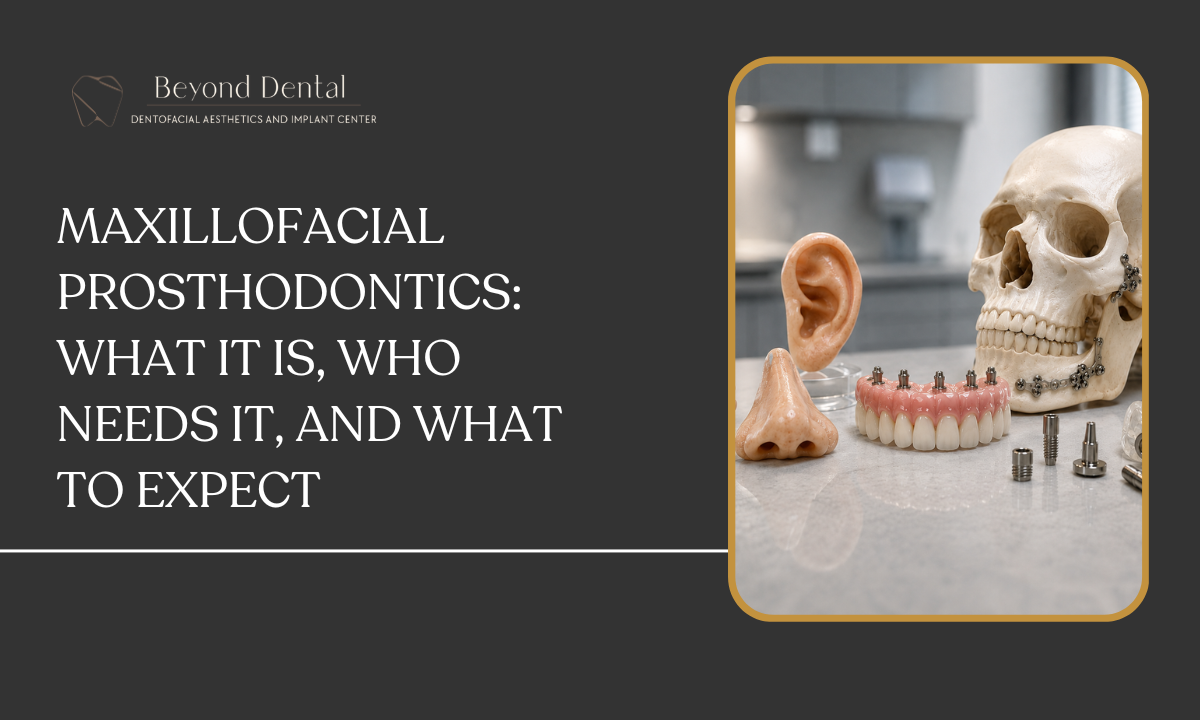
If you or a loved one has lost part of the face or jaw due to an accident, cancer surgery, or a condition present from birth, you may have come across the term maxillofacial prosthodontics while searching for solutions. At Beyond Dental, we specialise in aesthetic and restorative dental care, and prosthodontics in Bangalore, including maxillofacial cases, is one of our key areas of focus.
It can sound complicated at first, but at its core, it is about helping people look and function normally again after facial or oral trauma. This guide breaks it down in plain terms, so you understand exactly what it involves, who it can help, and what the process looks like from start to finish.
What Is Maxillofacial Prosthodontics?
Maxillofacial prosthodontics is a specialised branch of dentistry that focuses on rebuilding and restoring parts of the face, mouth, or jaw that have been lost or damaged. This could be due to a birth defect, an injury, or the removal of tissue during cancer treatment. Instead of surgery alone, this branch of dentistry uses custom-made prosthetics, artificial replacements for missing structures, to restore appearance and, just as importantly, function like eating, speaking, and swallowing.
Unlike general cosmetic dentistry, which focuses on the smile, maxillofacial prosthodontics deals with more complex rehabilitation, often involving the palate, jaw, cheek, nose, ear, or eye socket area. It sits at the intersection of dentistry, medicine, and rehabilitation, and it is often life-changing for patients who have gone through difficult surgeries or accidents.
Oral Maxillofacial Prosthodontics: How It Differs from General Dentistry
You may also come across the term oral maxillofacial prosthodontics, which refers more specifically to the oral cavity, meaning the mouth, jaw, and related structures. While general dentistry deals with everyday issues like cavities, gum disease, and routine crowns or fillings, oral maxillofacial prosthodontics deals with far more complex rebuilding work, such as replacing a missing section of the jaw or palate after surgery, or creating a prosthesis for someone who has lost part of their mouth structure due to trauma or disease.
In simple terms, if a condition affects a small part of a tooth, a general dentist can usually help. But when the condition affects the wider function or structure of the mouth and face, that is where a specialist trained in maxillofacial prosthodontics steps in.
General Dentistry vs Maxillofacial Prosthodontics
| Aspect | General Dentistry | Maxillofacial Prosthodontics |
| Focus area | Teeth, gums, everyday oral health | Face, jaw, palate, and related structures |
| Common treatments | Fillings, cleanings, routine crowns | Custom facial/oral prostheses, complex rehabilitation |
| Typical patients | General dental checkups and repairs | Trauma, cancer surgery, congenital defects |
| Level of specialisation | General dental training | Advanced prosthodontic and maxillofacial training |
| Treatment complexity | Usually single-visit or short-term | Often multi-stage, involves fittings and follow-ups |
Who Needs Maxillofacial Prosthodontics?
This treatment is not for everyone, and that is exactly why it is a specialised field. You may need to consult a maxillofacial prosthodontist and implantologist if you are dealing with:
- Cancer-related tissue loss – patients who have undergone surgery to remove oral, facial, or jaw cancers often need a prosthesis to restore the missing area.
- Congenital conditions – some people are born with conditions such as a cleft palate or missing facial structures that affect speech, eating, or appearance.
- Traumatic injuries – accidents involving the face or jaw, such as from a fall, sports injury, or road accident, can result in the loss of bone, tissue, or teeth that need reconstruction.
- Severe jaw or bone loss – where standard dentures or implants are not enough to restore function, a more customised prosthetic approach may be needed.
- Radiation-related complications – cancer treatment involving radiation to the head and neck area can sometimes affect the jaw and mouth, requiring specialised prosthetic care alongside ongoing medical treatment.
If any of these apply to you or someone you know, it is worth having a consultation with a specialist to understand what options are realistically available.
What Is a Maxillofacial Prosthesis?
A maxillofacial prosthesis is a custom-made artificial replacement designed to restore a part of the face, mouth, or jaw that is missing or damaged. These are not off-the-shelf devices. Every prosthesis is individually designed and coloured to match the patient’s natural skin tone, facial structure, and function, whether that means restoring a section of the palate, an ear, an eye area, or the jaw itself.
Depending on the case, a maxillofacial prosthesis may be:
- Removable, allowing the patient to take it out for cleaning, similar to a denture
- Fixed or implant-supported, attached more permanently using dental implants for added stability
- Combined with a surgical plan, working alongside a maxillofacial surgeon in more complex cases
The goal is always the same: to help the patient regain as much normal appearance and function as possible, so they can eat, speak, and go about daily life with confidence.
Types of Treatment Offered in Maxillofacial Prosthodontics
These are the main types of treatment involved in maxillofacial prosthodontics, depending on which part of the face or mouth needs to be restored.
Facial Prostheses (Eye, Ear, and Nose Restoration)
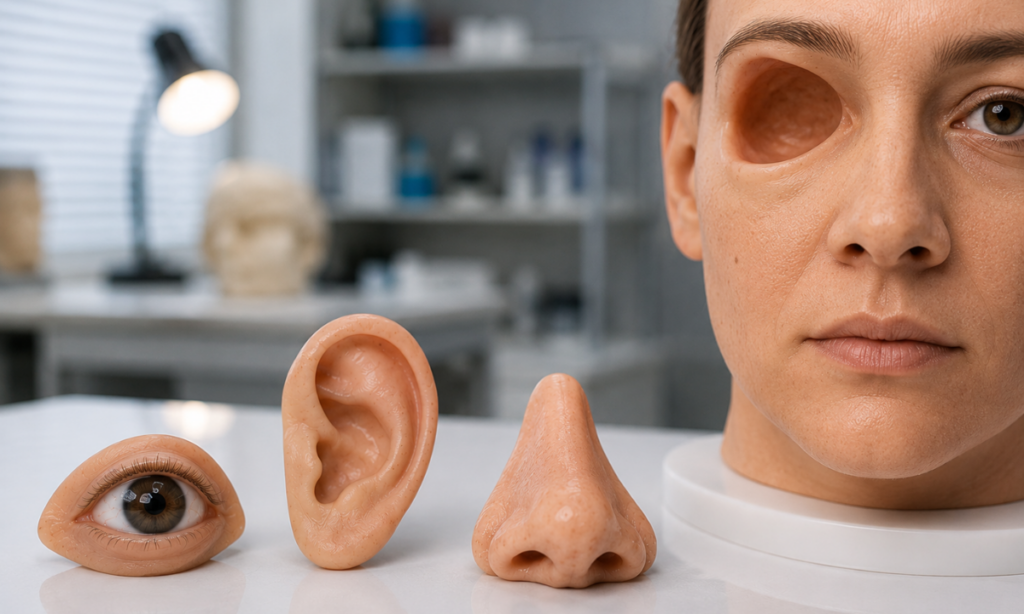
For patients who have lost part of the face, such as an eye, ear, or nose, due to trauma, cancer surgery, or a condition present from birth, a custom facial prosthesis can be created to restore appearance. These are carefully colour-matched and shaped to blend naturally with the patient’s own skin tone and facial features, helping restore both confidence and a sense of normalcy.
Palate and Jaw Restoration
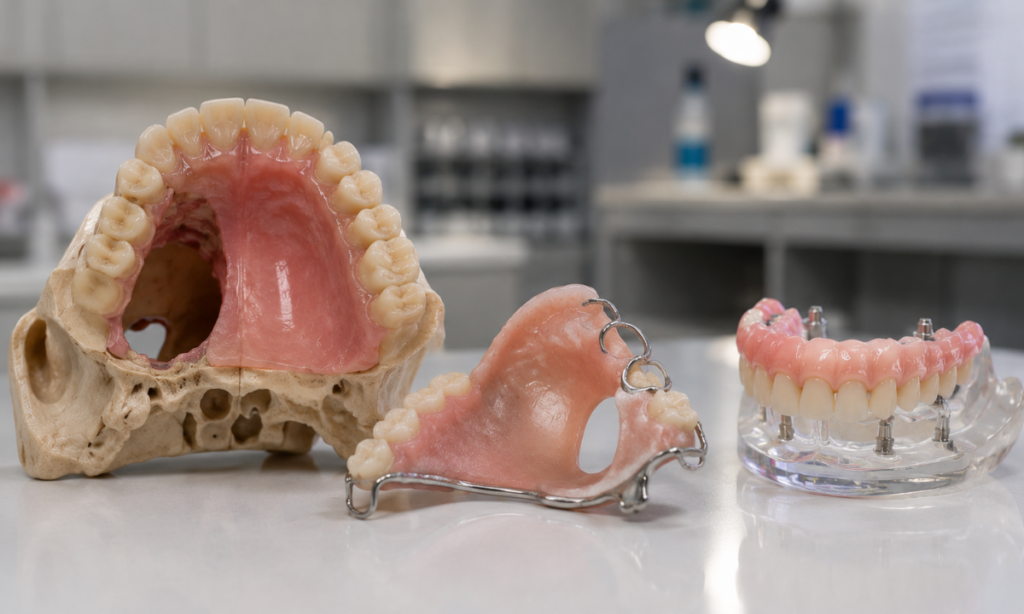
When part of the palate or jaw has been removed, often due to cancer surgery, a specialised prosthesis can be designed to close the gap and restore the structure of the mouth. This makes a real difference in everyday function, allowing patients to eat, swallow, and speak far more comfortably than they could without it.
Speech-Support Prostheses
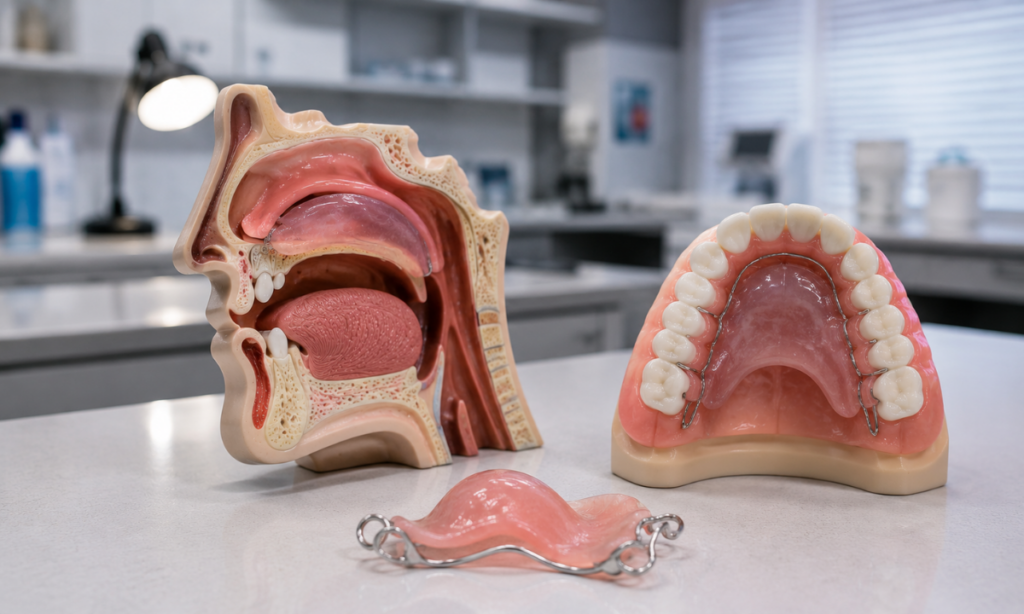
In some cases, the soft palate is unable to move correctly, which affects speech clarity. A prosthesis can be designed to help support the palate in the correct position, making speech noticeably clearer and easier.
Radiation and Cancer-Support Devices
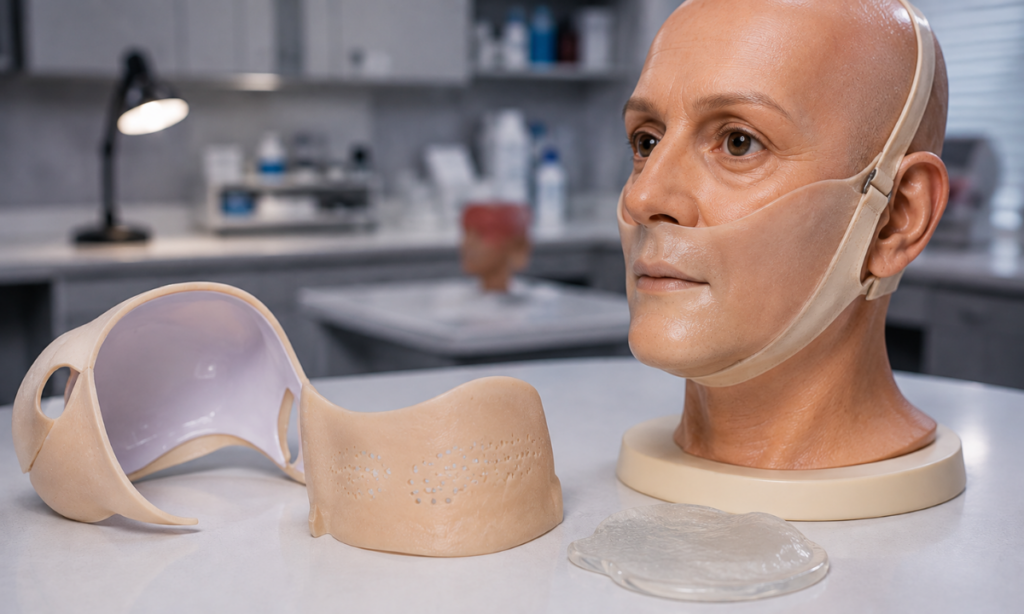
Patients undergoing radiation therapy for head and neck cancers sometimes need additional support, such as a custom device to protect healthy tissue during treatment or to help manage side effects like dry mouth, which can otherwise weaken the teeth over time.
Implant-Supported Prosthetic Solutions
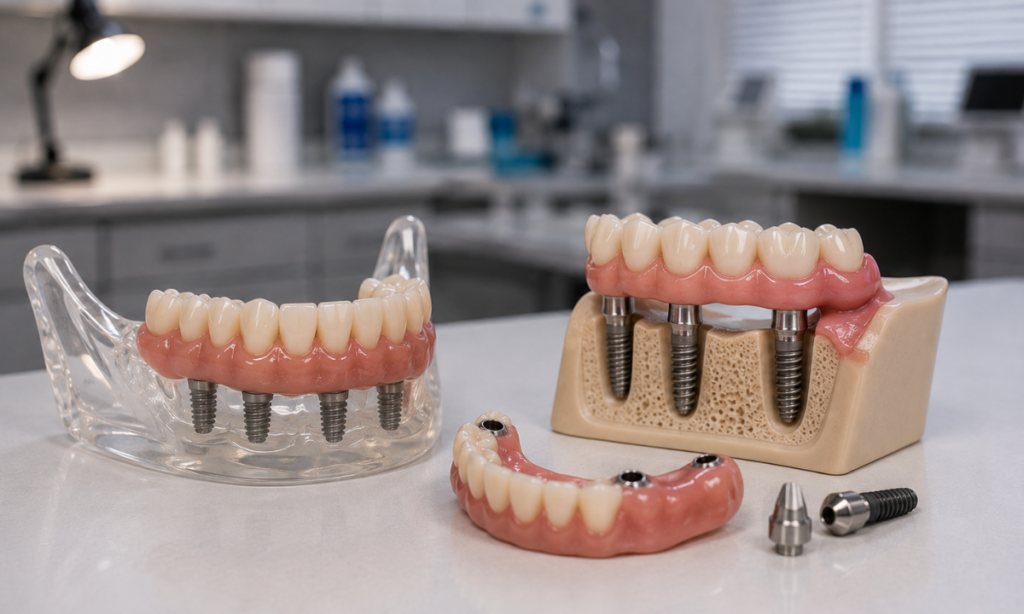
For patients who need more stability, especially in cases involving significant bone or tissue loss, a prosthesis can be anchored using dental implants rather than relying on adhesives or removable fittings alone. This is where the combined expertise of a maxillofacial prosthodontist and implantologist becomes especially valuable, as planning implant placement alongside a facial or jaw prosthesis requires a clear understanding of both fields. This approach often provides a more secure, natural-feeling result, particularly for jaw or facial prostheses that need to stay firmly in place throughout the day.
Congenital Defect Correction
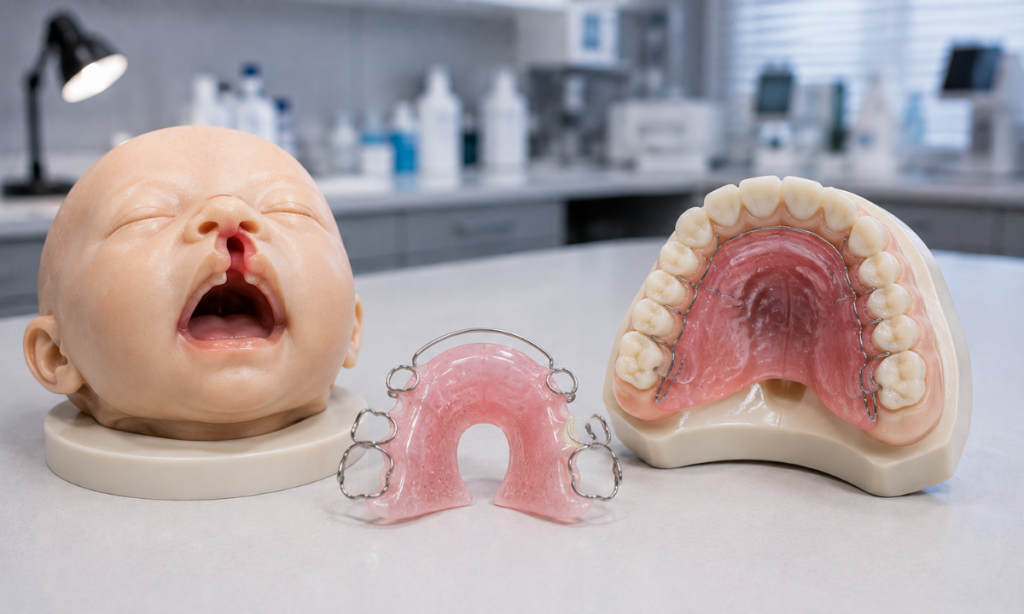
Some patients are born with conditions such as a cleft palate or underdeveloped facial structures. In these cases, treatment often begins early in life and may involve a series of prostheses designed to support normal growth, feeding, and speech development as the child grows older, working alongside paediatric specialists where needed.
Facial Prosthetics Before and After: What Kind of Results Can You Expect?
One of the most common things patients want to understand before starting treatment is what kind of difference a facial prosthetic can actually make. While every case is different depending on the extent of the injury or defect, the before and after difference is often significant, both visually and functionally.
Before treatment, patients often deal with a combination of physical and emotional challenges. Everyday activities that most people take for granted, such as eating certain foods, drinking without difficulty, or speaking clearly, can become genuinely hard depending on which part of the face or mouth is affected. Beyond the physical side, many patients also experience a real impact on confidence, often avoiding social situations, photographs, or public spaces because of how visible the change is.
After treatment, most patients notice improvement across a few key areas:
- Appearance and facial symmetry – a well-designed prosthesis is matched closely to the patient’s natural skin tone, facial contours, and proportions, helping restore a more balanced, natural look.
- Speech clarity – when the palate, jaw, or related structures are involved, speech often becomes noticeably clearer once the prosthesis restores the shape needed to form sounds properly.
- Eating and swallowing restoring the structure of the mouth or jaw makes chewing and swallowing considerably easier and more comfortable, which can also improve nutrition and general wellbeing over time.
- Comfort in daily life – many patients describe feeling more at ease in social settings, work, and family life once they no longer feel as self-conscious about visible changes to their face.
- Long-term adaptation most patients adjust well over the following weeks, becoming more comfortable with cleaning, wearing, and living with the prosthesis as part of their daily routine.
It’s important to set realistic expectations here. A facial prosthesis is not the same as the original tissue and does not “cure” the underlying condition, but it can meaningfully restore function and appearance, and results genuinely vary depending on the extent of the damage, the materials used, and the skill of the specialist involved. This is why an experienced, specialised team, and a clear conversation about what is realistically achievable in your specific case, matters more than looking at generic before-and-after examples online.
What Happens During Maxillofacial Prosthodontic Treatment?
If you are considering this treatment, here is a general idea of what the process usually looks like, though your specific plan will depend on your case:
- Initial consultation and assessment – the specialist examines the affected area, reviews your medical history, and discusses your goals and concerns.
- Diagnostic imaging – scans or impressions are taken to understand the exact shape, size, and structure needed for the prosthesis.
- Custom design and fabrication – the prosthesis is designed and created to match your natural features as closely as possible, often involving multiple fittings to get the shape, colour, and comfort right.
- Fitting and adjustments – once ready, the prosthesis is fitted, and adjustments are made to ensure comfort and proper function.
- Follow-up care – regular check-ups help monitor how the prosthesis is settling in, and any minor issues are addressed early.
According to the American College of Prosthodontists, maxillofacial prosthetics as a field specifically addresses the rehabilitation of patients with congenital and acquired defects of the head and neck, underlining just how specialised and patient-focused this branch of dentistry is.
Here’s the section, in our own words:
Benefits of Maxillofacial Prosthodontics
Beyond restoring appearance, this specialised treatment offers several meaningful benefits for patients:
- Improved speech clarity – restoring the palate or jaw structure helps patients form sounds more naturally, making everyday conversation easier.
- Better eating and nutrition – a properly restored mouth or jaw structure makes chewing and swallowing more comfortable, which can improve overall nutrition and general health over time.
- Restored facial symmetry and appearance – custom-matched prostheses help patients look and feel more like themselves again, which often has a real impact on how comfortable they feel in social and everyday settings.
- Boosted confidence and mental wellbeing – for many patients, the psychological benefit is just as significant as the physical one, as they no longer feel as self-conscious about visible changes to their face or mouth.
- Protection during cancer treatment – for patients undergoing radiation therapy, certain prosthetic devices help protect healthy tissue and reduce complications like dry mouth or weakened teeth.
- Long-term functional independence – with a well-fitted prosthesis, most patients can return to daily activities like eating, speaking, and socialising without needing ongoing assistance.
With these benefits in mind, it becomes clear why choosing an experienced, specially trained maxillofacial prosthodontist makes such a genuine difference to the outcome.
Who Provides This Treatment at Beyond Dental?
Maxillofacial prosthodontic care at Beyond Dental Clinic is led by Dr. Babashankar Alva M, a Specialist Prosthodontist and Implantologist with over 14 years of clinical experience. He completed his BDS from Government Dental College, Bengaluru, and his MDS from SDM College, Dharwad. Maxillofacial prosthodontics is an area he is particularly passionate about, and alongside his clinical practice, he serves as an Associate Professor at Ramaiah University, mentoring young dentists in the field. With over 18 publications and numerous national and international presentations to his name, Dr. Alva brings deep, specialised expertise to complex restorative and maxillofacial cases.
He works closely with Dr. Chinmaya Bhandary, Clinical Director at Beyond Dental Clinic, who oversees treatment planning across the clinic to ensure every case, including complex prosthodontic and maxillofacial work, is approached with the same standard of precision and personalised care the clinic is known for. Patients considering treatment can expect a thorough assessment and a treatment plan tailored to their specific condition, rather than a generic, one-size-fits-all approach.
The Training Behind a Maxillofacial Prosthodontist
One thing patients often don’t realise is just how specialised the training is for this field. A maxillofacial prosthodontist doesn’t start out this way, they first complete their basic dental degree, followed by an advanced postgraduate program specifically in prosthodontics, which typically takes a few years of focused clinical training. From there, those who choose to specialise further in maxillofacial cases often pursue additional training and hands-on experience working alongside surgeons, oncologists, and hospital teams, since many maxillofacial cases involve close coordination with cancer treatment or major reconstructive surgery.
This layered training is exactly why maxillofacial prosthodontics is considered a subspecialty within prosthodontics, rather than something every general dentist or even every prosthodontist routinely handles. When choosing where to seek treatment, it’s worth asking directly about a specialist’s specific experience and training in maxillofacial cases, rather than assuming general dental or even general prosthodontic experience covers it.
Finding the Right Maxillofacial Dental Clinic
Because this is such a specialised area, choosing the right clinic and specialist matters a great deal. When looking for a maxillofacial dental clinic, it helps to check for a few things: whether the team has specific experience with maxillofacial and prosthodontic cases (not just general dentistry), whether they work closely with implantologists and, where needed, maxillofacial surgeons, and whether they take the time to understand your individual goals rather than offering a generic solution.
At Beyond Dental, a dental clinic in Vasanth Nagar, Bangalore, this is an area of particular focus for our team. We work closely with patients to understand their specific needs, whether that involves a maxillofacial prosthesis, implant-supported restoration, or ongoing prosthodontic care, and guide them through every step of the process with clear communication and personalised treatment planning.
Final Thoughts
Maxillofacial prosthodontics can make a genuine difference in the lives of people dealing with facial or oral loss due to trauma, cancer treatment, or congenital conditions, restoring not just appearance but also everyday function and confidence. If you or someone you know is exploring options in this area, the most important step is finding a team with real experience in this specialised field. At Beyond Dental, our focus on maxillofacial prosthodontics, led by Dr. Chinmaya Bhandary, means patients get thoughtful, individually planned care from consultation through to the final result.
Frequently Asked Questions
What Is The Difference Between Prosthodontics And Maxillofacial Prosthodontics?
Prosthodontics generally deals with restoring or replacing teeth, such as crowns, bridges, dentures, and implants. Maxillofacial prosthodontics is a more specialised subfield that focuses on restoring larger facial and oral structures lost due to trauma, cancer surgery, or congenital conditions.
Is A Maxillofacial Prosthesis Permanent?
It depends on the type. Some prostheses are removable and need to be cleaned and maintained regularly, while others are implant-supported and more fixed in place. Your specialist will recommend the best option based on your specific case.
How Long Does It Take To Get Used To A Maxillofacial Prosthesis?
Most patients need some time to adjust, generally a few weeks, as they get used to the feel, function, and care routine of the new prosthesis. Your specialist will guide you through this adjustment period.
Does Insurance Cover Maxillofacial Prosthodontic Treatment?
This varies depending on the cause of the condition, such as whether it is related to cancer treatment, an accident, or a congenital condition, and your specific insurance policy. It is best to discuss this directly with your clinic and insurance provider.
Who Performs Maxillofacial Prosthodontic Treatment?
This treatment is typically carried out by a prosthodontist with specialised training in maxillofacial cases, often working alongside a maxillofacial surgeon and, where implants are involved, an implantologist.