
If you have noticed a chalky or opaque patch on your tooth and started searching for how to remove white spots on teeth naturally, you are dealing with a condition dentists see almost every week. White spots are not random. They follow one of a handful of well-documented causes, and knowing which one applies to you is what actually determines whether a home remedy will work or whether you need clinical treatment.
At Beyond Dental, this is one of the most common concerns raised during routine check-ups, and the answer almost always comes down to where the mineral loss sits in the enamel.
This guide breaks down exactly why white spots form, which natural methods genuinely make a difference, which ones are a waste of time, and when to stop trying home fixes and see a dentist.
What Causes White Spots on Teeth?
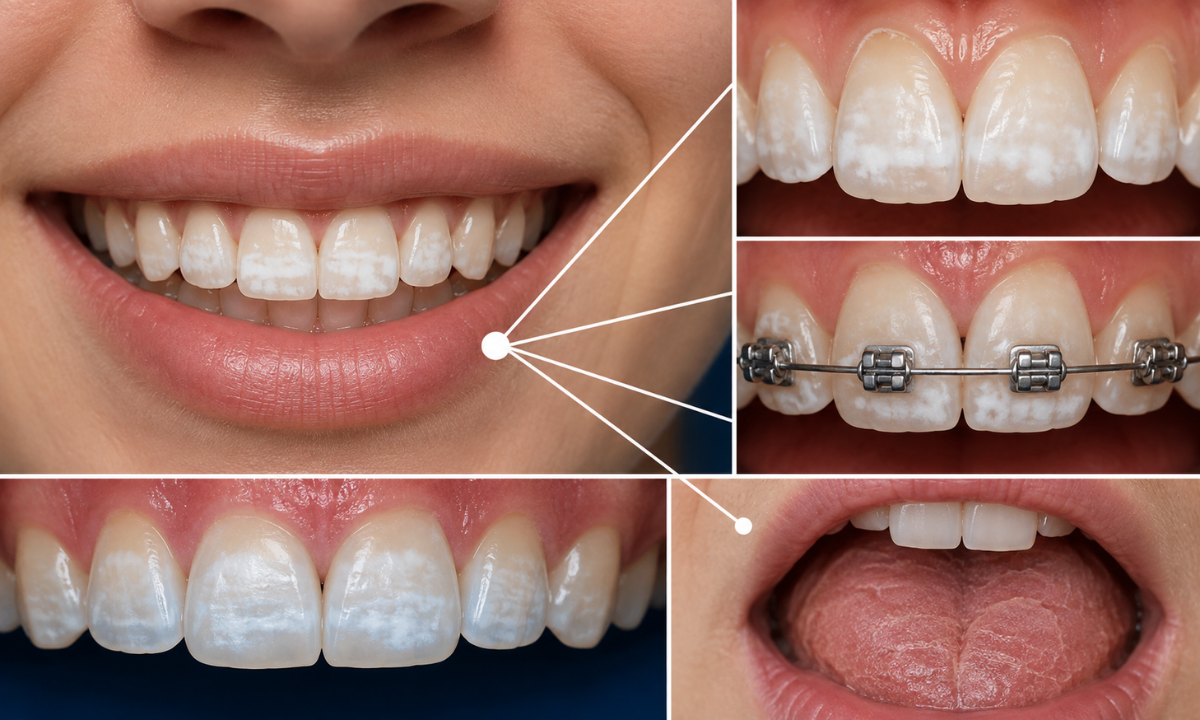
There is a clear white spot on the tooth behind almost every case, and it falls into one of five categories.
1. Early Enamel Demineralisation
This is the most common cause. Plaque bacteria feed on sugar and release acid, which pulls calcium and phosphate out of the enamel. The tooth does not cavitate yet, but the enamel becomes porous, and porous enamel reflects light differently, which is why it looks white and opaque instead of translucent. This is the one cause where natural remineralisation genuinely works, because the mineral loss is superficial and reversible.
2. Fluorosis
Fluorosis happens when a child swallows too much fluoride, usually from toothpaste, between the ages of one and eight while adult teeth are still forming under the gums. Once the tooth erupts, the marks are permanent. No natural remedy reverses fluorosis because the defect is inside the enamel structure, not on the surface.
3. White Spot Lesions From Orthodontic Treatment
Anyone who has had braces has likely seen this. Plaque builds up around brackets in spots that are difficult to clean, and the enamel beneath demineralises the same way it does with poor hygiene elsewhere. These respond well to remineralisation because they are surface-level, just like early decay.
4. Enamel Hypoplasia From Nutritional Deficiency
Low calcium, vitamin D, or vitamin A during childhood tooth development creates enamel that is structurally thinner or irregular. This is a developmental defect, not a surface stain, so it does not respond to remineralising toothpaste or diet changes made as an adult.
5. Dry Mouth
Saliva carries the calcium and phosphate ions that repair enamel continuously throughout the day. Reduced saliva flow, from medication, mouth breathing, or dehydration, removes that natural repair mechanism, so demineralisation spots form faster and do not fade on their own.
The distinction that actually matters: if your white spots come from early demineralisation, orthodontic plaque, or dry mouth, natural remineralisation works because the defect is on the enamel surface. If they come from fluorosis or nutritional hypoplasia, the defect is inside the enamel, and no natural remedy will change that. This is the single biggest reason home remedies work for some people and do nothing for others.
What Actually Works: Natural Remineralisation Methods

Here is how to remove white spots on teeth naturally, ranked by what has real clinical backing.
1. Hydroxyapatite or Fluoride Toothpaste, Used Twice Daily
This is the one method with genuine evidence behind it. Both hydroxyapatite and fluoride work by supplying the exact minerals enamel needs to rebuild its surface layer. Dentists see visible improvement in demineralisation-related white spots after six to twelve weeks of consistent twice-daily brushing with one of these, not overnight, and not with occasional use.
2. Reducing Sugar and Snacking Frequency
Every time you eat sugar, plaque bacteria produce acid for about twenty minutes. Snacking constantly keeps enamel in a permanent acid attack, so cutting frequency, not just total sugar, is what gives enamel time to repair itself between meals.
3. Calcium and Vitamin D Intake
Dairy, leafy greens, and sunlight exposure support the mineral supply your saliva uses to repair enamel. This helps ongoing remineralisation in adults with demineralisation-type spots, though it will not reverse a fluorosis or hypoplasia defect that formed during childhood.
4. Oil Pulling: What It Actually Does and Does Not Do
Oil pulling, swishing coconut or sesame oil for ten to fifteen minutes, has a genuine but narrow benefit. Some small studies show it reduces oral bacteria count, similar to a mouthwash. What it does not do is remineralise enamel or lighten an existing white spot directly. If you already brush twice daily with fluoride toothpaste, oil pulling adds very little. It is worth doing only as a bacteria-reduction habit alongside the methods above, not as a standalone fix for spots that are already visible.
What Does Not Work
Baking soda paste and lemon juice are commonly recommended online for white spots. Both are a mistake. Baking soda is abrasive enough to wear enamel further with repeated use, and lemon juice is acidic enough to worsen demineralisation, the exact problem you are trying to fix. Avoid both.
When Home Care Will Not Be Enough
If you have been consistent with remineralising toothpaste and reduced sugar for eight to twelve weeks and the spot has not faded, or if the cause is fluorosis or a developmental defect, home care has reached its limit. This is not a failure of effort; it is a matter of where the mineral loss sits in the enamel.
Professional Treatment Options
| Treatment | Best For | How It Works |
|---|---|---|
| Microabrasion | Superficial fluorosis and surface stains | A mild abrasive compound removes the outermost affected enamel layer |
| Resin Infiltration (ICON) | Early decay-related white spots | Resin is infused into porous enamel to restore uniform colour and translucency |
| Professional Teeth Whitening | Overall discolouration alongside white spots | Evens out surrounding tooth shade so spots blend in |
| Dental Bonding | Deeper or more visible spots | Composite resin masks the affected area |
| Veneers | Severe or widespread discolouration | Thin porcelain shells cover the entire visible tooth surface |
Understanding how to remove white spots clinically matters because each of these treatments targets a specific depth and cause of discoloration, which is exactly what a dentist assesses before recommending one.
At Beyond Dental Clinic, Dr Chinmaya Bhandary examines each white spot case under magnification to confirm whether it is decay-related, fluorosis, or developmental before recommending treatment, since starting with the wrong assumption wastes both time and money. If you are searching for a dentist in Vasanth Nagar, Bangalore who can give you a clear answer instead of guesswork, this is the kind of diagnosis that settles it in one visit.
If your concern extends beyond the spots to the overall shade of your teeth, our teeth whitening treatment in Vasanth Nagar, Bangalore is often planned alongside spot-specific treatment so the final result looks even, rather than whitening around a spot and making it stand out more.
Preventing White Spots From Forminge

- Supervise children under eight when brushing so they spit rather than swallow toothpaste
- Clean thoroughly around orthodontic brackets with an interdental brush, not just a regular toothbrush
- Cut snacking frequency rather than just total sugar intake
- Stay hydrated to keep saliva flow, and therefore natural remineralisation, active
- Book a check-up at the first sign of a chalky patch, since early demineralisation is reversible and a cavity is not
The National Institute of Dental and Craniofacial Research confirms that reducing sugar frequency and maintaining fluoride exposure are the two most effective interventions against enamel demineralisation, which is the mechanism behind most white spot cases.
Conclusion
White spots on teeth come down to one question: is the mineral loss on the surface, or is the defect built into the enamel itself? Surface-level spots from early decay, orthodontic plaque, or dry mouth respond well to fluoride or hydroxyapatite toothpaste, reduced snacking, and better hydration over six to twelve weeks. Fluorosis and developmental defects do not respond to any home remedy and need microabrasion, resin infiltration, or a similar clinical treatment to actually change. If you are unsure which one you are dealing with, a same-day diagnosis at a dental clinic in Vasanth Nagar, Bangalore is the fastest way to stop guessing and start the right treatment.
Frequently Asked Questions
Are white spots on teeth permanent?
Spots from early demineralisation can fade with consistent fluoride or hydroxyapatite toothpaste use. Fluorosis and developmental spots are structural and do not fade with home care; they need microabrasion or resin infiltration to improve.
Do white spots mean I have a cavity?
Not yet, but they mean the enamel has started losing minerals, which is the stage right before a cavity forms. This is the window where treatment, whether home care or clinical, has the most effect.
Does oil pulling remove white spots?
No. It can reduce bacteria in the mouth, which supports oral hygiene generally, but it does not resupply minerals to enamel or lighten an existing spot. Fluoride or hydroxyapatite toothpaste does that job; oil pulling does not replace it.
Is teeth whitening safe for people with white spots?
Yes, but whitening often lightens the surrounding enamel while the white spot itself does not change, which can make it more visible immediately after treatment. This is why a dentist usually plans spot treatment either before or alongside whitening, not after.
How long does resin infiltration take?
A single visit, usually thirty to forty-five minutes per tooth, with visible improvement immediately after the procedure.