
If you have been searching for how to correct facial asymmetry, the first thing to know is that almost everyone has some degree of it, true perfect symmetry is rare, and most cases are mild enough that they are barely noticeable to anyone but yourself. That said, there are genuine causes behind more visible asymmetry, and depending on what is driving it, there are real options ranging from simple lifestyle changes to professional dental or medical treatment.
At Beyond Dental, a trusted name in cosmetic dentistry in Bangalore and a dental clinic in Vasanth Nagar, we regularly see patients whose facial balance is affected by dental and jaw-related factors, and this guide walks through what actually helps.
Medical Disclaimer
This article is intended for general informational purposes only and does not constitute medical advice. Facial asymmetry can have many causes, some of which require evaluation by a physician or specialist. If you notice sudden changes in facial symmetry, or symptoms such as numbness, weakness, or drooping, please seek immediate medical attention. Always consult a qualified dentist or doctor for a proper diagnosis and personalised treatment plan.
What Causes Face Asymmetry
Understanding what causes face asymmetry is the first step before looking at how to correct it, since the right approach depends heavily on the underlying cause.
- Genetics: Bone structure inherited from parents is the most common reason for mild asymmetry, and this is simply natural variation rather than a problem to fix
- Sleeping position: Consistently sleeping on one side, especially with a hand tucked under the face, can subtly affect facial contour over years
- Chewing habits: Favouring one side of the mouth when chewing can lead to uneven jaw muscle development over time
- Missing or misaligned teeth: Gaps left by missing teeth or an uneven bite can cause the jaw and surrounding muscles to develop asymmetrically
- Injury or trauma: A past fracture or injury to the jaw or facial bones can leave lasting asymmetry
- Temporomandibular joint (TMJ) issues: Problems with the jaw joint can cause one side of the face to sit differently from the other
- Sinus or nerve conditions: Less commonly, medical conditions affecting nerves or sinuses can cause visible facial changes
Is Some Facial Asymmetry Normal?
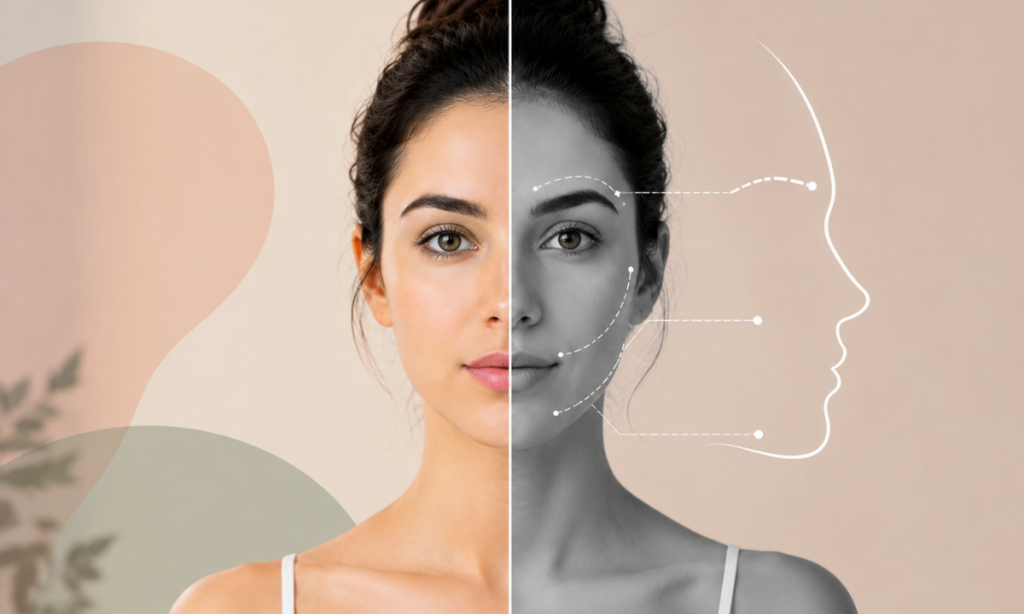
Yes, and this is worth stating clearly before going further. Research into facial symmetry has consistently found that no human face is perfectly symmetrical, small differences between the left and right side are the norm rather than the exception. Most people only notice their own asymmetry because they study their face closely in photographs or mirrors, not because it is obvious to others. The goal of this guide is not to suggest that mild natural variation needs fixing, but to explain what can be done when asymmetry is more pronounced or has a clear underlying cause.
- Slight differences in eye or eyebrow height are extremely common and rarely noticeable to others
- One side of the smile lifting slightly higher than the other is a normal muscular variation
- Minor differences in cheek fullness between sides are typical and not a cause for concern
- A slightly off-centre nose or jawline is common and usually just natural bone structure
- Asymmetry that has stayed the same for years without changing is generally nothing to worry about.
Can Facial Asymmetry Be Fixed?
The honest answer to can facial asymmetry can be fixed depends entirely on the underlying cause, as this table summarises.
| Cause | Can It Be Fixed? | Approach |
| Genetics | No, and does not need fixing | Natural variation, no treatment necessary |
| Sleep position or chewing habits | Often improves gradually | Posture correction, balanced chewing, sleep changes |
| Missing teeth or uneven bite | Often improves significantly | Dental treatment addressing the root cause |
| TMJ issues | Often improves with treatment | Dental or TMJ-specific care |
| Skeletal differences or trauma | Requires specialist evaluation | Orthodontic or surgical assessment |
As the table shows, most cases of noticeable asymmetry do have a genuine path forward, the key is identifying which category yours falls into before choosing a treatment approach. A proper evaluation is always more reliable than guessing based on online advice alone.
How to Fix Facial Asymmetry Naturally

For patients specifically searching how to fix facial asymmetry naturally, there are a few non-invasive approaches worth trying before considering anything more involved, particularly for mild cases linked to habits rather than structural causes.
Facial Exercises and Posture
Targeted exercises for the jaw and cheek muscles are sometimes recommended to improve muscle balance, though results are gradual and evidence is mixed. Poor neck and shoulder posture can also subtly affect jaw alignment over time, so correcting posture is often recommended alongside facial exercises rather than as a standalone fix.
Sleep Position and Chewing Habits
Switching to sleeping on your back, or alternating sides, can reduce asymmetry caused by consistent pressure on one side of the face over the years. Similarly, consciously chewing food on both sides of the mouth rather than favouring one side helps prevent the jaw muscles from developing unevenly. Gentle facial massage is sometimes used alongside these habits to ease muscle tension that can contribute to visible asymmetry.
Facial Massage and Myofascial Release
Gentle facial massage is sometimes used to ease muscle tension that can contribute to visible asymmetry, particularly around the jaw and cheek area where tightness tends to build up. Myofascial release, a technique that targets the connective tissue beneath the skin, is occasionally recommended alongside massage for patients dealing with tension-related asymmetry, especially when linked to teeth grinding or clenching. As with the other natural approaches, results are gradual and vary from person to person, this works best as a complementary habit rather than a standalone fix.
These natural approaches work best for mild, habit-related asymmetry. They are unlikely to meaningfully change asymmetry caused by underlying bone structure, a bite misalignment, or a past injury, which is where professional input becomes more relevant.
When Dental Factors Contribute to Facial Asymmetry
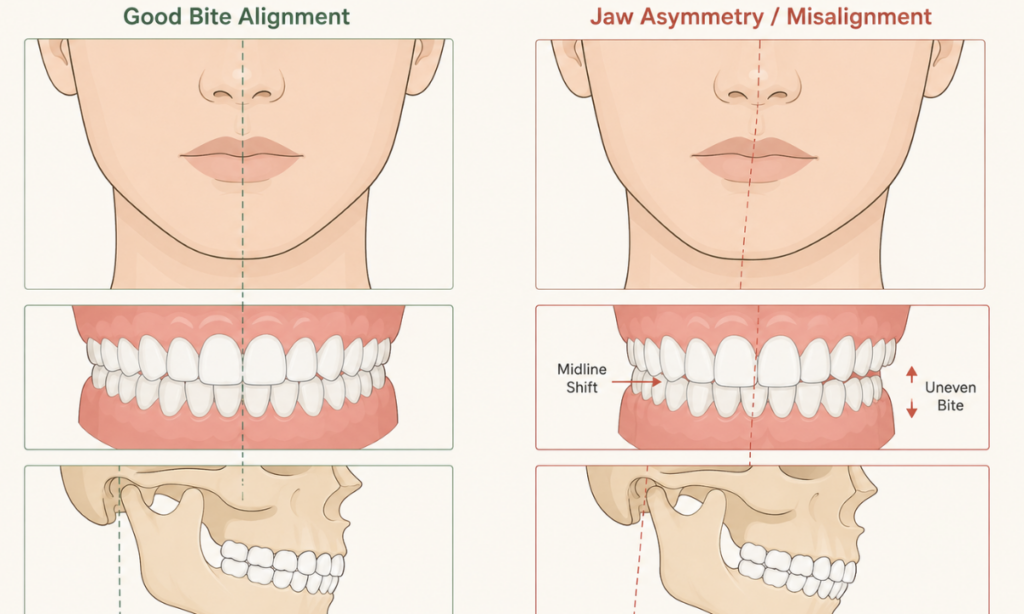
This is where a dentist’s perspective becomes genuinely useful. Several dental issues can directly influence facial symmetry over time, and addressing them can sometimes improve facial balance as a secondary benefit of proper dental care.
Missing Teeth and Jaw Collapse
When a tooth is missing and left untreated for an extended period, the jawbone in that area gradually loses density, a process called bone resorption. This can cause one side of the face to appear slightly sunken compared to the other, especially with multiple missing teeth on one side. Replacing missing teeth with a bridge or implant can help maintain jaw structure and prevent this kind of asymmetry from worsening. As a cosmetic dental clinic in Bangalore, we also assess whether restorative work can improve facial balance alongside oral health.
Uneven Bite and TMJ Issues
An uneven bite, where the upper and lower teeth do not meet correctly, can cause the jaw muscles on one side to work harder than the other over years of chewing, which can contribute to visible asymmetry in the lower face and jawline. This is closely linked to problems with the temporomandibular joint, often caused by teeth grinding, clenching, or bite issues, which can make one side of the jaw sit or move differently from the other.
According to the National Institute of Dental and Craniofacial Research, temporomandibular disorders are a group of more than 30 conditions that cause pain and dysfunction in the jaw joint and muscles that control jaw movement. TMJ-related asymmetry is one of the more common dental-adjacent concerns patients raise during consultations.
When to See a Specialist
While a dentist in Vasanth Nagar, Bangalore can identify and treat dental contributors to facial asymmetry, some cases genuinely need specialist input beyond dental care. Any sudden change in facial symmetry, especially alongside numbness, drooping, or weakness, needs urgent medical attention, as this can signal a neurological issue rather than a dental or muscular one. Cases involving significant jaw or bone structure differences are typically referred to an oral and maxillofacial surgeon or orthodontist, and persistent jaw pain, clicking, or locking alongside visible asymmetry warrants a proper TMJ evaluation. Facial changes following any injury should also be assessed by a doctor to rule out fractures or nerve involvement.
A qualified dental clinic in Vasanth Nagar, Bangalore can be the right first step for evaluating whether the cause is dental in nature, and can refer patients onward when specialist care is needed.
The Dental Perspective on Facial Asymmetry
Bite and tooth positioning influence facial appearance far more than most patients realise. At Beyond Dental Clinic , this is something Dr. Chinmaya Bhandary, Clinical Director and MDS in Prosthodontics, sees regularly in consultations, patients are often surprised to learn how directly their bite alignment or missing teeth connect to how balanced their face looks.
Early treatment of missing teeth or bite issues tends to be far more effective at preventing asymmetry from developing than trying to correct it years later, once bone loss or muscle imbalance has already set in. A proper evaluation can determine whether a patient’s asymmetry has a genuine dental root cause worth addressing, or whether it simply falls into the very common category of natural variation that needs no treatment at all.
Conclusion
Facial asymmetry is extremely common, and in most cases, it is a normal part of natural variation rather than something requiring correction. For patients specifically looking to improve mild asymmetry, natural approaches like posture correction, balanced chewing, and consistent sleep positioning can help over time. Where dental factors are involved, missing teeth, an uneven bite, or TMJ issues, addressing the underlying dental cause can genuinely improve facial balance as part of proper treatment. More significant asymmetry, particularly from skeletal differences or injury, needs evaluation from the right specialist.
A dental clinic in Vasanth Nagar, Bangalore is a sensible starting point for identifying whether the cause is dental, and guiding you towards the right next step if it is not.
Frequently Asked Questions
How can I correct facial asymmetry?
The right approach depends on the cause, mild habit-related asymmetry can often improve with posture and sleep changes, while asymmetry linked to dental issues like missing teeth or bite problems usually needs professional dental treatment.
Where can I get my facial asymmetry evaluated by a dentist in Bangalore?
Beyond Dental offers thorough evaluations to identify whether bite alignment, missing teeth, or TMJ issues are contributing to facial asymmetry, and can guide you towards the right treatment or specialist referral.
How do I fix facial asymmetry naturally?
Facial exercises, correcting sleep position, chewing evenly on both sides, and improving posture are the most commonly recommended natural approaches, though they work best for mild, habit-related cases.
Can facial asymmetry be fixed permanently?
It depends on the cause. Dental-related asymmetry can often be significantly improved by treating the underlying issue, while genetic asymmetry is a natural trait rather than something that needs permanent correction.
What causes face asymmetry to develop over time?
Common causes include genetics, sleeping position, uneven chewing habits, missing teeth, bite misalignment, TMJ issues, and in some cases, past injury.
Is facial asymmetry always a medical concern?
No, mild asymmetry is completely normal and extremely common. Sudden or significant asymmetry, particularly with other symptoms like numbness or pain, should be evaluated promptly by a professional.