
Quick Answer
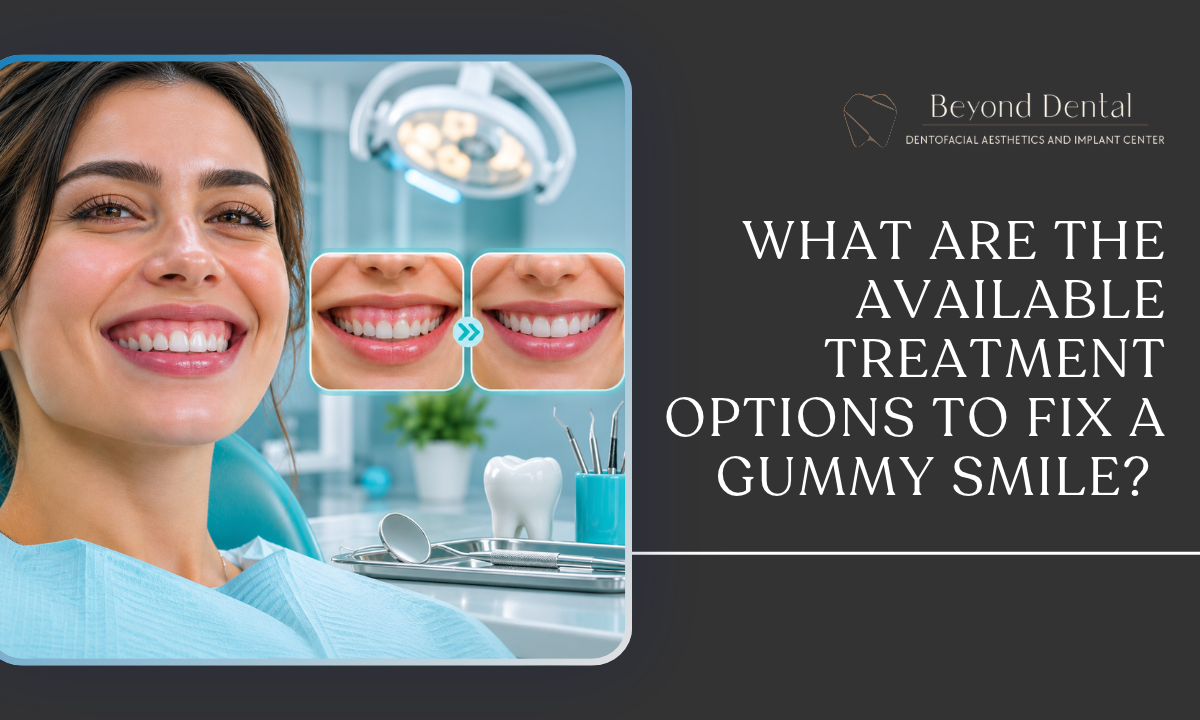
A gummy smile can be corrected through laser gum contouring, gingivectomy, crown lengthening, orthodontic treatment, lip repositioning surgery or jaw surgery. The right option depends on the underlying cause, including excess gum tissue, tooth position, upper lip movement and jaw structure. A dental examination helps determine the most suitable treatment.
Introduction
A smile is influenced by more than the appearance of teeth. The balance between the teeth, gums and upper lip also plays an important role in creating an attractive smile. Some people show more gum tissue than usual when they smile, a condition commonly known as a gummy smile or excessive gingival display.
A gummy smile is not always caused by excess gum tissue. In some cases, the teeth may appear short because the gums cover a larger portion of their crowns. In others, the upper lip may move too far upwards while smiling, or the upper jaw may have excess vertical growth. These factors can also occur together.
Fortunately, several dental and surgical treatments can help correct a gummy smile. Options range from minimally invasive laser gum contouring to orthodontic treatment and corrective jaw surgery. The choice depends on the cause, the amount of gum exposure, tooth proportions, lip movement and overall oral health.
Understanding these factors helps patients make informed decisions about gummy smile correction and achieve results that look natural and complement their facial features.
What Is a Gummy Smile?
A gummy smile refers to excessive exposure of the upper gum tissue when a person smiles. It is also called excessive gingival display. While some gum visibility is a normal part of smiling, a larger amount may affect the visual balance between the teeth and gums.
There is no single measurement that determines whether a smile requires treatment. However, gum exposure of around 3 to 4 mm or more is often considered excessive from an aesthetic perspective. Individual preferences, facial proportions and dental characteristics also influence treatment decisions.
A gummy smile may be associated with:
- Excess gum tissue covering the visible portions of the teeth.
- Short-looking or worn-down front teeth.
- A short or highly mobile upper lip.
- Excessive downward positioning of the upper jaw or upper front teeth.
- Uneven gum levels around the front teeth.
It is important to understand that a gummy smile is primarily an aesthetic concern. Treatment is generally considered when a person wishes to improve the appearance of their smile or when an underlying dental or gum condition requires attention.
What Causes a Gummy Smile?
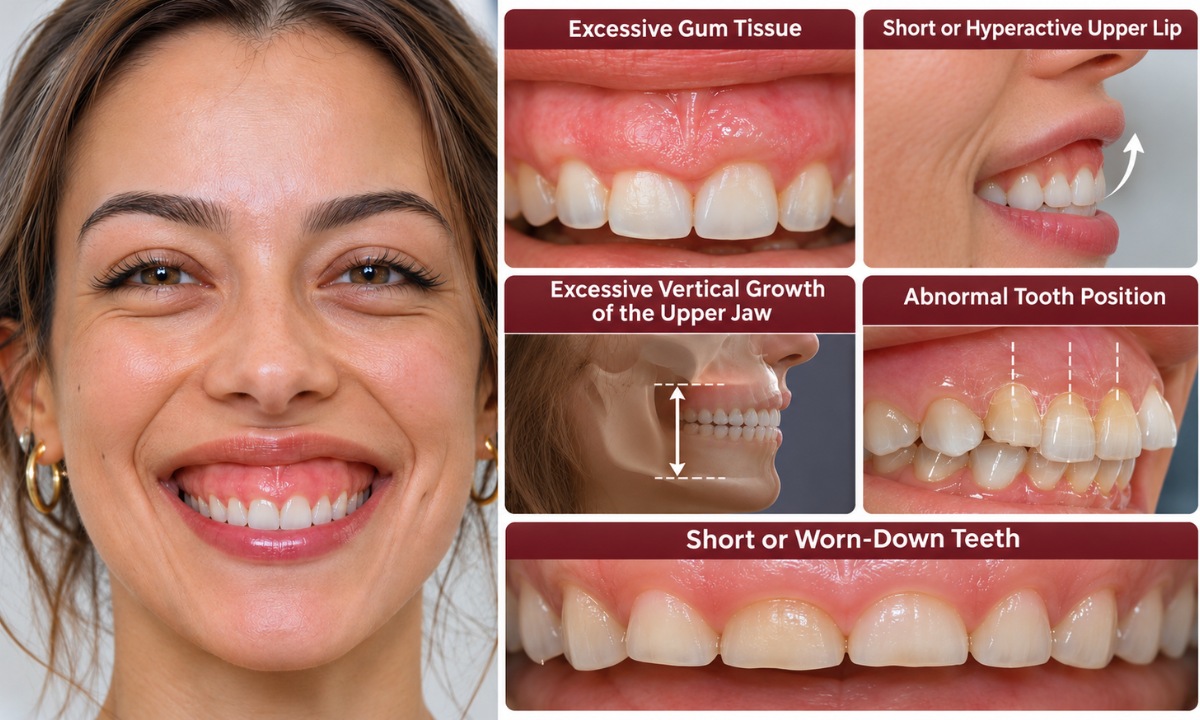
Identifying the cause is the first step towards selecting an appropriate treatment. A dentist or specialist evaluates the relationship between the teeth, gums, lips and jaw before recommending a procedure.
1. Excessive Gum Tissue
Some people have more gum tissue covering their teeth than necessary. This can happen when the gum tissue does not move upwards sufficiently after the teeth erupt. This condition is known as altered passive eruption.
As a result, the teeth may appear shorter than their actual size, even though their natural tooth structure is normal.
Gum overgrowth can also occur due to inflammation, certain medications or other periodontal conditions.
2. Short or Hyperactive Upper Lip
The upper lip naturally moves upwards when a person smiles. However, some people have a short upper lip or excessive movement of the muscles that lift it.
This can expose a larger area of gum tissue, even when the teeth and gum levels are within normal limits.
In such cases, removing gum tissue may not address the actual problem. Treatment needs to focus on controlling upper lip movement.
3. Excessive Vertical Growth of the Upper Jaw
The upper jaw, also called the maxilla, plays an important role in facial proportions. Excessive vertical development of the upper jaw can position the upper teeth and gums lower than usual.
This condition is known as vertical maxillary excess.
People with this condition may show a considerable amount of gum tissue when smiling. Depending on its severity, orthodontic treatment or corrective jaw surgery may be considered.
4. Abnormal Tooth Position
The position of the upper front teeth can also contribute to excessive gum visibility.
When the upper front teeth are positioned too low or have moved downwards, more gum tissue may become visible during smiling. This can sometimes be associated with bite problems or other orthodontic concerns.
Orthodontic treatment may help correct the position of the teeth and improve the appearance of the smile.
5. Short or Worn-Down Teeth
Teeth can appear shorter because of natural tooth proportions, excessive wear, grinding or damage.
When the visible tooth structure is reduced, the gums may appear more prominent in comparison. In these cases, restoring the natural tooth proportions may improve the overall appearance.
How Do Dentists Diagnose a Gummy Smile?
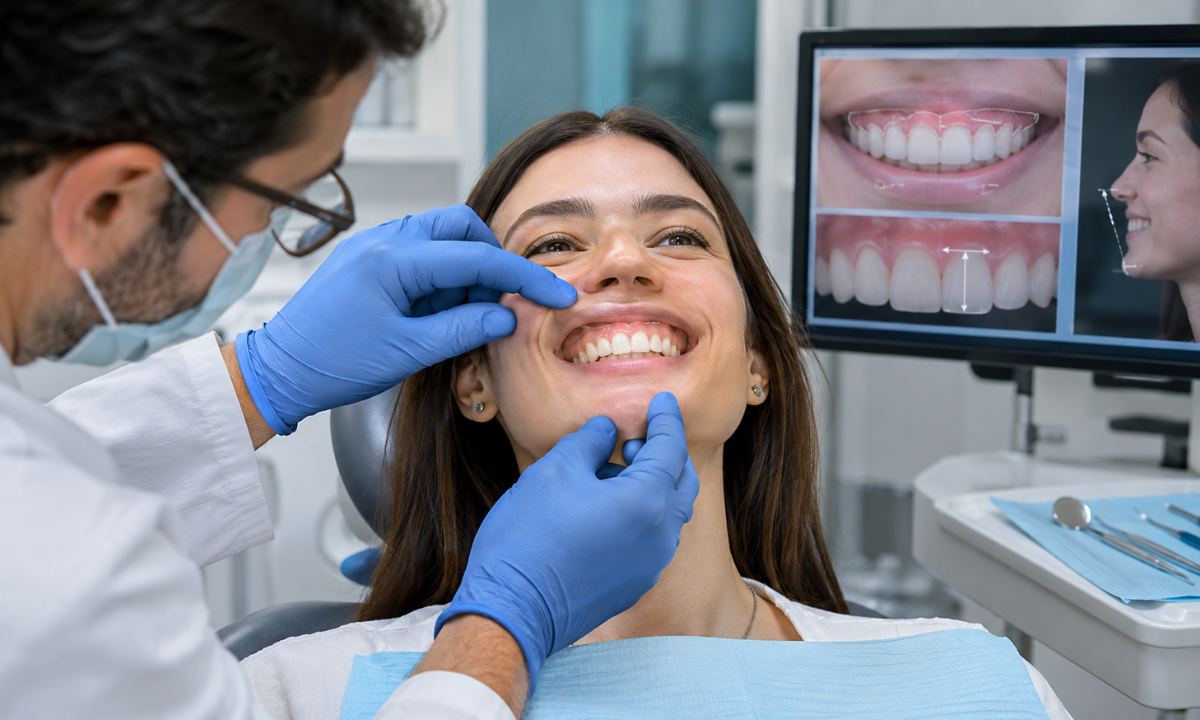
A proper diagnosis is essential because different causes require different treatments. A procedure that works for excess gum tissue may not provide the desired results when the problem is related to lip movement or jaw structure.
During the examination, the dentist may assess the following:
Gum Levels and Tooth Proportions
The dentist checks how much gum tissue is visible and measures the clinical crown height of the front teeth. This helps identify whether excess gum tissue is covering otherwise normal-sized teeth.
Upper Lip Length and Movement
The upper lip is examined both at rest and during smiling. Its length, position and movement help determine whether a short or hyperactive upper lip contributes to excessive gum exposure.
Tooth Alignment and Bite
The dentist checks the position of the upper front teeth and how the upper and lower teeth meet. This helps identify whether orthodontic treatment may be required.
Jaw Structure and Facial Proportions
The relationship between the upper jaw, lower jaw and facial structure is evaluated. If skeletal concerns are suspected, dental X-rays, photographs and cephalometric analysis may be recommended.
Gum and Bone Health
The dentist evaluates gum thickness, inflammation, periodontal attachment and supporting bone levels. These factors help determine whether gum contouring or crown lengthening can be performed safely.
Based on these findings, the dentist may recommend one treatment or a combination of procedures.
What Are the Available Treatment Options to Fix a Gummy Smile?
Several treatment options are available to reduce excessive gum visibility. Each procedure addresses a different underlying cause. The following are the commonly considered approaches.
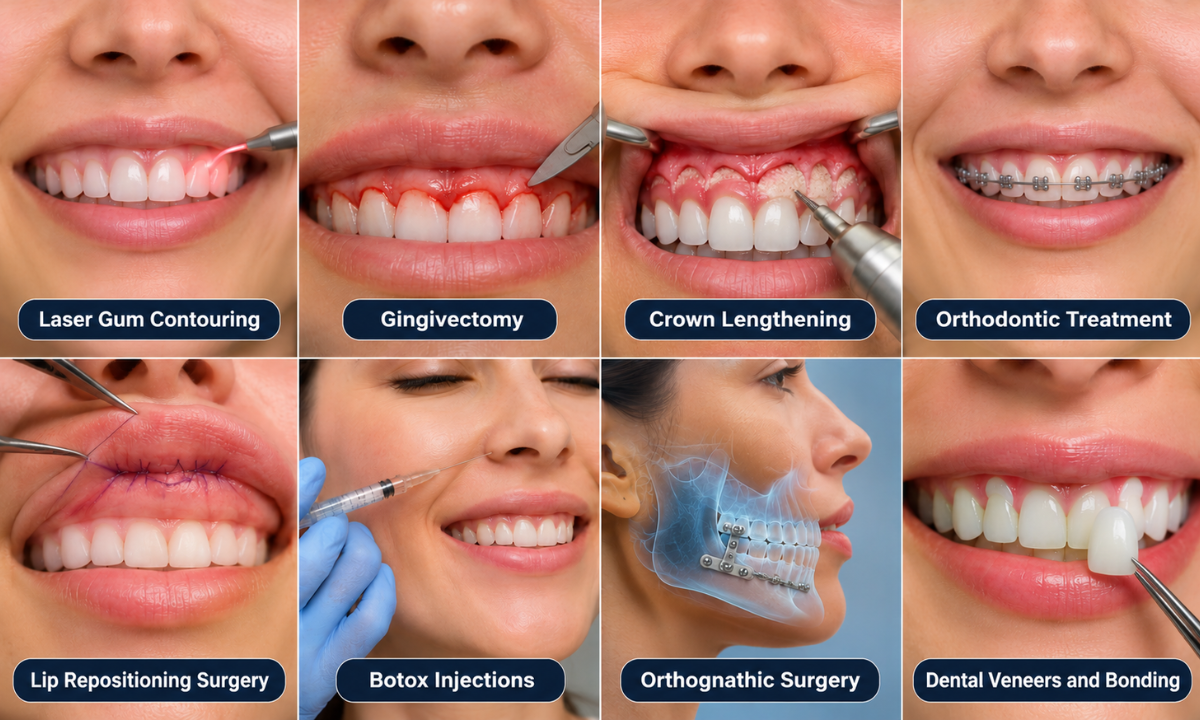
1. Laser Gum Contouring
Laser gum contouring is a minimally invasive cosmetic dental procedure that reshapes excess gum tissue to improve the appearance of the teeth.
It is commonly recommended for people whose gummy smile is caused by excessive gum coverage or an uneven gumline.
How does the procedure work?
The dentist first examines the gum levels and identifies the areas that require reshaping. A dental laser is then used to remove small amounts of excess gum tissue and create a more balanced gumline.
The procedure may be performed under local anaesthesia, depending on the extent of treatment and patient comfort.
Benefits:
- Helps improve the proportion between teeth and gums.
- Allows precise reshaping of the gumline.
- May involve less bleeding than conventional surgical techniques.
- Usually requires a shorter recovery period than more extensive periodontal surgery.
- Can improve the symmetry of the front teeth.
Limitations and risks:
Laser gum contouring is not suitable for every gummy smile. It mainly addresses excess soft tissue and cannot correct underlying bone positioning, jaw structure or excessive upper lip movement.
Possible side effects include temporary swelling, tenderness, bleeding and sensitivity. Gum tissue may also heal differently depending on the original condition and the extent of treatment.
2. Gingivectomy
A gingivectomy is a periodontal procedure in which excess gum tissue is surgically removed to expose more of the natural tooth surface.
It may be recommended when excessive gum tissue covers the teeth and affects their visible proportions.
How does the procedure work?
The dentist or periodontist examines the gum tissue and determines how much needs to be removed. The excess tissue is then carefully removed using surgical instruments, a laser or another suitable technique.
The aim is to create a more even gumline while maintaining healthy periodontal tissues.
Benefits:
- Reduces excessive gum coverage.
- Improves the visible length of the teeth.
- Helps create a more symmetrical smile.
- Can address certain cases of altered passive eruption.
Limitations and risks:
A gingivectomy is suitable only when the underlying bone position and available gum tissue allow safe removal of excess tissue.
Removing too much gum tissue can expose tooth roots, affect periodontal health or create an uneven appearance. Other possible risks include bleeding, discomfort, infection and gum recession.
3. Crown Lengthening
Crown lengthening is a periodontal surgical procedure used to expose more of the natural tooth structure by adjusting the gum tissue and, when necessary, the underlying bone.
It is often considered when a gummy smile is caused by altered passive eruption or when excess gum and bone tissue cover the natural crowns.
How does the procedure work?
The periodontist examines the relationship between the gumline, tooth structure and supporting bone.
During the procedure, the gum tissue is repositioned or removed. If the bone is positioned too close to the natural tooth crown, a small amount of supporting bone may also need to be reshaped.
This allows the gumline to settle at a more appropriate level and exposes more of the natural tooth surface.
Benefits:
- Improves the visible length of short-looking teeth.
- Creates a more balanced gumline.
- Can provide a lasting improvement when the underlying cause is correctly identified.
- Helps establish appropriate tooth proportions.
Limitations and risks:
Crown lengthening is more involved than simple gum contouring, particularly when bone reshaping is required.
Recovery may take several weeks, while the final gumline can take longer to stabilise. Possible complications include swelling, bleeding, tooth sensitivity, gum recession and changes in the appearance of the surrounding teeth.
The procedure is not appropriate when the exposed tooth structure or remaining support would compromise the long-term health of the teeth.
4. Orthodontic Treatment
Orthodontic treatment may help correct a gummy smile when excessive gum visibility is associated with the position of the upper front teeth or certain bite problems.
Dental braces and clear aligners can gradually move teeth into more appropriate positions. In selected cases, orthodontic intrusion may be used to move the upper front teeth slightly upwards and reduce gum exposure.
How does the procedure work?
The orthodontist examines the bite, tooth alignment and jaw relationship before preparing a treatment plan.
Braces or clear aligners apply controlled pressure to guide the teeth into their planned positions. In some cases, temporary anchorage devices may be used to achieve more precise tooth movement.
Benefits:
- Corrects misaligned or improperly positioned teeth.
- Improves bite function and tooth alignment.
- May reduce excessive gum visibility in suitable cases.
- Can improve overall smile balance.
Limitations and risks:
Orthodontic treatment may take several months or longer, depending on the complexity of the case.
It cannot independently correct every skeletal cause of a gummy smile. Possible risks include temporary discomfort, gum inflammation, root resorption and relapse if retainers are not used as advised.
Patients interested in this approach can explore dental braces at Beyond Dental to understand the available orthodontic options.
5. Lip Repositioning Surgery
Lip repositioning surgery is considered when excessive movement of the upper lip is the main reason for a gummy smile.
The procedure aims to limit how far the upper lip moves upwards while smiling, thereby reducing the amount of visible gum tissue.
How does the procedure work?
The oral surgeon or appropriately qualified specialist removes a small strip of mucosal tissue from the inner upper lip area. The remaining tissue is then sutured in a position that limits excessive upward movement.
The procedure changes the movement of the upper lip without altering the teeth or jaw structure.
Benefits:
- Directly addresses excessive upper lip movement.
- Can reduce gum visibility during smiling.
- Does not require removal of healthy tooth structure.
- May provide longer-lasting results than temporary muscle-relaxing treatments.
Limitations and risks:
Lip repositioning surgery is not suitable for patients whose gummy smile is mainly caused by excessive vertical jaw growth.
Possible complications include swelling, discomfort, restricted lip movement, scarring, infection and recurrence of excessive gum visibility. The amount of correction may also vary between individuals.
6. Botox Injections
Botulinum toxin injections may be considered when the upper lip muscles are overly active during smiling.
The treatment temporarily reduces muscle activity, limiting the upward movement of the upper lip and reducing gum exposure.
How does the procedure work?
A qualified medical professional injects small amounts of botulinum toxin into selected muscles responsible for elevating the upper lip.
The effect develops over several days, with the results generally lasting a few months. Repeat treatment may be required to maintain the improvement.
Benefits:
- Minimally invasive.
- Does not involve surgical removal of gum tissue.
- Requires little downtime.
- May be suitable for selected cases of hyperactive upper lip movement.
Limitations and risks:
The results are temporary and require maintenance. The treatment does not correct excess gum tissue, tooth position or jaw-related causes.
Possible side effects include bruising, temporary muscle weakness, an uneven smile and changes in lip movement. It should only be performed by a suitably qualified professional.
7. Orthognathic Surgery
Orthognathic surgery, also known as corrective jaw surgery, may be recommended for severe gummy smiles caused by excessive vertical growth of the upper jaw.
It addresses the underlying skeletal problem rather than simply changing the gumline or tooth position.
How does the procedure work?
An oral and maxillofacial surgeon evaluates the jaw structure, facial proportions and bite.
In suitable cases, the upper jaw is surgically repositioned upwards to reduce excessive vertical height and improve the relationship between the upper teeth, gums and facial features.
Orthodontic treatment is often required before and after surgery to achieve proper tooth alignment and bite function.
Benefits:
- Addresses significant skeletal causes of a gummy smile.
- Can improve facial proportions.
- May correct associated bite problems.
- Provides a more comprehensive correction in suitable cases.
Limitations and risks:
Orthognathic surgery is a major procedure and is generally reserved for patients with significant skeletal discrepancies.
Recovery can take several weeks, with additional time required for orthodontic treatment and complete healing. Potential complications include swelling, bleeding, infection, altered sensation, changes in bite and the need for further treatment.
It requires careful planning by an orthodontist and an oral and maxillofacial surgeon.
8. Dental Veneers and Bonding
In some cases, a gummy smile may be associated with short, worn-down or irregularly shaped teeth. Dental veneers or composite bonding may help improve tooth proportions and overall smile appearance.
These procedures do not remove excess gum tissue or correct jaw-related problems. They are considered when changes to the visible tooth structure can improve the overall aesthetic balance.
How do these treatments work?
Dental veneers are thin shells bonded to the front surfaces of teeth to improve their shape, size and appearance.
Composite bonding uses tooth-coloured resin that is applied and shaped directly on the tooth.
Benefits:
- Improves tooth shape and proportions.
- Can restore worn or damaged teeth.
- Helps create a more uniform smile.
- May complement gum contouring in selected cases.
Limitations and risks:
Veneers do not address the underlying causes of excessive gingival display. Some veneer procedures require enamel removal and may need replacement over time.
Composite bonding is generally more conservative but may stain, chip or require maintenance.
Explore cosmetic dentistry at Beyond Dental and its smile designing and makeover treatments to learn more about these options.
Which Gummy Smile Treatment Is Right for You?
The most suitable treatment depends on the cause of excessive gum visibility. A dentist considers the amount of gum exposure, tooth proportions, lip movement, jaw structure and periodontal health before recommending a procedure.
The following table provides a general comparison.
| Underlying cause | Possible treatment |
|---|---|
| Excess gum tissue covering the teeth | Laser gum contouring or gingivectomy |
| Altered passive eruption | Gingivectomy or crown lengthening |
| Excess gum and underlying bone tissue | Surgical crown lengthening |
| Upper front teeth positioned too low | Orthodontic treatment or intrusion |
| Hyperactive upper lip muscles | Botox injections or lip repositioning surgery |
| Short upper lip | Specialist assessment and selected lip-related treatment |
| Excessive vertical growth of the upper jaw | Orthognathic surgery, sometimes with orthodontics |
| Short or worn-down teeth | Dental bonding, veneers or other restorative treatment |
Some patients may have more than one contributing factor. For example, excess gum tissue and a hyperactive upper lip may occur together. In such cases, combining treatments may produce a more balanced result.
The objective is not simply to reduce gum visibility. It is to create a healthy and proportionate relationship between the teeth, gums and lips.
What to Expect During Gummy Smile Treatment and Recovery
The recovery period depends on the procedure, the extent of correction and the patient’s overall oral health.
Here is a general overview of what patients can expect.
After Laser Gum Contouring
Mild tenderness, swelling or sensitivity may occur for a few days. Patients are usually advised to maintain gentle oral hygiene and avoid irritating the treated area while it heals.
After Gingivectomy or Crown Lengthening
Patients may experience swelling, mild bleeding and discomfort during the initial recovery period. The dentist may recommend prescribed medication, a suitable diet and specific oral hygiene instructions.
Follow-up visits help monitor healing and ensure that the gumline is developing as planned.
After Orthodontic Treatment
Braces and aligners gradually move the teeth over time. Patients may experience temporary pressure or soreness after adjustments or when changing aligners.
Regular orthodontic appointments and proper oral hygiene are important throughout treatment.
After Lip Repositioning or Jaw Surgery
Surgical procedures require more recovery time. Swelling, restricted movement and temporary discomfort may occur. Patients must follow the surgeon’s instructions regarding food, oral hygiene, medication and follow-up visits.
The final aesthetic outcome may take longer to assess because the tissues need time to heal and stabilise.
What Are the Possible Risks of Gummy Smile Correction?
Although gummy smile treatments can improve smile appearance, every procedure has potential risks. Understanding them helps patients make informed decisions.
Some possible complications include:
- Gum recession: Excessive or inappropriate gum removal may expose tooth roots.
- Tooth sensitivity: Changes in gum coverage may temporarily increase sensitivity.
- Bleeding and swelling: These are common short-term effects of surgical gum procedures.
- Infection: Poor oral hygiene or inadequate postoperative care may increase the risk.
- Uneven gumline: Differences in healing or inaccurate treatment planning may affect symmetry.
- Treatment relapse: Gum tissue or lip movement may change over time, affecting the results.
- Changes in lip movement: Lip repositioning or muscle-relaxing treatments may temporarily affect normal smiling movements.
The risk level varies according to the procedure and the patient’s dental condition. A detailed consultation helps identify potential concerns before treatment begins.
How Can You Maintain the Results After Gummy Smile Treatment?
Maintaining good oral health is important for preserving the results of gummy smile correction.
Patients should follow their dentist’s recommendations and maintain consistent dental care.
Some useful practices include:
- Brush twice daily: Use a soft-bristled toothbrush and fluoride toothpaste to maintain healthy teeth and gums.
- Clean between your teeth: Use dental floss or interdental cleaning aids to remove plaque from areas that brushing may miss.
- Attend regular dental checkups: Routine examinations help identify gum inflammation, recession or other concerns early.
- Follow postoperative instructions: Avoid disturbing healing tissues and follow the recommended oral hygiene routine.
- Wear retainers when advised: Patients who undergo orthodontic treatment should use retainers as prescribed to maintain tooth alignment.
- Address teeth grinding: If you grind your teeth, discuss suitable protective measures with your dentist.
- Maintain healthy gum tissue: Professional cleaning and appropriate periodontal care help prevent inflammation and gum overgrowth.
Regular follow-up appointments also allow the dentist to monitor the gumline and assess the long-term stability of the results.
Frequently Asked Questions
1. Can a gummy smile be corrected without surgery?
Yes. Selected cases can be managed without surgery. Botox injections may help reduce excessive upper lip movement, while orthodontic treatment can correct certain tooth-position problems. Mild excess gum tissue may be treated through minimally invasive gum contouring, depending on the clinical situation.
2. Is laser gum contouring painful?
Laser gum contouring is generally well tolerated. Local anaesthesia may be used to improve comfort during the procedure. Some patients experience mild tenderness, swelling or sensitivity after treatment, which usually improves as the tissues heal.
3. Is gummy smile correction permanent?
The longevity depends on the treatment and its underlying cause. Gum contouring and crown lengthening can provide long-lasting results when properly planned. Botox requires repeat treatment, while orthodontic results need retention. Lip repositioning may also experience some relapse.
4. How long does it take to fix a gummy smile?
The treatment duration varies. Simple gum contouring may be completed in a single appointment, while crown lengthening requires additional healing time. Orthodontic treatment may take several months or longer. Jaw surgery involves surgical recovery and often requires orthodontic treatment as well.
5. Can braces fix a gummy smile?
Braces may help correct a gummy smile when the excessive gum visibility is related to the position of the upper front teeth or certain bite problems. However, braces cannot correct every cause, particularly excessive gum tissue or significant jaw-related concerns.
6. What is the difference between gingivectomy and crown lengthening?
A gingivectomy removes excess gum tissue to expose more of the natural tooth. Crown lengthening may involve removing or repositioning gum tissue and reshaping the underlying bone when necessary. The choice depends on the relationship between the gumline, bone and natural tooth structure.
7. Can a gummy smile return after treatment?
Yes, recurrence is possible depending on the original cause and treatment method. Gum tissue may change during healing, orthodontic results may relapse without retainers, and temporary treatments such as Botox wear off. Proper treatment planning and follow-up care help maintain the results.
8. Does every gummy smile require treatment?
No. A gummy smile is often an aesthetic concern and does not automatically indicate a dental problem. Treatment is a personal choice unless an underlying gum, tooth or jaw condition requires attention.
Improve Your Smile with the Right Dental Treatment
Correcting a gummy smile begins with understanding why excess gum tissue is visible when you smile. Whether the cause is excessive gum coverage, short-looking teeth, upper lip movement or jaw structure, the right treatment should address the underlying concern while protecting long-term oral health.
At Beyond Dental, treatment planning considers the relationship between teeth, gums and facial proportions. Options such as gum contouring, cosmetic dentistry, orthodontic treatment and smile designing can be considered according to individual requirements.
If you are concerned about excessive gum visibility, consult a qualified dental professional for an examination and personalised treatment recommendations. A well-planned approach can help you achieve a more balanced smile while maintaining healthy teeth and gums.