
If you have been putting off fixing your teeth because you think braces are only for teenagers, you are not alone. Many adults walk into a dental clinic with exactly that concern. The truth is, there is no age limit for braces. Whether you are 25, 40, or even in your 50s, orthodontic treatment is absolutely possible, and the results can be just as effective as they would have been in your teens.
According to the American Association of Orthodontists, 1 in 3 orthodontic patients today are adults. That number has been growing steadily as more people recognise that a healthier, straighter smile is not a privilege reserved for school-going kids.
This guide breaks down everything you need to know before you decide.
Is There an Age Limit for Getting Braces?
There is no upper age limit for braces. What determines whether you can get braces is not your age, it is the health of your teeth, gums, and bone structure. As long as your gums are healthy and there is enough bone mass to support tooth movement, you are a candidate for braces at any age.
Adult patients have successfully completed orthodontic treatment well into their 60s and 70s. The deciding factor is always oral health, not the number on your birth certificate.
Why Do Adults Choose to Get Braces?
Adults come in for orthodontic treatment for a mix of reasons. Here are the most common ones:
- Teeth that shifted over time. Even if you had straight teeth in your 20s, teeth naturally drift as you age, especially if you lost a tooth or stopped wearing a retainer after earlier treatment.
- Confidence and appearance. A straighter smile has a real impact on how you carry yourself at work, in social settings, and in photographs.
- Oral health reasons. Crowded or misaligned teeth are harder to clean properly, which increases the risk of cavities, gum disease, and long-term tooth loss.
- Jaw pain and bite issues. A misaligned bite can cause jaw discomfort, persistent headaches, and uneven wear on teeth. Braces address the underlying structural problem rather than just managing the symptoms.
- Before cosmetic dental work. Many dentists recommend straightening teeth before veneers, implants, or other restorative procedures to ensure the best long-term outcome.
- Teeth that relapsed after childhood treatment. Adults who had braces as teenagers but did not consistently wear retainers often find their teeth have gradually shifted back, prompting them to consider treatment again.
How Are Adult Braces Different from Teen Braces?
This is where it is important to set realistic expectations. Adult orthodontic treatment works on the same principles as teenage treatment, but there are a few meaningful differences.
| Factor | Teenagers | Adults |
| Bone density | Still developing, teeth move faster | Fully formed, teeth move slightly slower |
| Treatment duration | 12 to 24 months typically | 18 months to 3 years depending on complexity |
| Pre-existing dental work | Rarely a factor | Crowns, fillings, or missing teeth may need assessment |
| Compliance | Variable, often inconsistent | Generally high, adults follow instructions well |
| Complexity of case | Usually straightforward | May involve gum health, bone loss, or prior restorations |
| Cosmetic preferences | Less concerned about appearance of braces | Often prefer discreet options like ceramic or Invisalign |
The key takeaway here is that adults are actually better patients in many ways. Higher compliance with instructions often compensates for the slower pace of bone response.
Types of Braces Available for Adults
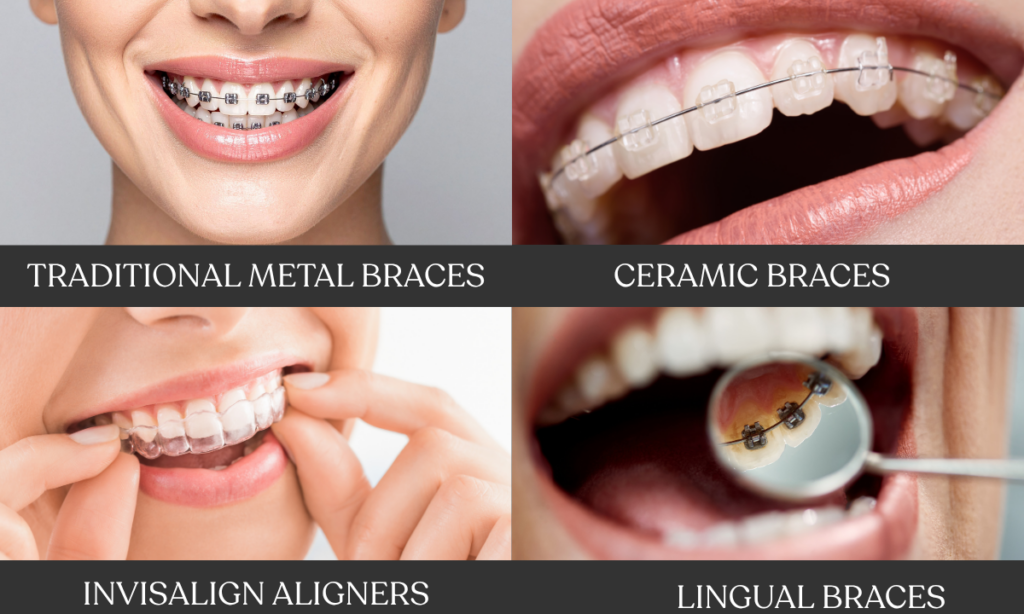
Modern orthodontics gives you several options. You are not limited to the traditional metal brackets that most people associate with teenagers.
- Traditional metal braces remain the most effective option for complex cases involving severe crowding, significant bite issues, and major misalignments. They give the orthodontist the most precise control over tooth movement.
- Ceramic braces work exactly like metal braces but use tooth-coloured or clear brackets, making them far less noticeable. A practical middle ground between effectiveness and aesthetics.
- Invisalign aligners are a series of custom-made, removable clear trays that gradually shift teeth into position. They are nearly invisible, comfortable, and particularly suited to adults who want a discreet treatment option. They work best for mild to moderate cases.
- Lingual braces are mounted on the back surface of the teeth, making them completely invisible from the front. They are a specialised option not offered by every clinic.
Dental braces at Vasanth Nagar offer all of the above treatment options under one roof, with personalised treatment plans designed for your specific alignment needs. If you are in Bengaluru and looking for reliable orthodontic care, their Vasanth Nagar clinic is worth consulting.
What Happens During Your First Consultation?
Before any treatment begins, your dentist will carry out a full assessment. Here is what that typically involves:
- X-rays to assess bone levels and root positions
- Digital scans or impressions of your teeth and bite
- An evaluation of gum health and bone density
- A discussion about your goals, budget, and expected timeline
- Identification of any pre-existing issues that need to be resolved first
If there are existing problems like gum disease, cavities, or bone loss, these need to be treated before orthodontic treatment can begin. This is not a delay, it is a necessary step to protect both your teeth and your investment.
Common Concerns Adults Have Before Getting Braces
Will it affect my professional life?
Most adults adapt within a few days. Invisalign in particular is virtually unnoticeable in professional settings. Even with traditional braces, the initial self-consciousness fades quickly.
Will it hurt?
You will feel pressure and mild soreness for 1 to 2 days after each adjustment or aligner change. It is manageable and temporary.
How do I maintain oral hygiene?
With traditional braces, use an interdental brush or water flosser to clean around the brackets. With Invisalign, remove the trays before brushing and floss normally. Oral hygiene becomes more important during treatment, not less.
Will I need a retainer after treatment?
Yes, always. Once your teeth have been moved to their new positions, a retainer is essential to keep them there. Skipping retainers is the most common reason teeth shift back after treatment.
Frequently Asked Questions
At what age is it too late to get braces?
There is no cut-off age. As long as your gums and supporting bone are healthy, treatment is possible at any age.
Can I get braces if I already have dental crowns or implants?
In most cases, yes. Your dentist will evaluate how existing restorations interact with the treatment plan and adjust accordingly. Implants cannot be moved with braces, so their position needs to be accounted for in the treatment design.
How long will I need to wear a retainer after braces?
Initially, retainers are worn most of the day for the first few months, then typically reduced to nights only. Many orthodontists recommend indefinite nighttime retainer wear to maintain results long-term.
Is there any treatment that is not suitable for adults?
Some growth-modifying appliances that take advantage of a developing jaw are not relevant for adults. However, virtually all alignment and bite correction treatments available to teenagers are also available to adults.
If you have been considering straightening your smile and are not sure whether you are a good candidate, the best starting point is a consultation. The dentist in Vasanth Nagar at Beyond Dental will assess your specific situation and give you an honest picture of what treatment would look like for you, including the right type of braces, realistic timeline, and cost.
Sources:
- American Association of Orthodontists: aaoinfo.org
- University of Rochester Medicine: urmc.rochester.edu